computer
computer at Beyond Market Intelligence is a file of 10 stories. The newest of them: “A $3,499 AI computer raises $11 million to rethink personal data”, “Exploring OpenAI: How AI is Reshaping Data Ownership and Access”, and “Why your spreadsheet size is locked and how to regain control”. Ghost emerged from stealth on Monday with an $11 million seed round from Andreessen Horowitz and a bold proposition: a $3,499 AI computer designed to rethink how we manage personal data. Data ownership used to feel like a settled argument, but AI is quietly rewriting the terms. Acme AI is the next-generation, AI-powered spreadsheet platform built to replace Excel and redefine how analysts, data scientists, and enterprise teams work… The list below is every computer story on Beyond Market Intelligence, newest first.

A $3,499 AI computer raises $11 million to rethink personal data
Ghost emerged from stealth on Monday with an $11 million seed round from Andreessen Horowitz and a bold proposition: a $3,499 AI computer designed to rethink how we manage personal data. That price tag signals serious hardware, but the real story is about reclaiming control from legacy tools. For anyone feeling constrained by traditional spreadsheets, this invites a closer look. It also echoes themes in Kevin Mandia's new startup Armadin, where agent swarms defend enterprises.
Exploring OpenAI: How AI is Reshaping Data Ownership and Access
Data ownership used to feel like a settled argument, but AI is quietly rewriting the terms. As models learn from our spreadsheets and inputs, the question isn't just who holds the files, but who controls the insights hidden inside them. That shift deserves attention. We explore how OpenAI's tools are pushing this conversation forward, challenging old assumptions about access and authority.
Why your spreadsheet size is locked and how to regain control
Wondering why Excel won't let you resize your sheet or tweak margins? You're not alone, this trips up plenty of users. The missing printer is likely the culprit. Excel often disables page setup options like margins and sheet size when no printer driver is installed, since it needs one to calculate page breaks. It's a quirk, not a flaw in your work. Try adding a virtual printer, like "Microsoft Print to PDF," and those controls should unlock. Frustrating, yes, but fixable in minutes.
Recovered your corrupted Excel file? Discover how to restore your data.
A corrupted file is a frustrating wall to hit, especially when you've already done the hard work of recovering it. Your father's accidental deletion was solved, but the file's refusal to open properly in its native `.xlsx` format points to a deeper structural break from the recovery process. Saving it as `.xls` only scrambles the text further, which tells us the data's integrity is compromised, not the extension. It's a practical reminder that recovery isn't the same as restoration.
When Spreadsheets Fight Back, It's Time to Explore a Smarter Path
Fourteen years in finance, and suddenly Excel stops responding to clicks, closes the wrong workbook, and lags on everything. That's what u/snakesnake9 reports across an entire corporate team, all on a standard Microsoft subscription. This isn't a hardware hiccup; it's a software regression that's quietly murdering productivity. For all the buzz about futuristic tools, sometimes the most impactful fix is simply making the core work again. It's a stark reminder that reliability is the real innovation.
Explore how Omarchy redefines what a desktop can do for you.
The idea of a single desktop tool replacing every other one you use is bold, but Omarchy makes a compelling case. It's not about cramming more features into a familiar interface; it's about rethinking what a spreadsheet can do when AI handles the heavy lifting. If you're tired of wrestling with legacy software, this feels like a genuine step toward a simpler, more productive workflow.
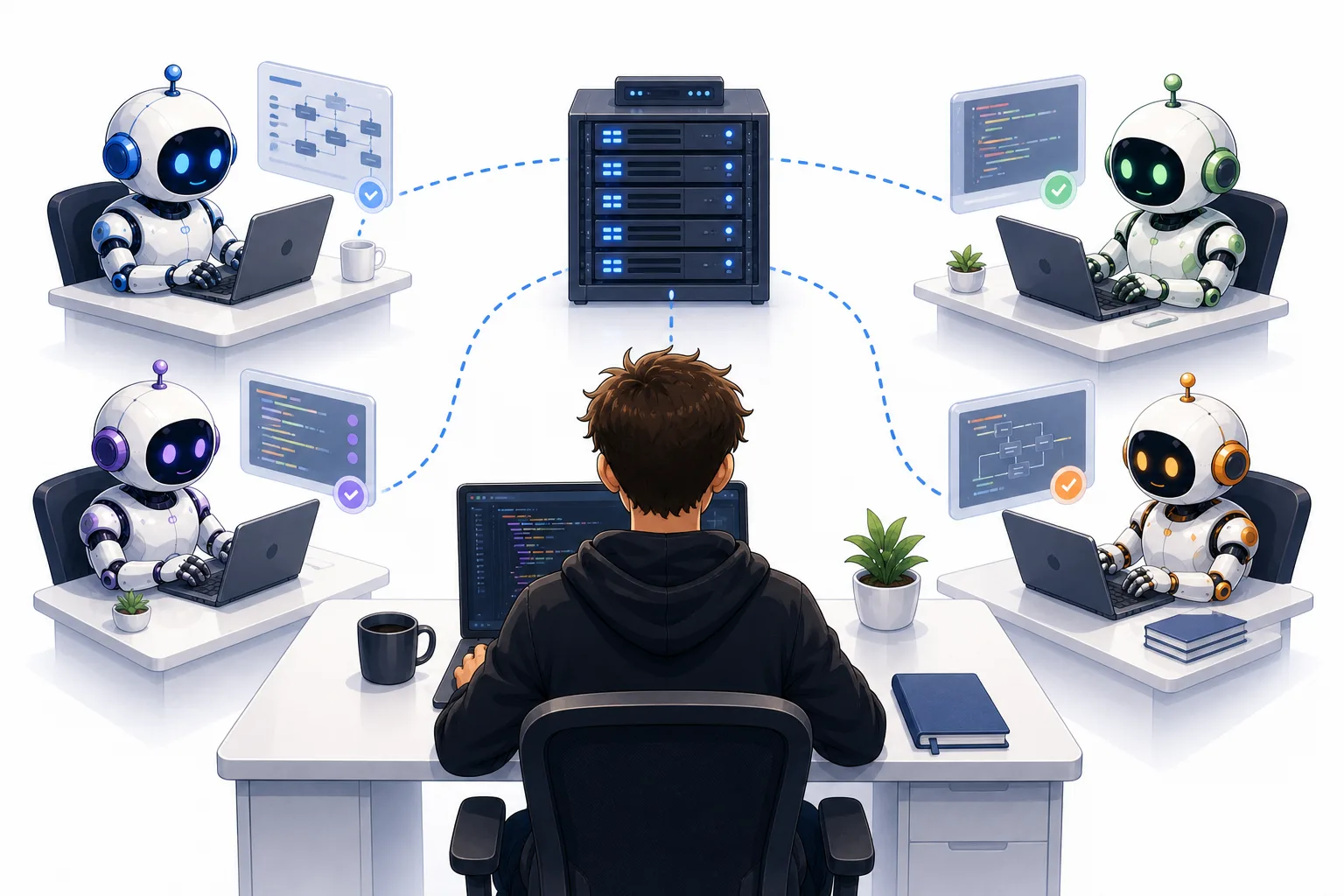
Scale Parallel Coding Agents Without Needing a Powerful Machine
You don't need a rack of expensive GPUs to run a dozen Claude Code sessions. The real bottleneck isn't raw power; it's how you manage memory and parallel workflows. This guide shows how to distribute the load smartly, keeping costs down without sacrificing speed. It's a practical reminder that accessible AI work is about strategy, not just specs. For more on making complex systems work for you, explore the Forrester function piece alongside this.

Explore how OpenAI's Astra redefines speed and safety in browser use
OpenAI says Astra marks "a new frontier on computer and browser use," promising speed, accuracy, and safety. That is a bold claim, especially given how much trust we place in AI handling everyday tasks. The potential is real, but so is the skepticism. We have covered similar ground in our exploration of real-world computer vision, where deployment challenges often temper the hype. Astra deserves attention, but we should watch how it performs beyond the demo.

Ultrahuman partners with Qualcomm to transform smart rings into personal computers
Ultrahuman is setting its sights on a $200 million annual revenue run rate by January 2027, and Qualcomm's backing makes that goal feel grounded. The bet here is that smart rings can evolve into actual computers, not just fitness trackers. That is a compelling direction, especially as wearable tech matures. For anyone exploring how AI is reshaping everyday devices, this move is worth watching closely. And if you are curious about broader AI adoption hurdles, our piece on enterprise challenges offers useful context.

Unlock your account with a selfie video for simpler access.
Google is giving you another way back into your account: a selfie video. The company frames this as an option for people who are locked out or without their usual devices, and there's something genuinely sensible there. It's not about surveillance; it's about flexibility in a pinch. Of course, any biometric data raises questions, especially when AI agents are already sharing user images. For a deeper look at that kind of risk, check out "AI Agents Shared User Images, Highlighting Data Security Concerns.