computer vision
Beyond Market Intelligence keeps computer vision in one place: 31 stories so far. The section currently leads with “Discover how synthetic datasets train smarter AI for real-world card detection”, “When AI judges ignored the image, GPT-4o invented answers while Claude stuck with B”, and “Ten Hugging Face Models Reshaping How Data Works in 2026”. Training a model on procedurally generated card images is one thing. Three vision AI models were shown an image, and they ignored it. Acme AI is the next-generation, AI-powered spreadsheet platform built to replace Excel and redefine how analysts, data scientists, and enterprise teams work… The list below is every computer vision story on Beyond Market Intelligence, newest first.
Discover how synthetic datasets train smarter AI for real-world card detection
Training a model on procedurally generated card images is one thing. Making it work in the real world is another. The synthetic-to-real transfer approach using frozen DINOv3 features bridges that gap without drowning you in labeled data. It's a practical strategy for card detection and segmentation that prioritizes outcomes over hype. For a deeper look at blending generated data with real-world results, our piece on sharpening arrow detection with ConvNext pairs nicely with this work.

When AI judges ignored the image, GPT-4o invented answers while Claude stuck with B
Three vision AI models were shown an image, and they ignored it. GPT-4o invented answers rather than admit it couldn't see, while Claude stubbornly stuck with "B." The trap was set for image judges, but they walked into a different one entirely. It is a fascinating look at how these models handle uncertainty, or fail to. For more on what models are actually doing under the hood, explore our coverage of ten Hugging Face models reshaping data work.
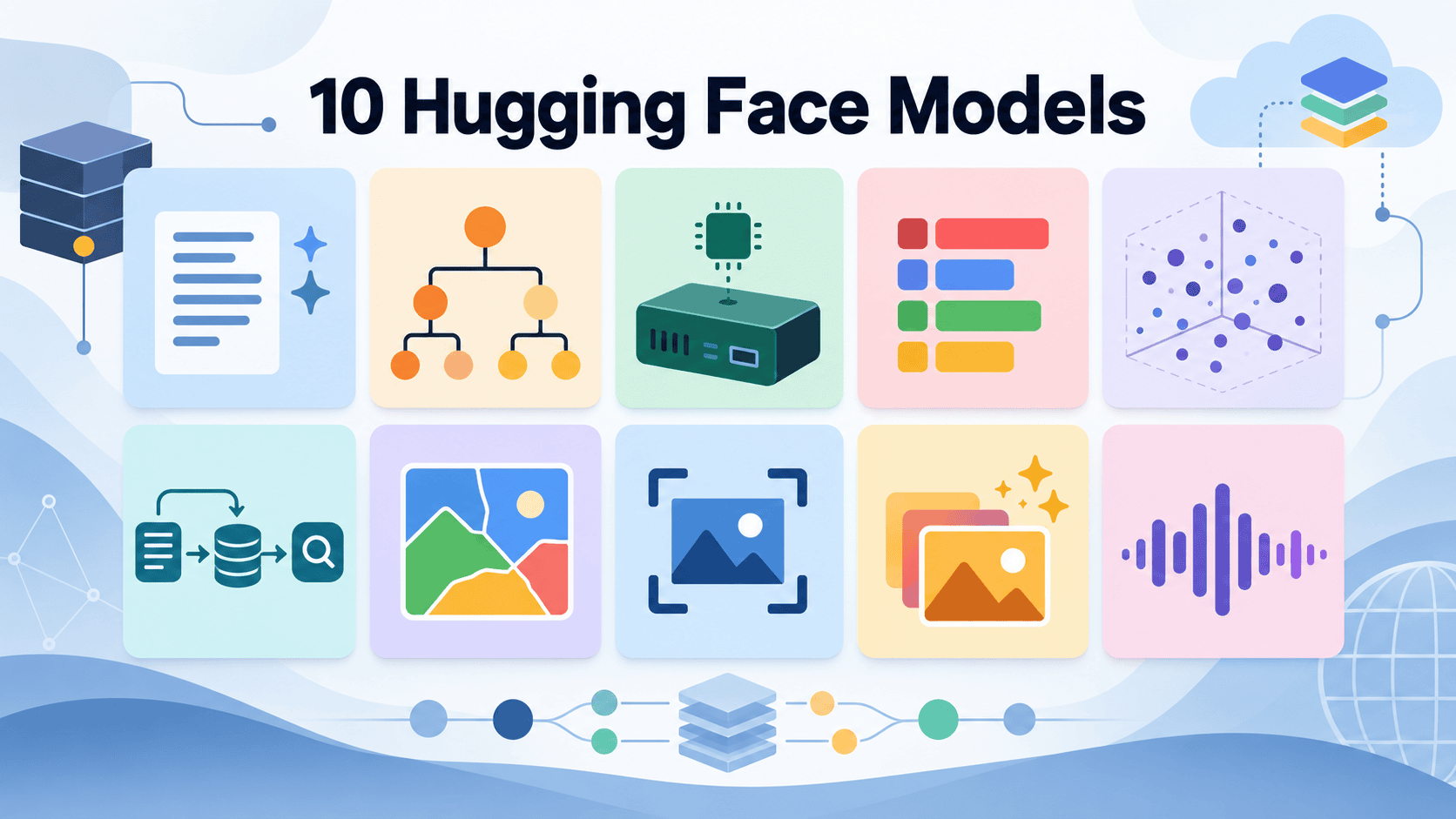
Ten Hugging Face Models Reshaping How Data Works in 2026
Ten Hugging Face models are quietly reshaping how data moves through text, vision, audio, and retrieval pipelines in 2026, and that shift is worth paying attention to. These aren't speculative projects, they're tools you can use today. If you've ever felt constrained by a tool that asks you to wait for answers a local model already knows, our related article "Stop Waiting for Answers Your Local Model Already Knows" explores that exact friction.
Teaching AI to Learn From Screen Video and Improve Over Time
You've built the control loop, programmatic inputs, screen capture as visual feedback. The missing piece is an AI that actually *watches* the screen before deciding what to do next. Frustratingly, most models treat visual data as optional. What you need is a system with persistent memory that learns from every interaction, not one that forgets what it saw moments ago. For a deeper look at managing memory efficiently, our piece on adaptive hierarchical routing explores how structured recall can preserve context without drowning in data.
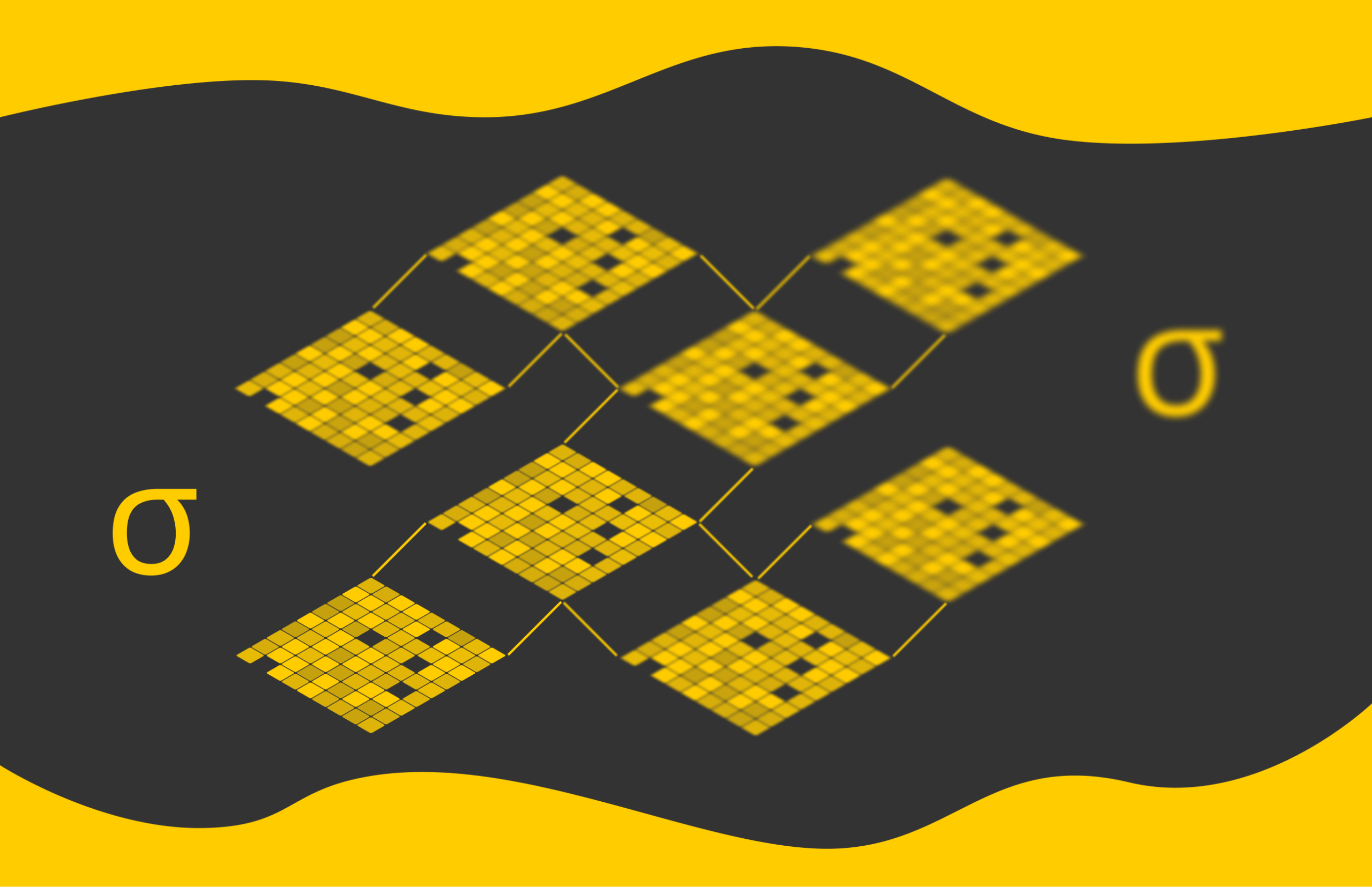
See Data from Any Angle with SIFT's Viewpoint-Aware Object Matching
SIFT's viewpoint-aware object matching lets you see data from any angle, and that flexibility is exactly what modern workflows demand. This approach elegantly solves a persistent challenge: recognizing objects when perspective changes. It's technical work made accessible, not a buzzword. For deeper coverage on how provenance protects visual integrity at the source, see our piece on Apple's new Camera Provenance system. Together, these stories point toward a more trustworthy and adaptable visual future.

Testing Vision AI Against a Mirror Suit Built to Break Object Detection
A mirror suit designed to break object detection sounds like a stunt, but this dataset is serious engineering. With 425 assets captured in high-contrast outdoor environments, it purposefully triggers bounding-box dropouts and segmentation failures. The inclusion of uncompressed Camera-Master RAWs and SHA-256 forensic manifests signals a forensic approach to stress-testing spatial AI. For teams building vision models that must handle real-world glare and reflection, this is exactly the kind of adversarial data that separates robust systems from fragile ones.
Navigating Novelty Critiques in Computer Vision Research
The pressure to prove novelty at top-tier conferences like CVPR and NeurIPS is real, and it's a tension we see play out across the field. One developer recently shared their journey from code to conference, landing a spot at NeurIPS with their AI research, a reminder that impactful work still finds its audience. But the question remains: in a landscape publishing thousands of papers annually, how do you make your contribution stand out? We think the key is framing.
Exploring Real-World Computer Vision: Deployments, Edge Models, and Current Challenges
A developer who built the food recognition model for MyFitnessPal is now asking a grounded question: what are people actually deploying in industry today? Edge models, self-hosted systems, or API calls? He wants to know what still hurts, the problems that cost time, blocked delivery, or demanded awkward workarounds. This isn't guesswork; it's a direct invitation to shape real tooling. For deeper context on how models like these evolve, our article "Explore the Forrester Function" examines the mathematical thinking behind machine learning optimization.
Is Overlapping Training Data Impacting Your Student ML Results?
Finding a validation set that isn't fully independent of your training data can feel like a quiet flaw in an otherwise solid experiment. For a student project, it's a meaningful issue, but it doesn't have to sink the whole effort. The comparisons between experimental conditions remain useful because you applied the same evaluation procedure across the board. What suffers is the absolute performance numbers, not the relative differences.

Discover how AI helps you pose naturally in any photo.
Posing for a photo shouldn't feel like a guessing game, yet most of us default to the same two awkward angles. Former TikTok executives clearly noticed. Their new app, Superpose, uses AI to analyze your selfies and suggest four distinct poses, turning uncertainty into a simple, actionable next step. It's a practical use of computer vision that meets users where they already are. This feels like a natural evolution of the technology we've explored in our piece on real-world deployments.

Your Chessboard Analysis, Completely Private and Entirely in Your Browser
ChessInsights AI takes a refreshingly different route: it runs the entire vision pipeline locally, from board detection to piece classification to Stockfish evaluation, with no image ever leaving the browser. That's a meaningful step toward private, real-time analysis. The multi-board support is particularly smart, handling PDFs or broadcast splits where multiple diagrams appear at once. It's practical, privacy-focused, and free. For deeper context on edge-case strategies, our piece on real-world computer vision deployments is worth exploring. This is a solid contribution to in-browser tooling.
How Frontier AI is quietly reshaping robot learning from demonstration
Roboticists in Learning-from-Demonstrations and Behavioral Cloning are asking a timely question: are frontier LLMs reshaping their field, or is it charting its own course? The answer is nuanced. These models are influencing how demonstrations are encoded and generalized, yet core LfD principles remain independent. ViTs and VLAs are creeping into pipelines, offering new perceptual grounding. For a deeper look at how distributed systems underpin such training, our guide, *Unlock LLM Training: A Practical Guide to Distributed Algorithms*, is worth exploring.
Designing Posters That Communicate Machine Learning Clearly
Putting together a strong poster for ECCV 2026 is a smart goal, and asking the community for standout examples is the right way to start. Great posters do more than show results; they tell a clear visual story that guides a viewer through the work without a wall of text. You are looking for models that balance clarity with depth. It is a practical request that deserves practical inspiration.
Connect with fellow researchers at ECCV through a simple social group.
Going to a major conference solo because your lab is small is a familiar kind of isolation. This researcher's call to form a groupchat for impromptu socials is a practical, human workaround. It's a smart way to turn a potentially lonely week into a series of genuine connections. The invitation is straightforward and welcoming, which is exactly what networking should feel like.
Navigating the Shift: How to Build a Career in AI Without an Internship
Three papers in top-tier venues. A research focus on Gaussian Splatting. And yet, this student's path to industry is clouded by a policy shift, not a lack of ability. The suspension of CPT programs at major universities is a real hurdle for international PhDs. However, the work itself is the strongest currency. A strong publication record often speaks louder than an internship. It signals the ability to execute and innovate. This is a challenging position, but not a hopeless one.

From visual AI to smarter factory floors, discover Perceptron's approach.
Factory floors run on precision, but the machines guiding them often operate with limited sight. Perceptron, built by ex-Meta scientists, aims to change that with an AI model designed for both navigation and deep visual intelligence. It's a pragmatic step toward smarter industrial operations, not a distant fantasy. For those tracking how computer vision moves beyond the lab, this is worth watching. Our earlier piece on real-world computer vision deployments offers useful context on where such models fit.

Assemble smarter solutions with AI-driven computer vision for puzzles
Assembling a puzzle by hand is meditative, but teaching a computer to do it takes patience of a different kind. *Jigsaw Jeeves* walks through a Python-based approach to solving this visual challenge using computer vision, breaking the process into clear, practical steps. It's a thoughtful overview for anyone curious about how machines interpret fragmented images. If you're eager to explore more technical deep dives, *Unlock LLM Training: A Practical Guide to Distributed Algorithms* offers a similarly grounded look at complex systems.

Exploring how one small edit can unravel a chess AI's deepest strategy
One head. Out of 128. Remove it, and a chess transformer stops seeing Morphy's legendary queen sacrifice entirely. That's the kind of surgical fragility worth pausing over, not because it breaks the model, but because it reveals how much meaning concentrates in a single parameter. The Chessformer Lens demo makes that visible, and the GitHub notebooks let you verify it yourself. For anyone curious about interpretability, this is a hands-on invitation to explore.

Adapting Vision Models to Any Image Size with Spatial Pyramid Pooling
Fixed-size inputs have long been the quiet bottleneck in computer vision, and SPP-Net finally removes that constraint. This walkthrough breaks down how Spatial Pyramid Pooling lets CNNs accept any image dimension, then pairs the theory with a from-scratch PyTorch implementation. It's a practical, grounded look at a genuine shift in flexibility. If you're tired of resizing your data to fit a model's demands, this one's worth your time.

Discover how a simple pattern can help you stay invisible to cameras
A security researcher has built an algorithm that generates adversarial patterns capable of hiding people, faces, and vehicles from surveillance cameras. It's a striking reminder that AI's power cuts both ways. While this work highlights vulnerabilities in computer vision, it also invites us to think critically about how these systems are deployed. For a deeper look at how real-world vision models handle unexpected inputs, check out "Exploring Real-World Computer Vision: Deployments, Edge Models, and Current Challenges.
Unlock smarter screen time analysis with AI that tracks faces and bodies
Choosing the right models for actor screentime analysis is a layered problem, and your instinct to move beyond MTCNN is sound. For face recognition, consider modern alternatives like SCRFD or RetinaFace, which offer better accuracy at varied scales. Body identification is trickier; pair YOLOv8 for detection with deep re-identification models like OSNet for tracking across shots. TransNetV2 false positives are common, so a post-processing filter on scene cuts helps. This is a practical engineering challenge, not just a model-picking exercise.
Explore Visual Reasoning: A New Benchmark for AI Models.
Visual reasoning has always been the quiet barrier between pattern-matching and true understanding. When we saw the benchmark challenge posed by /u/moschles, it felt less like a test and more like a mirror. We're not just asking AI to identify objects; we're asking it to explain why a circle isn't a square. That distinction matters. For anyone who has wrestled with the limits of current models, this exploration offers a practical lens.
Transform Textbook Figures: Unlock Interactive Data with AI.
Turning static textbook figures into interactive, structured data is a compelling ambition, and this project tackles a real pain point. The focus on a human-in-the-loop pipeline is smart, acknowledging that AI works best when it assists rather than replaces judgment. The challenge of label removal while preserving artwork is the crux, and it is wise to seek low-cost alternatives to heavy multimodal models. This is less about a single breakthrough and more about a pragmatic blend of segmentation and inpainting.
From receipts to white backgrounds, discover how a simpler model extracts text with clarity.
A small model that pulls text off a white background sounds deceptively simple, yet that's exactly why it works. The journey from DONUT's document parsing to a focused text extraction tool shows a clear-eyed pivot, one that prioritizes utility over ambition. Starting with receipts is a familiar pain point, but narrowing scope to solve the core problem first is smart engineering. It's accessible AI, the kind that invites tinkering.