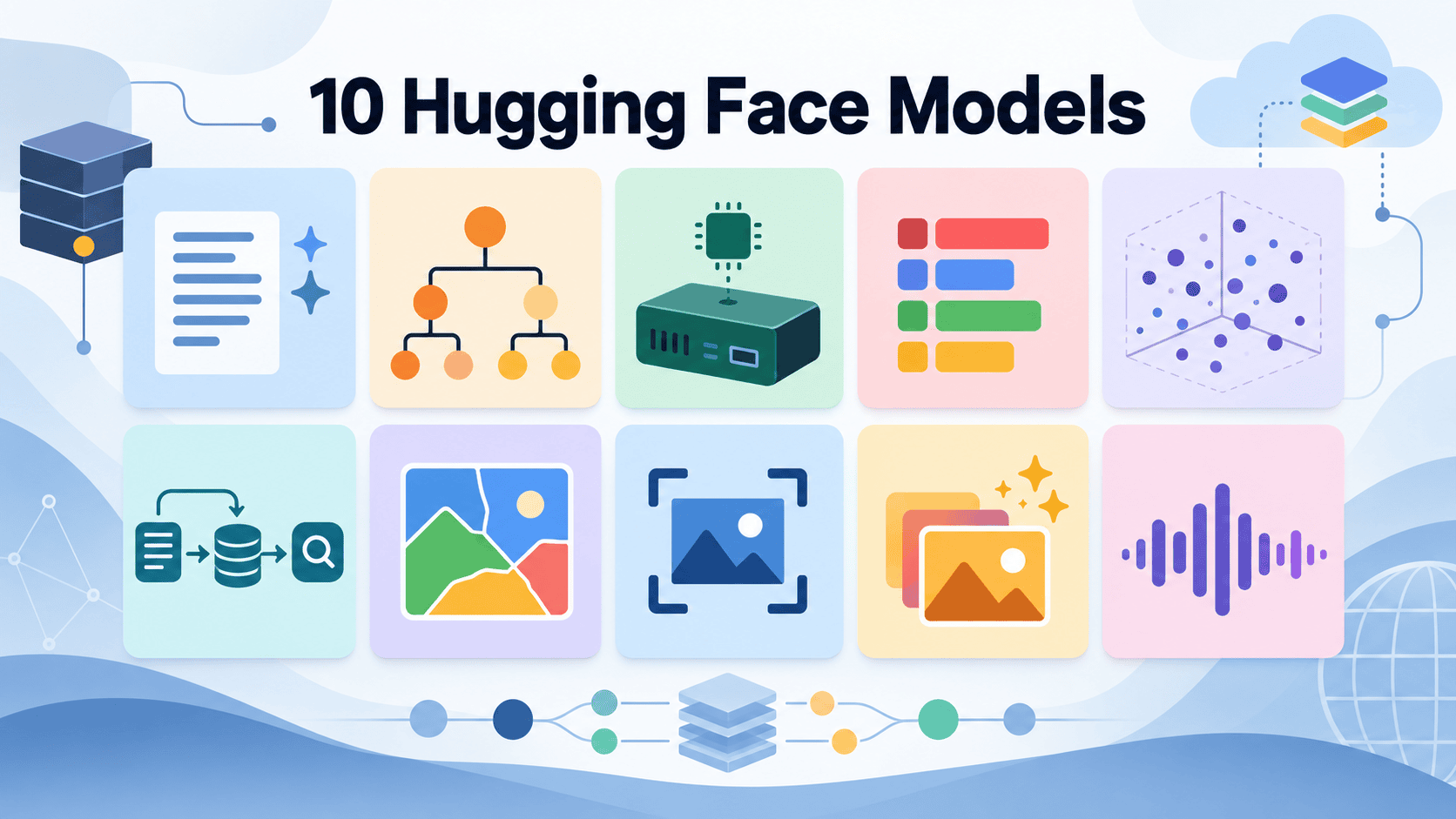
The open-source model ecosystem has stopped being a preview of what might come and started being the actual infrastructure under how data moves. The ten Hugging Face models shaping 2026 work across text, vision, audio, and retrieval, and the pattern is unmistakable: the most useful tools are the ones that shrink complexity rather than expand it. That is the takeaway worth sitting with. If you have been waiting for answers your local model already knows, the shift here is that the wait is no longer a technical constraint. It is a choice.
What stands out in this year's model lineup is how ordinary the breakthroughs feel. Nobody is promising magic. These are models that handle classification faster, retrieve the right context sooner, and process audio without a server round-trip. That ordinariness is the point. When a tool becomes reliable enough to stop being remarkable, it has crossed into utility. The same logic applies to running AI detection fully client-side with a fraction of the original size. The smaller and faster these models get, the more they stop being demos and start being defaults. The practical consequence is that your workflow can now assume intelligence exists locally, not as a premium feature but as a baseline.
This matters because the bottleneck in data work has never been raw capability. It has been integration. A model that sits on Hugging Face and runs in a browser or on a laptop removes the friction that keeps people chained to legacy spreadsheets and delayed pipelines. The editorial stance here is direct: if your data processes still depend on waiting for a remote call or a bulky model, you are not protecting yourself from risk, you are just postponing the inevitable move. The models in 2026 are not asking you to change your goals. They are asking you to change your assumptions about what requires a server, a queue, or a permission slip.
One specific consequence to watch is how this reshapes citation and verification habits. As retrieval models get sharper and local inference gets faster, the gap between what you can check and what you actually check will narrow. That has real implications for researchers who have felt the lag in why Google Scholar citations lag behind your published research. When the tools for finding, classifying, and validating information run locally and quickly, the excuse of "the infrastructure made it slow" disappears. The open question is whether our habits will catch up with the hardware. The models are ready. The workflows are not, and that gap is the next problem worth solving.