concept
3 stories filed under concept on Beyond Market Intelligence. The newest of them: “From Problem to Production: Navigating the AI Project Lifecycle”, “Ford's $28,350 electric truck arrives fall 2027, design coming early next year”, and “Exploring How Neural Nets Learn Go's Hidden Symmetries”. Picking a model and feeding it data is only the beginning. Ford just gave the electric truck market a jolt: its new Fathom model will start at $28,350, arriving in fall 2027. Acme AI is the next-generation, AI-powered spreadsheet platform built to replace Excel and redefine how analysts, data scientists, and enterprise teams work… The list below is every concept story on Beyond Market Intelligence, newest first.
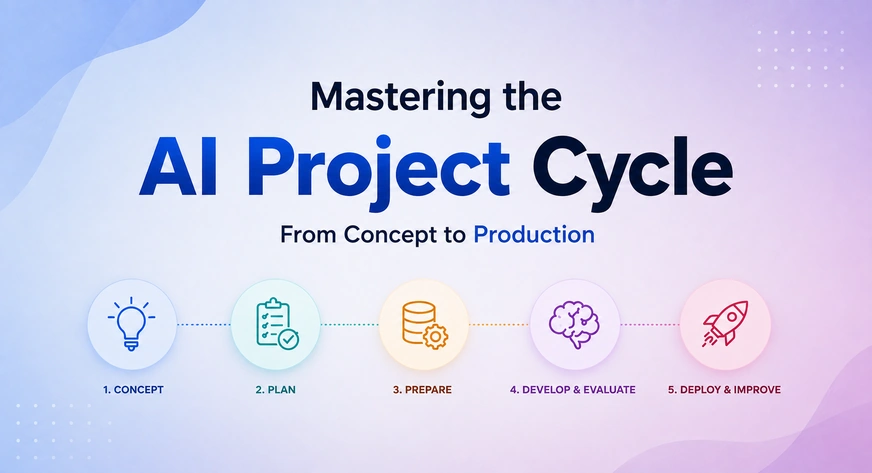
From Problem to Production: Navigating the AI Project Lifecycle
Picking a model and feeding it data is only the beginning. Real AI projects demand a structured path, one that starts with the right problem and carries through to deployment, monitoring, and refinement. That journey is the AI Project Cycle, and this piece breaks it down clearly. We appreciate how it frames the process as an accessible roadmap rather than a maze. If you are ready to go deeper, our guide to distributed algorithms offers a practical next step for those scaling their efforts.

Ford's $28,350 electric truck arrives fall 2027, design coming early next year
Ford just gave the electric truck market a jolt: its new Fathom model will start at $28,350, arriving in fall 2027. That's a striking price point, though Ford is staying coy, keeping Fathom's design under wraps until early next year. We appreciate the patience, but we're eager to see what they're building. This launch lands as other players like Tesla push their own electric trucking ambitions forward. For a deeper look at that competitive push, check out our piece on Tesla Semi's production ramp-up.
Exploring How Neural Nets Learn Go's Hidden Symmetries
KataGo's models aren't told to respect Go's rotational symmetry, yet they might learn to anyway. This study asks a sharp question: do superhuman networks internalize orientation-independent concepts, or do they quietly memorize each rotated view separately? The answer, it turns out, surprised the author. For anyone curious about what neural nets actually do under the hood, this is a gentle, honest look. It's also worth noting how much AI assisted the writeup. If you enjoy this, "Unlock LLM Training" offers a related practical angle.