consistency
consistency at Beyond Market Intelligence is a file of 9 stories. The newest of them: “Why a living design system beats a frozen component library”, “How Continuity Scales Git to 300 Pushes Per Second With S3”, and “Discover how KYAML brings clarity and confidence to Kubernetes configurations.”. Keeping a canonical component library alive used to be a smart investment. Cursor's Continuity architecture treats S3 as the source of truth, not a backup. Acme AI is the next-generation, AI-powered spreadsheet platform built to replace Excel and redefine how analysts, data scientists, and enterprise teams work… The list below is every consistency story on Beyond Market Intelligence, newest first.
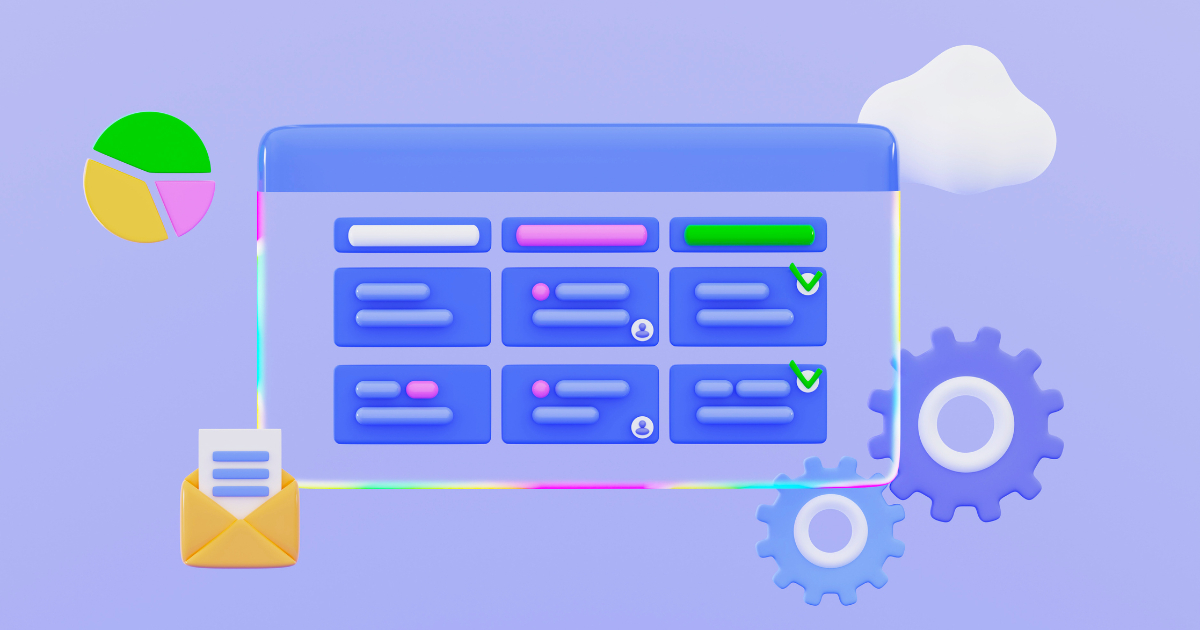
Why a living design system beats a frozen component library
Keeping a canonical component library alive used to be a smart investment. But regeneration has changed the economics of reuse. A model pointed at a solid design system can now produce most standard UI on demand. That makes a frozen library feel like a relic. Keep the design system, tokens, guidelines, and tests central, they buy you consistency. For a deeper look at how modern infrastructure scales, see "How Continuity Scales Git to 300 Pushes Per Second With S3."

How Continuity Scales Git to 300 Pushes Per Second With S3
Cursor's Continuity architecture treats S3 as the source of truth, not a backup. By demoting local NVMe drives to warm caches and separating replica coordination from consistency, the design achieves over 300 pushes per second with linear read scaling across 100 replicas. That's a practical rethinking of how Git storage should work at scale. For teams wrestling with repository bottlenecks, this approach is worth exploring, much like the compute challenges addressed in our piece on LLM post-training research.

Discover how KYAML brings clarity and confidence to Kubernetes configurations.
YAML's flexibility has long been a quiet source of frustration in Kubernetes, and KYAML offers a way forward that feels long overdue. By enforcing a stricter dialect, it trades guesswork for predictability, helping teams catch common errors before they become production headaches. That focus on clarity aligns with what we've explored in our broader coverage of AI-driven workflows, like unlocking practical tools for everyday work. For developers tired of chasing subtle indentation bugs, KYAML is a practical step toward more reliable configurations.

Discover how AI is reshaping brand visibility beyond clicks and rankings.
The old playbook for measuring brand visibility is quietly failing. Most teams still track rankings and traffic, but AI engines now assemble answers directly on the screen, bypassing your website entirely. That creates a zero-click world where your content isn't the destination, it's just one piece of evidence. Winning means becoming part of the answer itself. That requires consistent, structured, and original knowledge machines can trust. It's a harder standard, but it's also a more honest one.
Measure consistency over time with a smarter approach to standard deviation
Tracking consistency across a hobby group's results is a smart way to spot trends, but the formula struggle is real. Your approach with `INDEX` and `COUNTA` is close, yet the syntax needs a nudge. For Excel 2019, try `=STDEV.P(OFFSET([LA],COUNTA([LA])-3,0,3,1))` to target the last three entries dynamically. It's a cleaner path than stacking `INDEX` calls. This isn't about complexity; it's about precision. If you're exploring broader data skills, our piece on shifting AI/ML job expectations might resonate,

Cloudflare's Meerkat enables leaderless global coordination with strong consistency.
Cloudflare's new Meerkat service tackles a familiar pain point: coordinating writes across a global network without slowing down. Built on the QuePaxa consensus algorithm, it steps away from Raft's leader-based model, allowing leaderless writes while keeping strong consistency intact. That's a meaningful win for availability where every millisecond counts. For teams wrestling with distributed systems, Meerkat feels like a practical nudge forward. If you're exploring how these patterns apply elsewhere, our guide to distributed algorithms for LLM training offers a useful parallel.

Trust in AI agents is the real barrier to enterprise deployment
The gap between AI agent pilots and production isn't a capability problem; it's a reliability problem. Bryan Silverthorn, Amazon's Director of AGI Autonomy, made that case at VB Transform 2026, pointing to a framework that breaks reliability into consistency, robustness, predictability, and safety. His "intern" analogy is the right way to think about it. Agents need management, not just better benchmarks. For deeper context on navigating these adoption challenges, our related piece, "Unlock AI's Enterprise Potential," offers a broader lens.
Why enterprise AI agents stall at deployment, not capability
At VB Transform 2026, Bryan Silverthorn from Amazon made a pointed case: enterprise AI agents aren't failing because they're not smart enough. They're failing because they're not reliable enough. With 85% of companies piloting agents but only 5% shipping them, the gap is a measurement problem, not a model problem. His "intern" framework is a refreshingly human lens on managing autonomous systems. It's practical advice for escaping pilot purgatory. For more on scaling these workflows, see our piece on orchestrating AI agents with Google's AX.
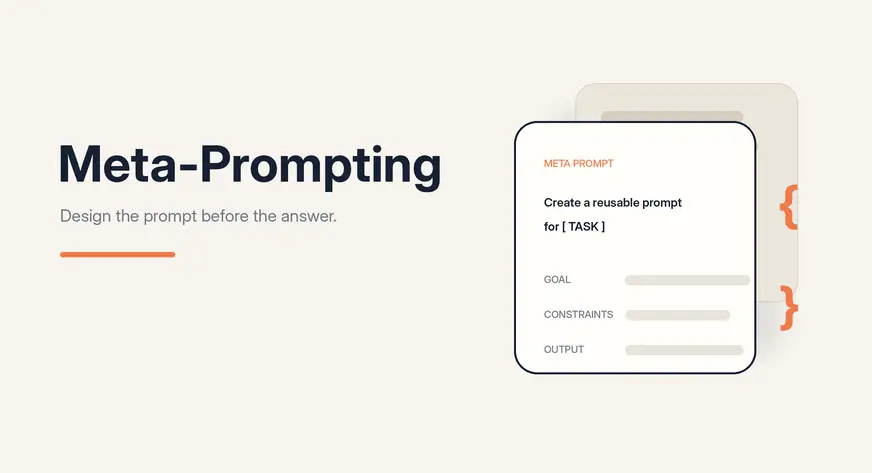
Design Smarter Prompts by Letting AI Build Its Own Workflow
Prompts are the quiet force behind every useful interaction with a large language model, yet they often fail when consistency matters most. Meta-prompting changes that by asking the model to build its own reusable prompt, template, or workflow before diving into the task. It's a smarter approach for teams that need the same output format again and again. If you're tired of vague results, this technique deserves your attention.