context engineering
Beyond Market Intelligence keeps context engineering in one place: 11 stories so far. The section currently leads with “How LinkedIn built context-aware AI agents for massive codebases”, “Master Context, Not Prompts, to Build Production-Grade AI Systems”, and “New context engineering guidelines to transform your data science workflow”. Ajay Prakash isn't just tinkering with AI agents; he's giving them a corporate memory. A well-crafted prompt is only the beginning. Acme AI is the next-generation, AI-powered spreadsheet platform built to replace Excel and redefine how analysts, data scientists, and enterprise teams work… The list below is every context engineering story on Beyond Market Intelligence, newest first.
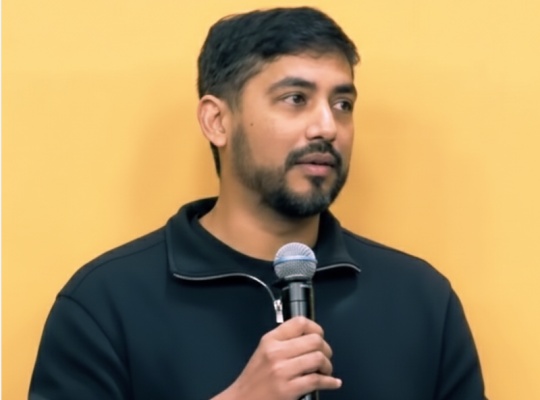
How LinkedIn built context-aware AI agents for massive codebases
Ajay Prakash isn't just tinkering with AI agents; he's giving them a corporate memory. At LinkedIn, he tackles a familiar pain point: large codebases that leave agents lost. His answer is Contextual Agent Playbooks and Tools, built on MCP, which feed agents procedural know-how and runbooks directly. The 20% productivity gain with zero reliability loss is a compelling argument for context done right. For more on enterprise AI adoption, check out our related piece on navigating ethical considerations.

Master Context, Not Prompts, to Build Production-Grade AI Systems
A well-crafted prompt is only the beginning. Ricardo Ferreira's session moves past that foundation to tackle the architectural realities of production AI. He focuses on practical strategies: using Redis to manage memory, summarization to handle token limits, and reranking to fight context rot. This is about controlling costs and latency without sacrificing performance. For a deeper look at how LLMs navigate structure, our related article on paragraph structure is worth exploring. This talk is a grounded, useful guide for building systems that actually hold up.
New context engineering guidelines to transform your data science workflow
Context engineering is no longer a behind-the-scenes concern for AI researchers; it is becoming a core skill for data scientists who want their models to act, not just generate. The latest guidelines push us past static prompts toward dynamic, structured reasoning. That shift is practical, not theoretical. We think it deserves your attention, especially if you are building workflows that need to scale.
From isolated context to shared knowledge: the next step for enterprise AI
Enterprise AI agents are only as reliable as the messiest documents behind them. Most teams treat knowledge as application-specific context, building separate pipelines for each assistant. That works for isolated copilots, but it fractures as agents multiply. Inconsistencies spread, changes propagate unevenly, and teams rebuild the same retrieval infrastructure repeatedly. These are knowledge management problems, not context engineering ones. The fix is architectural: manage knowledge once, as shared infrastructure, and publish reusable representations for every agent.

TrueForge gives developers more control over AI agents without the cost burden
TrueForge enters a crowded field with a straightforward pitch: more control, lower cost. TrueFoundry's open-source harness, released under the MIT License, reports task completion costs 30% to 75% below Anthropic's managed offering, depending on the model used. That's a concrete claim, and it's backed by a sensible design that trims context waste and treats sandboxes as optional tools. For enterprises tired of choosing between vendor lock-in and operational overhead, TrueForge offers a practical middle path.
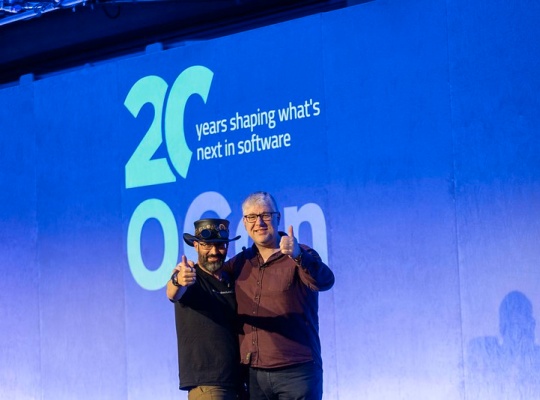
Smarter Prompts, Not Bigger Ones: Engineering Context That Works
Big context windows feel like the easy answer, but Baruch Sadogursky and Patrick Debois argue otherwise in their session, "The Right 300 Tokens Beat 100k Noisy Ones." They show why stuffed prompts drag coding agents down, then offer practical fixes like lazy-loaded skills and externalized memory banks. It is a grounded, useful take for engineering leaders wrestling with agentic workflows.
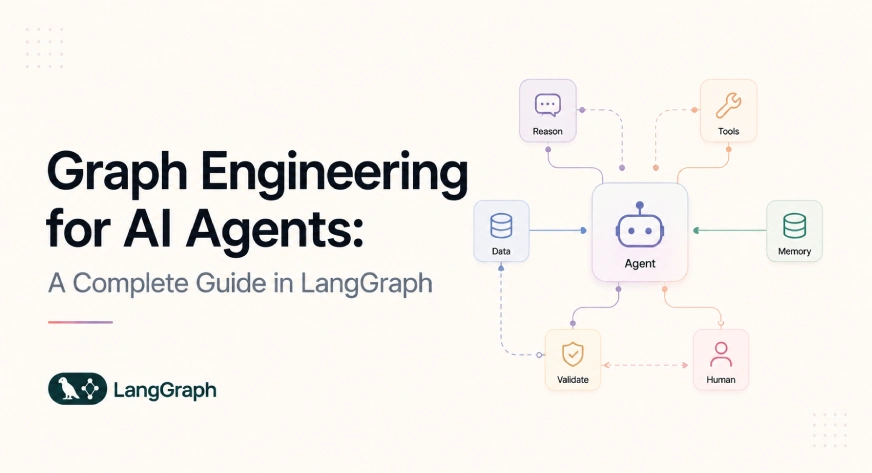
Design Your AI Workflows with Graph Engineering, Not Just Agent Loops
Single-agent loops are only part of the story. Graph engineering treats AI applications as explicitly designed workflows, where agents, tools, validators, and humans coordinate with intention. It's a shift from autonomous tinkering to deliberate architecture. That distinction matters. Moving beyond isolated prompts and toward systems that feel engineered, not improvised is a strong case. If you're curious how such coordination plays out in practice, our piece on talking to an AI clone offers a grounded counterpoint.

Move from Model Logic to Context Engineering for Faster Root Cause Analysis
The debate over root cause analysis is shifting. Engineers increasingly argue that modern LLMs can reason through the problem effectively, provided the context is prepared correctly. The real challenge, they say, lies in the pipelines that correlate telemetry. A Coroot experiment across eleven models offers early evidence for this claim. It is a pragmatic reframing of where the work actually happens. For those exploring how AI understands complex systems, this pairs well with our earlier piece on questioning AI's limitations.

Before retrieval begins, a small loop refines your question
The small loop runs before retrieval, and that sequencing is the insight. Read the doc, ask what is missing, re-parse. It is a tight, deliberate cycle that treats question parsing as its own engineering problem, not a footnote to context building. We appreciate the restraint here. This is prompt engineering, then context engineering, then loop engineering, each step earning its place. For readers tracking how LLMs navigate structure, our related piece on paragraph structure in token space pairs well with this disciplined approach.

When the Loop Has No Brain, the Architecture Speaks for Itself
Most discussions of loop engineering assume an LLM sits at the center of the loop. This experiment challenges that by removing the model entirely, using a deterministic, zero-dependency Python benchmark to isolate the architecture itself. The author tested whether a goal-directed controller could isolate failures better than a linear pipeline, validating it across 300 random seeds. The results are narrow but compelling: failure isolation is a measurable property of control flow, independent of reasoning.

Turn One Messy Question Into Four Clear Signals for Smarter RAG
A single messy question string hides a lot of structure. This piece breaks down how question parsing turns that raw input into four typed fields, each one feeding a distinct downstream call for retrieval and generation. It is a practical, grounded look at making RAG systems less brittle and more intentional. If you are still wrestling with vague prompts, this is worth your time. For more on how LLMs navigate structure, explore our related piece on paragraph structure.