control plane
14 stories filed under control plane on Beyond Market Intelligence. The newest of them: “Scaling AI Agents From Prototype to Production on Kubernetes”, “Grant Your LLM Safe Autonomy in 9 Practical Steps”, and “Orchestrate AI Agents: Google Open-Sources AX for Enhanced Efficiency”. Transitioning AI agents from a local FastAPI prototype to a production-grade system on Kubernetes is a challenge many teams are now facing. Giving an LLM permission to act sounds like a leap of faith. Acme AI is the next-generation, AI-powered spreadsheet platform built to replace Excel and redefine how analysts, data scientists, and enterprise teams work… The list below is every control plane story on Beyond Market Intelligence, newest first.
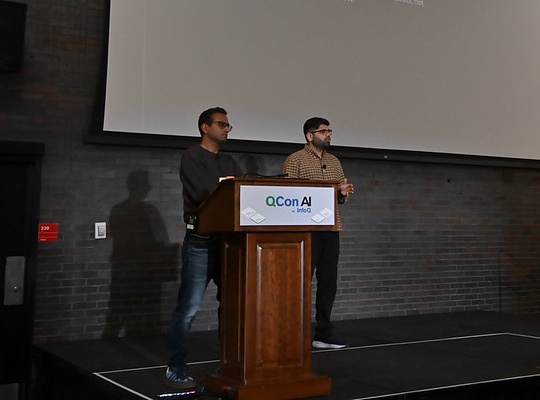
Scaling AI Agents From Prototype to Production on Kubernetes
Transitioning AI agents from a local FastAPI prototype to a production-grade system on Kubernetes is a challenge many teams are now facing. Deepak Mohanakumar Chandramouli and Bhumik Vinodkumar Thakkar share practical insights on RayCluster topology, stateful memory, and auto-scaling under dynamic traffic. They also cover guardrails, multi-region setups, and LLM-as-a-judge evaluation pipelines. For more on scaling reliable infrastructure, see our coverage of ARC's latest upgrades for self-hosted runners.

Grant Your LLM Safe Autonomy in 9 Practical Steps
Giving an LLM permission to act sounds like a leap of faith. This guide doesn't ask you to take that leap blindly, it breaks the process into nine practical steps. The author builds a control plane for AI agents, walking through how to grant safe autonomy without losing oversight. It's the kind of grounded, actionable thinking that makes complex systems feel manageable.

Orchestrate AI Agents: Google Open-Sources AX for Enhanced Efficiency
Google has open-sourced AX, an orchestrator designed to keep autonomous AI agents from idling away resources. By treating agents as stateful actors on its Agent Substrate runtime, AX suspends tasks during downtime and resumes them on demand, trimming latency without sacrificing performance. The control plane's Kubernetes-style primitives make managing agent workloads feel familiar, not foreign. It's a practical step toward efficient, scalable AI operations.

From Configuration to Control Governing AI Infrastructure Safely
As coding agents take over the writing of infrastructure, HashiCorp argues the real challenge has shifted to verification and safe execution. HCP Terraform is stepping into that role, offering governance for AI-driven workflows. It is a smart move, acknowledging that generating configuration is no longer the bottleneck. The focus now is on control. For those exploring how AI agents handle tasks, our guide, "Unlock ChatGPT for Work," offers a practical starting point.

Gateways can't fix what identity layers don't yet secure.
Start with the agents you can actually name. If you cannot identify which agent is acting, who delegated the work, and what credentials are in play, no gateway will save you. Enforcement feels like progress, but it is the fifth control, not the first. Build the dependency chain in order: inventory, identity, scoped credentials, telemetry, then enforcement. Skip ahead and you will burn your first hour of incident response just figuring out what should have been obvious.

A defense-in-depth architecture for autonomous AI agents
Autonomous agents that can reason and act on their own introduce a category of risk that application-level controls were never built to contain. Treating that risk as a single problem produces incomplete architectures, says Oscar Wahlberg, senior director of product management at Nutanix. The guardrails catching a malicious prompt won't stop a hallucinating agent from deleting databases or leaking sensitive data. A defense-in-depth architecture spanning infrastructure, network, and control plane layers is what actually scales into production.

Azure API Management shifts control plane from APIs to AI models and tools
Microsoft's dedicated AI Gateway tier for Azure API Management is a thoughtful step forward, shifting the control plane from APIs to models, MCP servers, and tools. It's a consolidation that architects have long needed, especially with Foundry, Bedrock, Vertex AI, and OpenAI behind one endpoint. Policy cards replacing XML feels right. Still, the governance boundary invites scrutiny. Where does oversight truly begin and end? That question matters as much as the convenience.

Rethinking AI agents on Kubernetes as efficient worker pods
Most teams assume each AI agent deserves its own Pod, but kagent challenges that instinct. Agents are bursty, short-lived, and often wait on human approval, making one Pod per agent a wasteful use of cluster resources. Instead, agent-substrate introduces a control plane that schedules logical Actors onto long-lived worker Pods. It's a smarter deployment unit, one that matches how agents actually behave. For more on scaling concurrent workloads, our piece on Modal's sandbox rebuild pairs well with this perspective.

Cloudflare's Meerkat enables leaderless global coordination with strong consistency.
Cloudflare's new Meerkat service tackles a familiar pain point: coordinating writes across a global network without slowing down. Built on the QuePaxa consensus algorithm, it steps away from Raft's leader-based model, allowing leaderless writes while keeping strong consistency intact. That's a meaningful win for availability where every millisecond counts. For teams wrestling with distributed systems, Meerkat feels like a practical nudge forward. If you're exploring how these patterns apply elsewhere, our guide to distributed algorithms for LLM training offers a useful parallel.
How AI Gateways Keep Agentic Systems Stable Without Rewriting Your Platform
Traditional API gateways were built for deterministic services and simple schemas. Agentic AI breaks those assumptions. That's why enterprise engineering leaders are turning to AI Gateways as an evolutionary architecture seam. By centralizing guardrails, model routing, agent identity, action policy, and semantic audit into one control plane, teams prevent costly incidents without destabilizing core platforms. It's a practical, human-centered response to AI's pace of change.

Roll back Kubernetes upgrades with a seven-day safety net
Upgrading a Kubernetes cluster should feel like progress, not a gamble. Amazon EKS now lets you roll back the control plane to its previous version within seven days of an upgrade, giving teams a practical safety net when issues surface. That window turns a risky leap into a manageable step. It's a straightforward acknowledgment that even well-tested updates can go sideways. For practitioners tired of crossing their fingers during upgrades, this is a welcome layer of control.

Many enterprise agents are chatbots, not the orchestrated future you need.
Enterprise AI has a deployment problem, not a platform problem. Across 101 enterprises, most "agents" are still chatbot wrappers, 71% admit a quarter or fewer handle true multi-step work. The ambition is real: hybrid control planes dominate by 2026, and lock-in fears drive the architecture. But the gap between strategy and shipped reality is the story. Explore how model gravity shapes platform choice, yet leaves the hardest work, reliable execution and fiscal control, still waiting for the build-out.

Enterprise agents promise more than most are delivering today
The gap between ambition and reality defines enterprise agent orchestration today. Most "agents" are single-prompt chatbot wrappers, not multi-step workflows. Success requires reliability, yet the orchestration layer runs ahead of the portfolio it should manage. The path forward is clear: consolidate, build hybrid control, and treat token spend as an engineering problem. The ambition is real, now execution must catch up.

Centralize your AI tools: AWS and Anthropic launch a self-hosted control plane.
AWS and Anthropic have shipped the Claude apps gateway for AWS, a self-hosted control plane that puts identity, policy, telemetry, and spend caps in one stateless container. It routes inference to Amazon Bedrock or Claude Platform on AWS. That's a practical answer for teams juggling Claude Code and Claude Desktop across their org. Centralizing control without forcing a cloud detour feels like the right next step.