control systems
Beyond Market Intelligence keeps control systems in one place: 7 stories so far. The section currently leads with “Empower Robotics Development with Feather’s Customizable Platform”, “CERN Chooses Debian for Accelerator Controls Over Red Hat's Restrictive Mandates”, and “Transfer learning for physics with simplified dynamical models”. A $30,000 platform might sound like a serious commitment, but for software developers tired of rigid robotics tools, it's a practical bet. CERN's engineers aren't clinging to legacy for nostalgia; they're making a calculated stand. Acme AI is the next-generation, AI-powered spreadsheet platform built to replace Excel and redefine how analysts, data scientists, and enterprise teams work… The list below is every control systems story on Beyond Market Intelligence, newest first.

Empower Robotics Development with Feather’s Customizable Platform
A $30,000 platform might sound like a serious commitment, but for software developers tired of rigid robotics tools, it's a practical bet. Feather is building something customizable, not a locked-down box. That focus on flexibility matters. It gives teams room to iterate, test, and adapt without fighting the hardware. If you're exploring how far accessible AI can push real-world systems, our piece on real-world computer vision deployments pairs well with this mindset.
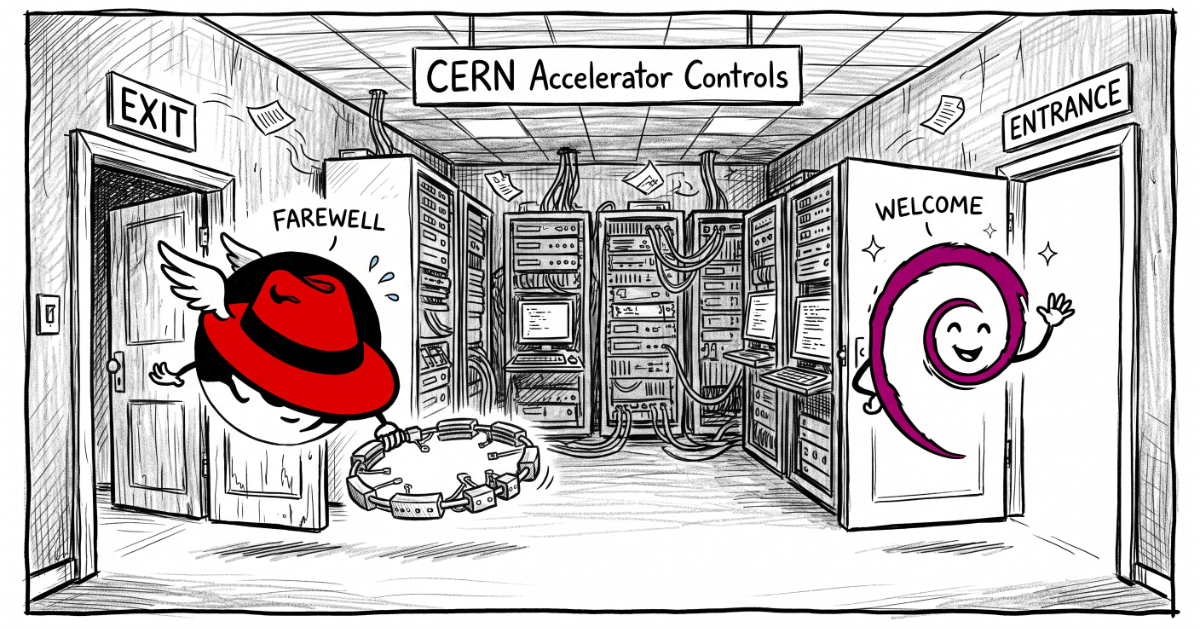
CERN Chooses Debian for Accelerator Controls Over Red Hat's Restrictive Mandates
CERN's engineers aren't clinging to legacy for nostalgia; they're making a calculated stand. By moving 2,200 specialized control machines from Red Hat to Debian, they're prioritizing hardware longevity over vendor mandates. Red Hat's tightening compiler rules forced the issue, and CERN responded with a pragmatic pivot. It's a quiet but telling vote for flexibility, and the late 2026 deadline shows careful planning. For more on how infrastructure decisions ripple outward, our piece on bridging retrieval and action in AI tasks offers a fitting parallel.

Transfer learning for physics with simplified dynamical models
Training an RL agent on one complex physical system rarely transfers cleanly to another. That is the bottleneck this approach tackles directly, using reduced order models to compress the dynamics into something the agent can actually reuse. It is a smart, practical step toward generalizable simulation control. If you are already wrestling with how to scale your own models, our guide to distributed training algorithms pairs well with this mindset. The takeaway: smarter abstractions, not brute force, are the way forward.

Waymo makes its case for sensor diversity over pure AI autonomy
Waymo is making its case loudly: full autonomy can't be achieved with a single approach. By arguing that a mix of sensors is essential, Waymo directly challenges the idea that pure end-to-end AI systems are safe enough for public roads. It's a confident stance, especially with Tesla's Cybercab on the horizon. We see this as a necessary push for accountability in a moment when hype often outpaces proof.

How AI taught itself to reduce misaligned behaviors across ten tests
Ten benchmarks. Ten wins. An Anthropic researcher just walked us through self-improving AI that fixed every targeted misaligned behavior without sacrificing overall performance. That is not incremental tinkering; that is the kind of progress worth paying attention to. It suggests we can build systems that actively refine their own judgment, not just follow static rules. For anyone tired of brittle tools, this is a signal to explore where the field is heading.

Why Smarter Agent Networks Use Fewer Connections
More connections don't automatically mean better outcomes. In a controlled experiment across 50 runs, recovery held steady even as relationship density climbed from 20% to 100%. What shifted was behavioral: the share of edges actually used dropped sharply. That gap between configured and used connectivity is where the real insight lives. It's not about building denser graphs; it's about designing for the connections that matter.

Enigma's $71M seed round aims to make robot control as intuitive as volume
Enigma's $71M raise signals something practical: making robot control feel as intuitive as turning a dial. Led by Index Ventures and Ribbit Capital, with Sarah Guo's Conviction Partners joining, this seed round backs a simpler interaction model. We're encouraged by the focus on accessibility over flashy claims. It aligns with our own explorations, like the piece on questioning AI clones, where ease of use meets ethical nuance. For those tracking how humans interface with intelligent systems, this is a step worth watching closely.