correlation
correlation at Beyond Market Intelligence is a file of 7 stories. The newest of them: “Uber's dependency analysis moves beyond sampled tracing to classify failure types”, “LLMs prove strategic reasoning on Go, with room to grow.”, and “Atlassian Correlates Metrics, Logs, and Traces to Automate Root Cause Analysis”. Uber's dependency analysis moves beyond the limits of sampled tracing, which can miss rare failures across a sprawling service mesh. GoBench puts large language models to a properly hard test: 9x9 Go against a ladder of KataGo opponents, from random to superhuman. Acme AI is the next-generation, AI-powered spreadsheet platform built to replace Excel and redefine how analysts, data scientists, and enterprise teams work… The list below is every correlation story on Beyond Market Intelligence, newest first.
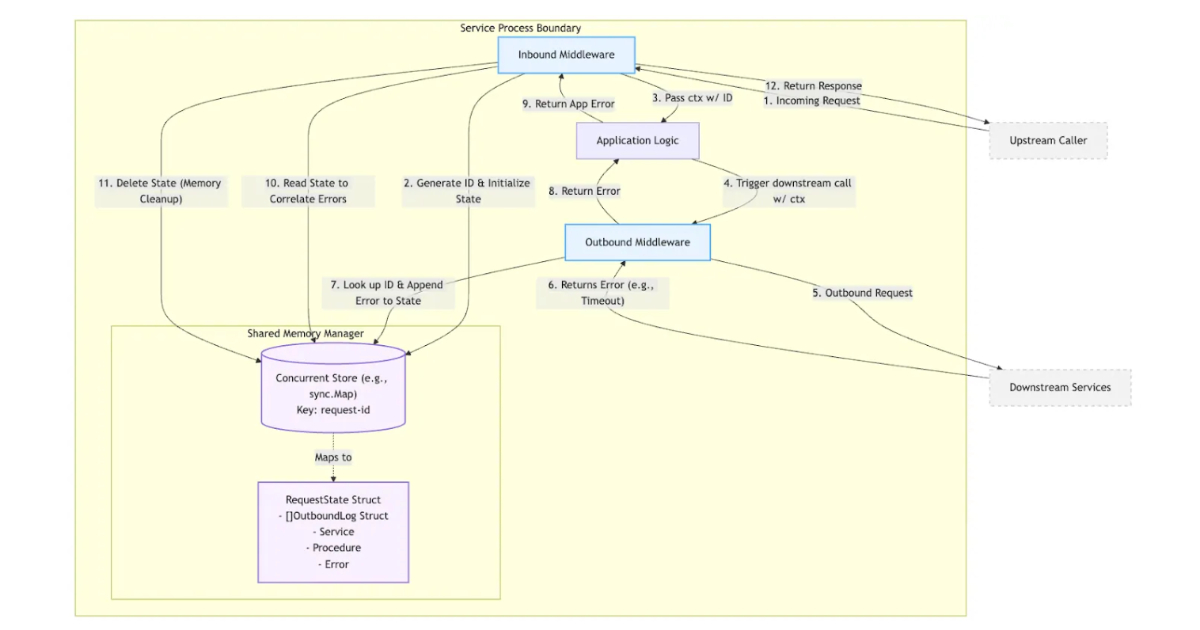
Uber's dependency analysis moves beyond sampled tracing to classify failure types
Uber's dependency analysis moves beyond the limits of sampled tracing, which can miss rare failures across a sprawling service mesh. By using RPC middleware and production metrics, the system classifies dependencies as fail-close, fail-open, or unknown. This approach is a practical step forward for engineers tired of guessing which downstream service caused an outage. For more on how platforms manage complex infrastructure, see our coverage of Grafana Tempo 3.1, which empowers operators to redact traces with simple queries.

LLMs prove strategic reasoning on Go, with room to grow.
GoBench puts large language models to a properly hard test: 9x9 Go against a ladder of KataGo opponents, from random to superhuman. The results are telling. GPT-6 Astra max lands at 2500 Elo, while the best KataGo sits at 4400, and even with coding tools and two hours of prep, Codex with Astra reaches only 3560. That gap matters. The benchmark's strong correlation with ARC-AGI 2 (r=0.83) suggests it is measuring genuine reasoning, not memorization. It is a refreshingly unsaturated evaluation.

Atlassian Correlates Metrics, Logs, and Traces to Automate Root Cause Analysis
Atlassian is tackling one of the messiest parts of cloud operations: figuring out why things break. Their new approach correlates metrics, logs, traces, and service topology to rank hypotheses about where failures start and how they spread. That is a practical step beyond chasing alerts blind. It feels like the kind of automation that lets teams focus on fixing rather than guessing. For more on how AI handles complex tasks, our guide, "Unlock ChatGPT for Work," offers a useful starting point.

How AI helps incident response teams see more and decide better
When Alex Palcuie, an Anthropic reliability engineer, walks you through using LLMs for incident response, he's not selling magic. He's sharing where AI genuinely acts as a superhuman observer for logs and traces, while admitting it still trips over causation versus correlation. That honesty is refreshing. For engineering leaders, the real challenge isn't adopting AI; it's weaving it into on-call work without dulling human judgment.
Explore how AI uncovers exactly where world models break down.
World-model evaluation has a blind spot, and it's not where you'd expect. When a "predict nothing changes" baseline scores 0.983 SSIM on real robot video, and the error stays flat across six steps, the metric isn't lying; the setup is. The usable ranking window sits between 8 and 24 steps on DROID footage, bookended by ties. That's a measurement worth stealing for your own data.

Why Prediction Alone Fails to Uncover True Causal Effects
A model that predicts an outcome with high accuracy can still mislead you on treatment effects. That is the uncomfortable truth this piece tackles. The issue is variable selection: predictive models chase correlation, not causation, so they often drop confounders that matter for estimating impact. Bayesian Adjustment for Confounding offers a more principled path forward. It is a technical fix, but the lesson is practical. If your data strategy is off, even the smartest model will lead you astray.

Seeing Through the Noise: How Geometry Explains Unstable Regression Coefficients
If your regression coefficients keep shifting or ballooning, multicollinearity is likely the culprit, and geometry explains why. When predictor variables move together, their overlapping dimensions confuse the model, making individual effects unstable. It's not about bad data; it's about hidden relationships inflating uncertainty. Understanding this spatial dynamic turns a frustrating puzzle into a manageable one. For those eager to explore how mathematical structures shape practical tools, our piece on the Forrester function offers a natural next step.