data engineering
Beyond Market Intelligence keeps data engineering in one place: 15 stories so far. The section currently leads with “Explore DuckDB's direct access to Hugging Face datasets, no downloads needed”, “Four Workloads, Three Layouts: A Practical Guide to Lakehouse Data Decisions”, and “File Compaction's Real Impact on Query Speed, Tested Across Three SQL Workloads”. DuckDB now reads Hugging Face datasets directly, no downloads, no local storage juggling. Physical data layout is one of the most consequential decisions in lakehouse engineering, and Kushal Kumar Vishwakarma's comparison of Liquid Clustering, ZOrdering, and partitioning across four workload types reveals… Acme AI is the next-generation, AI-powered spreadsheet platform built to replace Excel and redefine how analysts, data scientists, and enterprise teams work… The list below is every data engineering story on Beyond Market Intelligence, newest first.

Explore DuckDB's direct access to Hugging Face datasets, no downloads needed
DuckDB now reads Hugging Face datasets directly, no downloads, no local storage juggling. That's a meaningful step toward removing friction from data workflows. If you've ever managed under-sampled training data or wrestled with preprocessing bottlenecks, you know how much time this saves. Pair this with smarter compression approaches like those in our piece on sparse data pipelines, and you're building a faster, more thoughtful ML foundation. Explore it, and see how direct access changes your process.

Four Workloads, Three Layouts: A Practical Guide to Lakehouse Data Decisions
Physical data layout is one of the most consequential decisions in lakehouse engineering, and Kushal Kumar Vishwakarma's comparison of Liquid Clustering, ZOrdering, and partitioning across four workload types reveals two undocumented failure modes likely affecting production systems today. This is the kind of practical guidance that transforms how teams approach Delta Lake. For deeper context on how AI is reshaping data workflows, see our coverage of Context Language Models from Meta, MIT, and UW.

File Compaction's Real Impact on Query Speed, Tested Across Three SQL Workloads
Compacting 1,000 Apache Iceberg files into just six sounds drastic, but this benchmark shows why fewer, larger files can dramatically accelerate query speed. Testing across three SQL workloads, the results are clear: file count matters more than most users realize. We appreciate how this experiment grounds the advice in real performance data rather than theory. It's a practical reminder that storage hygiene directly shapes analytics speed.

Building a resilient data science career in an AI-native world
Data science careers are being reshaped by the very tools they helped create. If you are entering this field now, the old playbook of static skills won't cut it. The key is to focus on how you adapt, not just what you already know. For those feeling the pressure to keep up, our piece on navigating AI/ML job requirements offers a practical look at how the expectations are shifting. This is about building a resilient skill set for the long haul.
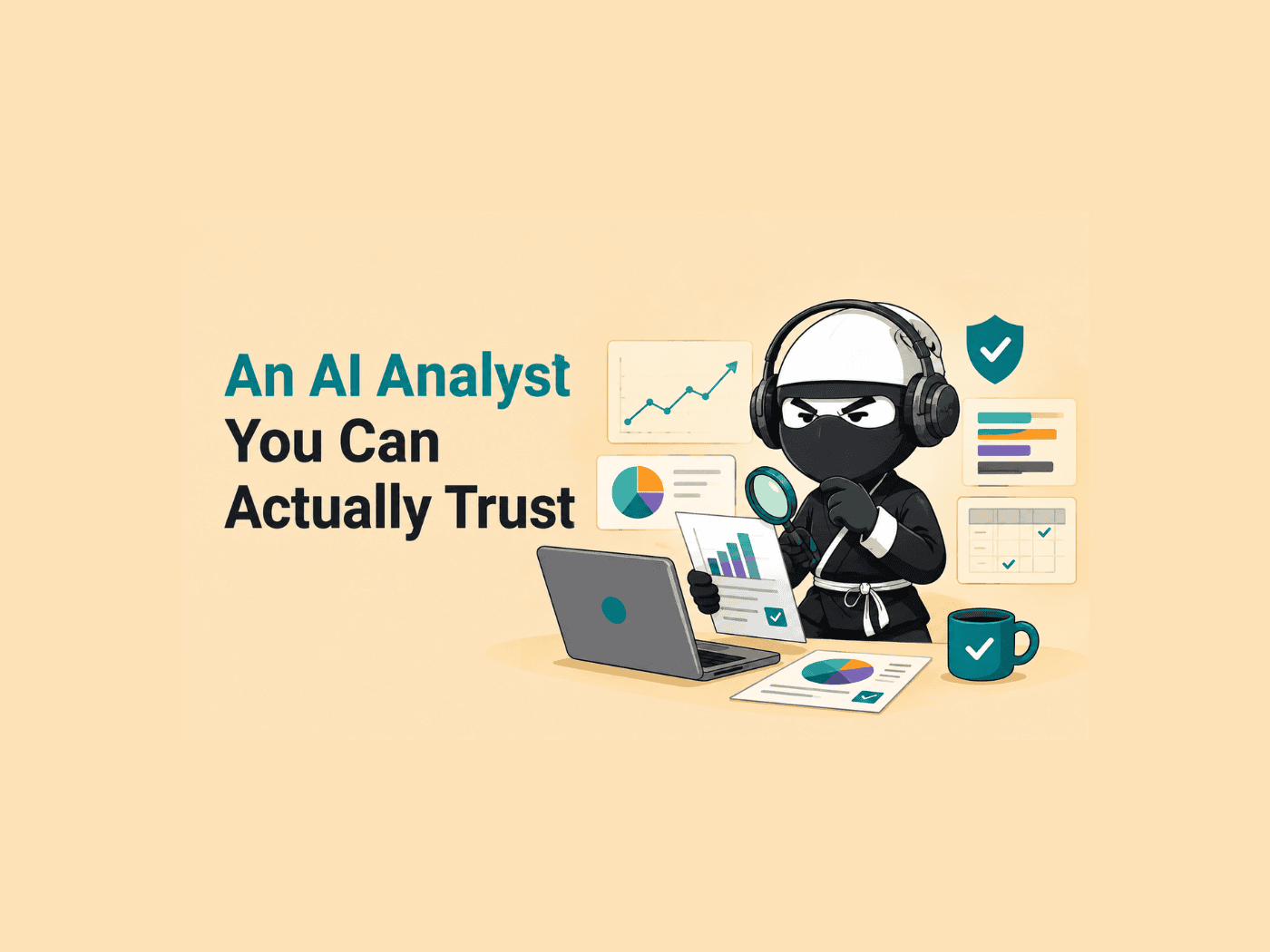
Build an AI pipeline that verifies every number before it answers
A spreadsheet that confidently gives you a wrong number is just a rumor with a toolbar. That's why we built a six-stage pipeline for an AI data analyst that thinks like a senior analyst: it checks its numbers before calling anything an answer. It's a disciplined approach to verification, not hype. If you're tired of tools that guess, explore this. For a related primer on the underlying mechanics, our guide to distributed algorithms is a solid starting point.

Build smarter data models with SQL transformations you can test and trust
Struggling to keep SQL transformations in sync across your team? That's exactly where dbt steps in. This practical guide walks through building, testing, and documenting transformations without the fluff. It's about turning messy pipelines into something you can trust, then moving on to bigger questions. For a deeper look at how structured thinking applies elsewhere, explore our piece on paragraph structure in LLMs. Start here, and make your data workflow feel genuinely manageable.

From a Million Files to One Clean Table: Structured Extraction for Real Queries
Two people, one hour, six to ten fields. That is the entire setup for turning a single document type into a million structured rows, and the two signals that define a real column are the ones that keep a filter from breaking later. It is a focused, practical read. If you want to see how paragraph structure guides an LLM through token space, our related piece on that topic pairs well here.
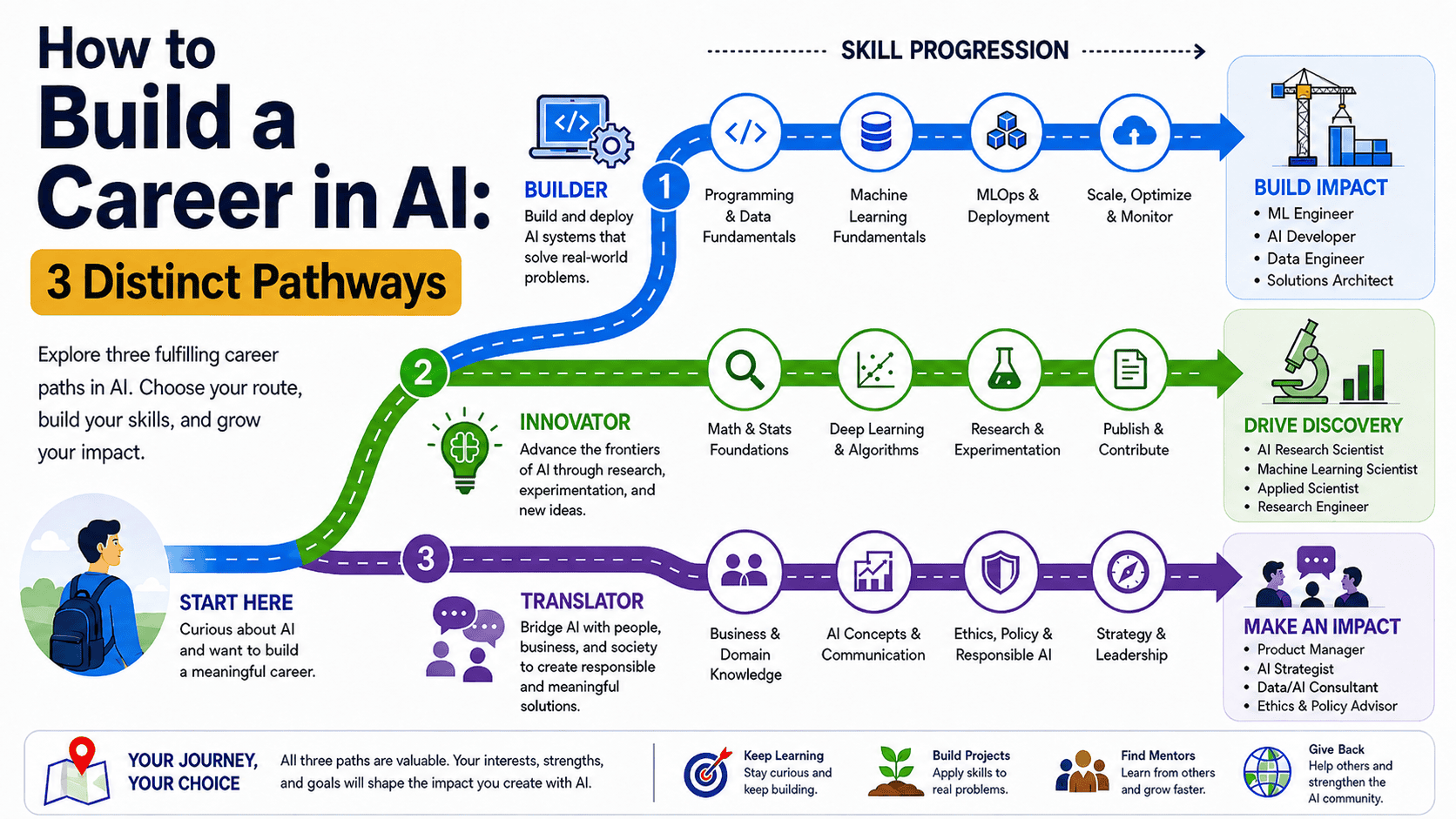
Three paths to align your skills with an AI-driven future
Three orientations. Three different skill maps. That's the honest starting point for anyone eyeing a career in AI, and it's exactly what this guide lays out. You don't need to fit a single mold; you need to match your current standing to the right path. It's practical, grounded advice that respects where you are. If you're still questioning what AI can truly do, our piece on talking to an AI clone offers a useful counterpoint. Explore the pathways, and find the one that fits.

Choosing the Right Python Tool for Your Data Workflow
Not all Python data libraries are created equal, and the choice between Polars and Pandas often comes down to what you're actually building. For AI developers, the question isn't just about speed; it's about matching the tool to the task. Pandas offers familiarity and a mature ecosystem, while Polars brings performance gains that can matter at scale. We think the answer isn't a simple switch, but a careful evaluation of your workflow.

Your data pipeline isn't complete until analysis is effortless.
Loading data feels like crossing the finish line. You've built the pipeline, the tables are populated, and the job is done. Then you start building your first dbt models and realize the real work begins. Making data genuinely analysis-ready is where the journey starts. It's an honest look at moving from delivery to discovery, and it pairs well with our piece on catching AI slop before it skews your model.

Explore how medallion architecture simplifies your data pipeline with Python and DuckDB
Most teams hit the same wall: raw data lands in one place, and chaos follows. The Medallion Architecture cuts through that with a clear Bronze, Silver, and Gold path, turning mess into structure. This guide pairs that framework with a working Python and DuckDB example, so you can see it run, not just read about it. For more on how LLMs navigate token space, check out our piece on paragraph structure.
Build a smarter analytics team by choosing tools that grow with your needs
You're running a one-person analytics operation, and you're asking the right question: not "what's new," but "what's next." Moving from SQL and Snowflake toward a team-ready stack means shifting from writing queries to building systems. Focus on version control, orchestration tools, and cloud-native data engineering. That's where automation lives. Pair it with a solid understanding of MLOps practices. It's less about chasing every package and more about creating reliable pipelines.

Why AI pipelines stumble and how DataFlow-Harness restores their power
AI coding agents write clean one-off scripts, but hand them a full data pipeline and the output often falls apart. That gap between free-form code and production-ready workflows is real, and researchers are finally attacking it. DataFlow-Harness, an open-source framework from Peking University and collaborators, steers LLMs toward structured, visual pipeline graphs instead of disposable scripts. The results speak for themselves: a 93.3% pass rate, 72.5% lower API costs, and pipelines engineers can actually audit.

Your data pipeline is the real reason your AI is confidently wrong
The failure that doesn't look like a failure is the one that quietly undoes your AI system. You ship it, stakeholders sign off, and months later, the answers drift wrong, not because the model changed, but because the data behind it didn't move with the world. That's not a retrieval problem; it's a data engineering one. Correctness, freshness, consistency, lineage, these are the checks that matter, and most pipelines still monitor for completion, not truth. If you're chasing model swaps, you're solving the wrong puzzle.

Yelp streamlines AI model training with a unified, configuration-driven framework
Yelp's new Training Orchestrator replaces those scattered Spark scripts with a configuration-driven, DAG-based model. It's a smart move toward consistency, letting teams focus on what the data should do rather than wrestling with pipeline plumbing. We appreciate the shift from bespoke code to a unified framework. For a deeper look at how such distributed systems operate, our guide, "Unlock LLM Training: A Practical Guide to Distributed Algorithms," pairs well with this story. It's a practical step toward more accessible machine learning operations.