data integration
8 stories filed under data integration on Beyond Market Intelligence. The newest of them: “Explore DuckDB's direct access to Hugging Face datasets, no downloads needed”, “Maximize Your Power BI Pipeline Without Wasting Time on Dead Ends”, and “Unlock Data Insights: Building a Lakehouse with DuckDB and DuckLake”. DuckDB now reads Hugging Face datasets directly, no downloads, no local storage juggling. You're right to question whether Excel VBA opening a file is the most reliable path, it often creates more dead ends than solutions. Acme AI is the next-generation, AI-powered spreadsheet platform built to replace Excel and redefine how analysts, data scientists, and enterprise teams work… The list below is every data integration story on Beyond Market Intelligence, newest first.

Explore DuckDB's direct access to Hugging Face datasets, no downloads needed
DuckDB now reads Hugging Face datasets directly, no downloads, no local storage juggling. That's a meaningful step toward removing friction from data workflows. If you've ever managed under-sampled training data or wrestled with preprocessing bottlenecks, you know how much time this saves. Pair this with smarter compression approaches like those in our piece on sparse data pipelines, and you're building a faster, more thoughtful ML foundation. Explore it, and see how direct access changes your process.
Maximize Your Power BI Pipeline Without Wasting Time on Dead Ends
You're right to question whether Excel VBA opening a file is the most reliable path, it often creates more dead ends than solutions. Power BI Premium with Copilot gives you a cleaner option: schedule a direct refresh through the service, or use Power Automate to trigger a refresh when a new CSV lands in SharePoint. Skip the Excel middleman entirely. Your data pipeline should flow forward, not loop through fragile workarounds.

Unlock Data Insights: Building a Lakehouse with DuckDB and DuckLake
A single Parquet file on your laptop might not feel like a data lakehouse yet. But when you join that local data to cloud storage in the same query, the picture sharpens. DuckDB and DuckLake make this transition straightforward, not theoretical. It is a practical path from isolated files to a unified analytics layer. If you are tired of wrestling with complex infrastructure, this walkthrough feels like a breath of fresh air.

When Fuzzy Matching Fails, a Safer Architecture Emerges for Data Lakes
The matcher was supposed to finish what normalization started, but testing against real data proved otherwise: no version of it could be made safe. So the author set it aside, and what remains is a cleaner architecture built on that honest failure. It is a pragmatic take on entity key drift, favoring stability over cleverness. For readers wrestling with similar data lake challenges, this approach feels refreshingly grounded.
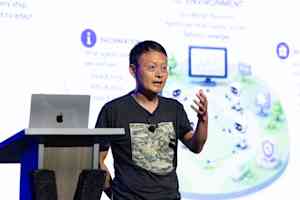
How 37,000 AI agents collaborate to transform drug discovery
The assumption that one engineer equals one AI agent is already outdated. At Stanford, James Zou's team has scaled past that model, building a virtual biotech where 37,000 specialized agents collaborate like a real company. The results speak for themselves: the system designed a drug that Merck later independently validated, earning FDA breakthrough status. For developers, the lesson isn't about building smarter single agents, it's about designing environments where thousands can work together. That's a shift worth exploring, especially as orchestration becomes the real bottleneck.
Explore How Legacy Systems Hide Simple Problems Behind Complex AI
The pattern is unmistakable: organizations hire for AI sophistication when their real need is data hygiene. The author sees it clearly, and they are right. It is not a talent gap. It is a readiness gap. Talented engineers are being pointed at problems that do not need agents or vector databases yet. They need clean pipelines and honest documentation. That is less glamorous work, but it is the work that matters. Before chasing the next framework, master the basics.

From Scattered Knowledge to an AI-Ready Company Brain
Building a context layer sounds straightforward until you try to move beyond a demo. This piece cuts through the hype to show what it actually takes to turn scattered company knowledge into something an LLM can reliably use. The polished demo is only about five percent of the real work. The rest is messy, unglamorous, and essential. If you are weighing whether your team is ready for this, it is a sobering and useful read.
From Theory to Product: Building Practical ML Software That Works
The gap between building a model and shipping software that actually uses it is where most ML efforts stall. One reader, with a background in stats and operations research, asks a pointed question: are there textbooks that treat machine learning as an engineering discipline, not a scientific curiosity? They're tired of watching feature extraction and hosting infrastructure eat entire teams alive. Fair frustration. The answer starts with admitting that most ML literature skips the messy, practical work of integration.