data management
13 stories filed under data management on Beyond Market Intelligence. The newest of them: “Perplexity Transforms Search with CobbleDB, Achieving 5x Faster Queries”, “Unlock Data Insights: Building a Lakehouse with DuckDB and DuckLake”, and “When Fuzzy Matching Fails, a Safer Architecture Emerges for Data Lakes”. Perplexity has quietly rebuilt its search backbone, moving from Amazon DynamoDB to CobbleDB, its own key-value store written in Rust. A single Parquet file on your laptop might not feel like a data lakehouse yet. Acme AI is the next-generation, AI-powered spreadsheet platform built to replace Excel and redefine how analysts, data scientists, and enterprise teams work… The list below is every data management story on Beyond Market Intelligence, newest first.

Perplexity Transforms Search with CobbleDB, Achieving 5x Faster Queries
Perplexity has quietly rebuilt its search backbone, moving from Amazon DynamoDB to CobbleDB, its own key-value store written in Rust. The result is a fivefold speed boost and lower costs on large document batches, all while handling serious production traffic. That is the kind of infrastructure bet most teams talk about but rarely pull off. For deeper looks at similar moves, Cloudflare's blog migration to EmDash shows how internal tools can reshape performance.

Unlock Data Insights: Building a Lakehouse with DuckDB and DuckLake
A single Parquet file on your laptop might not feel like a data lakehouse yet. But when you join that local data to cloud storage in the same query, the picture sharpens. DuckDB and DuckLake make this transition straightforward, not theoretical. It is a practical path from isolated files to a unified analytics layer. If you are tired of wrestling with complex infrastructure, this walkthrough feels like a breath of fresh air.

When Fuzzy Matching Fails, a Safer Architecture Emerges for Data Lakes
The matcher was supposed to finish what normalization started, but testing against real data proved otherwise: no version of it could be made safe. So the author set it aside, and what remains is a cleaner architecture built on that honest failure. It is a pragmatic take on entity key drift, favoring stability over cleverness. For readers wrestling with similar data lake challenges, this approach feels refreshingly grounded.
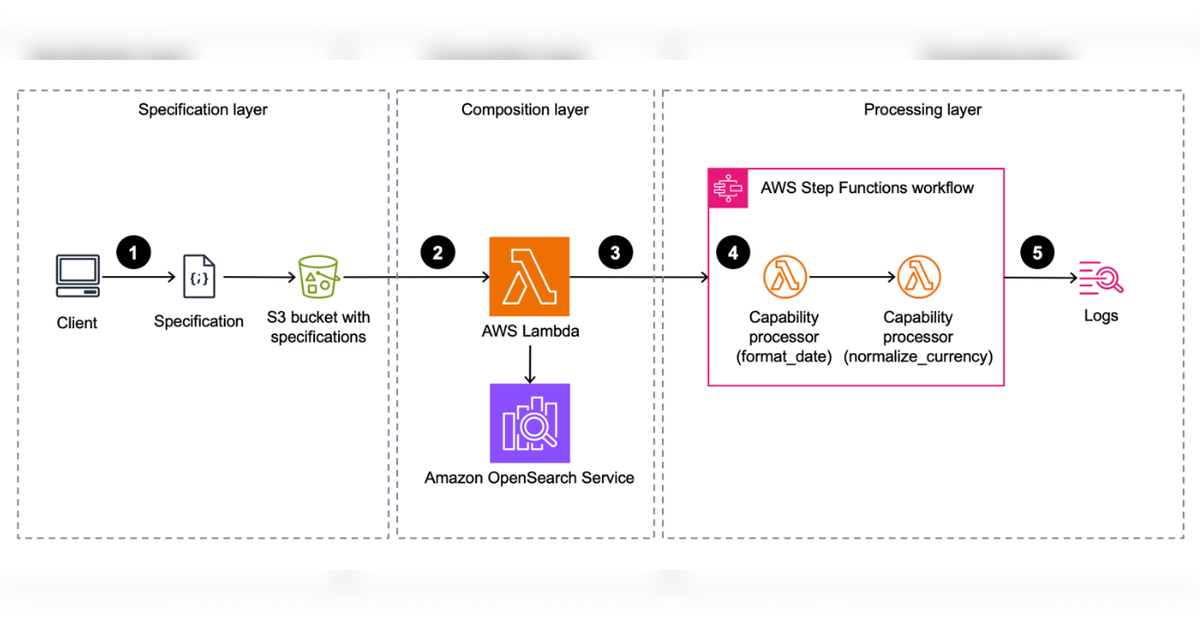
Declare Your Data Intent: Flexible Workflows Without the Bottleneck
Declarative specifications are the quiet workhorse behind flexible data workflows, and AWS is proving it. By separating intent from processing logic, this approach lets teams define what they need while reusing proven capabilities, with validation catching issues before execution runs. The payoff is tangible: dataset onboarding shrinks from weeks to days, without sacrificing traceability or governance. It is a practical, human-centered answer to a complex problem.

From Demo to Production: Structuring a Reliable Backend for Your AI Agent
Turning a demo LangGraph agent into something that can actually hold onto real booking data is where the practical work begins. Building a proper backend for that transition is a useful look at moving from proof-of-concept to something dependable. The focus stays on structure and persistence, not hype. For readers interested in how AI handles complexity at a deeper level, our piece on paragraph structure in LLMs offers a complementary perspective worth exploring.

Explore remote SQL execution with three concurrent DuckDB servers.
DuckDB is known for being fast, but what happens when you push it beyond a single machine? In this experiment, the team behind Quack ran SQL concurrently across three remote servers to see if the database could handle the pressure. The result is a practical look at distributed execution that feels both ambitious and grounded. It is not about hype; it is about what actually works. If you are exploring how AI-native tools handle real-world data challenges, this is a worthwhile stop.
Discover how linked tables keep your expense data in perfect sync
You've built a solid system: a parent table for expense types, linked child tables that filter rows through a dropdown. It's tidy, but adding a new expense means manually copying rows and formulas into each child table. That's the friction. The good news? This is exactly where an AI-native approach earns its keep. Instead of chasing updates, imagine the child tables syncing automatically, pulling new rows and their formulas the moment the parent grows.
Empower AI Agents: Building Trustworthy Data Foundations with Snowflake.
Many data teams added AI agents to their roadmaps this year, and the appeal is clear: an agent that compresses a two-day analysis into a two-minute conversation can genuinely reshape how analysts and business teams collaborate. But that promise hinges on trust. Point an agent at raw tables or stale data, and you get fast answers, not reliable ones. This piece explores how Snowflake's semantic governance builds the trustworthy foundation agents need.

Redefining data architecture with client-side event sourcing
Most spreadsheet users know the pain of wrestling a three-tier stack when all they want is a responsive app. Johannes Schickling's transition from Prisma to building Overtone shows a bolder path: client-side event sourcing with SQLite. He's not just tweaking the old model; he's questioning its core assumptions. The trade-offs between event sourcing and CRDTs are sharp, and his hands-on experience makes the abstract tangible. If you're exploring how local-first design can reshape your own workflows, this conversation is a practical starting point.

Untangle the Data Hairball with Autonomous Data Products for AI
Data doesn't scale by adding more pipelines. It scales by giving data a boundary. Jörg Schad makes that case with autonomous data products, which wrap pipelines, schemas, and metadata into self-contained units. The promise is a cleaner architecture for GenAI, one where governance isn't bolted on but built in. He also shows how protocol-driven discovery can reduce context rot, a real pain for AI reliability.
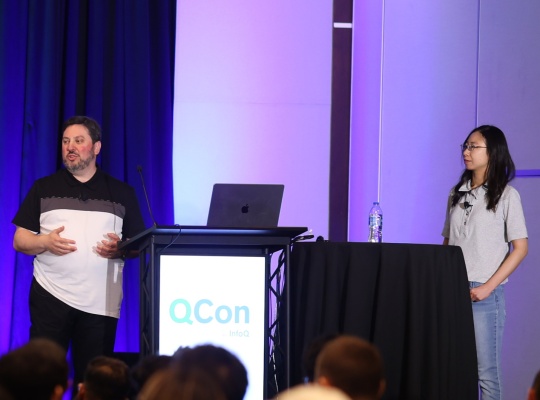
Durable workflows live in your database, not a separate orchestrator
External orchestrators promise flexibility, but they often add a fragile layer that undermines reliability. In this presentation, Jeremy Edberg and Qian Li make a compelling case for flipping the script: use your database as the engine for durable execution. Their approach with DBOS Transact, leveraging standard tables and SKIP LOCKED queues, is both elegantly simple and surprisingly robust. It's a smart, practical alternative for complex AI workflows that avoids the operational drag of separate systems.

Build Smarter Data Systems with AI Agents, Governance, and Practical Architecture
Most teams treat AI as an add-on, layering it over spreadsheets that were never built for it. A native architecture where data agents handle the heavy lifting, AI-powered QA keeps answers honest, and governance stays embedded from the start is argued for as something bolder. It's a practical blueprint, not theory. If you're questioning how much to trust these systems, our related piece on verifying AI's understanding offers a timely follow-up.

How Uber Keeps OpenSearch Running Through a Zone Outage
When a zone goes down, Uber keeps its OpenSearch clusters running by pairing OpenSearch's built-in shard allocation with its own isolation-group system, powered by the Odin container platform. That approach protects both query and ingestion, which is no small feat. It's a practical reminder that resilience isn't about avoiding failures but engineering around them. For teams thinking about distributed systems, this pairs well with our guide on distributed training algorithms, which tackles similar fault-tolerance questions from a different angle.