data quality
data quality at Beyond Market Intelligence is a file of 20 stories. The newest of them: “Find training-data partners who deliver at scale, not just on paper”, “When you shift marketing spend, does your MMM finally tell the truth?”, and “Clean Data Starts With Catching AI Slop Before It Skews Your Model”. Finding a partner who can deliver millions of annotated samples with consistent quality is harder than their website makes it look. A shift in marketing spend timing can expose an MMM's blind spots, because the model only learns from data that never held the right answers. Acme AI is the next-generation, AI-powered spreadsheet platform built to replace Excel and redefine how analysts, data scientists, and enterprise teams work… The list below is every data quality story on Beyond Market Intelligence, newest first.
Find training-data partners who deliver at scale, not just on paper
Finding a partner who can deliver millions of annotated samples with consistent quality is harder than their website makes it look. A flashy case study doesn't prove they can handle your volume. Before signing a large contract, a trial batch is essential, but you must also audit their sourcing and consent practices, vague answers here are a red flag. For deeper insight into why clean data matters, see our related article, "Clean Data Starts With Catching AI Slop Before It Skews Your Model."
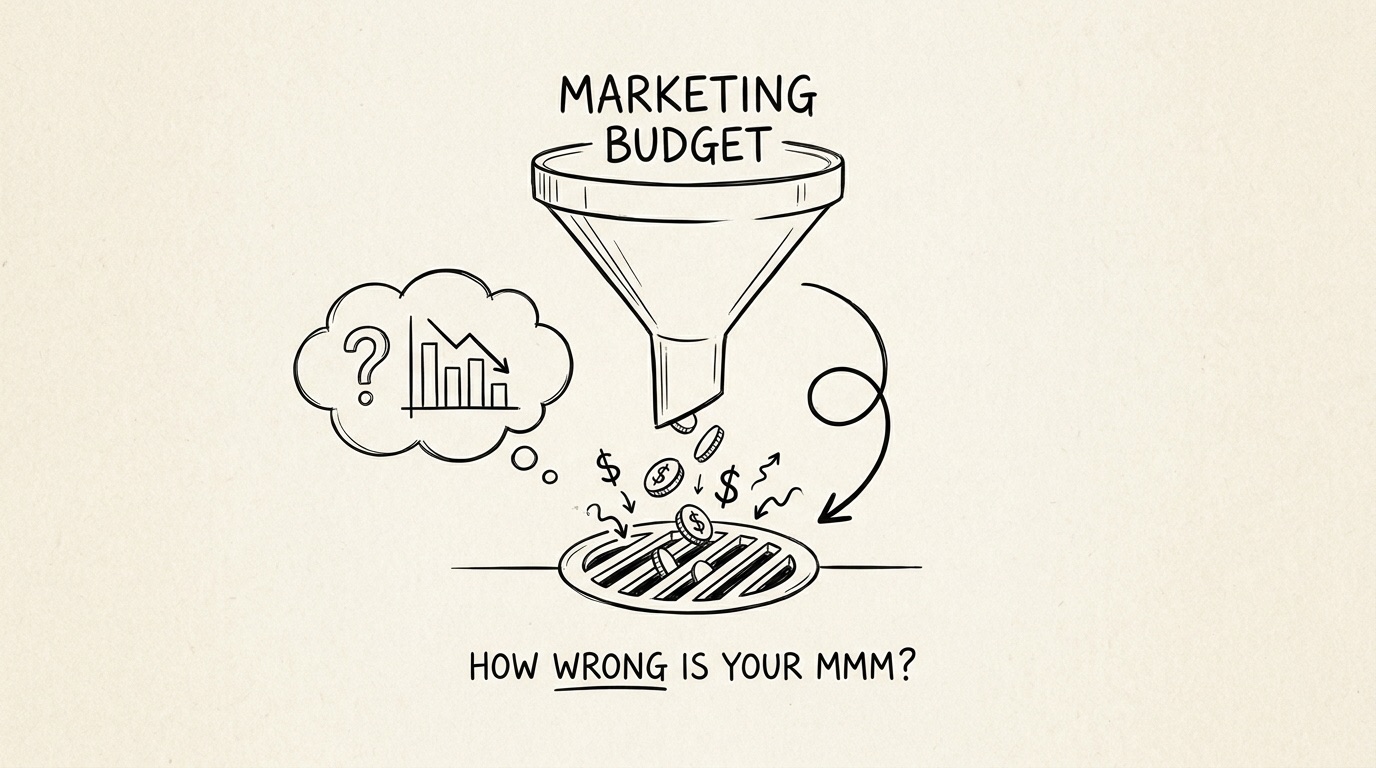
When you shift marketing spend, does your MMM finally tell the truth?
A shift in marketing spend timing can expose an MMM's blind spots, because the model only learns from data that never held the right answers. Testing when you spend, not just how much, reveals whether the model can finally tell the truth. It is a practical challenge to a tool many trust too easily. For deeper coverage on AI-driven analysis, see "Beyond the Search Box: Defining Real Research in AutoResearch."
Clean Data Starts With Catching AI Slop Before It Skews Your Model
Cleaning your training data isn't just about removing obvious junk. When my AI detectors flagged plenty of genuine reviews, filtering them out actually made the sentiment model less accurate. That's the trap: overcorrecting for AI slop can skew your results in the opposite direction. This piece tests three practical ways to spot that noise without tossing the signal. It's a useful, grounded look at a problem many teams will face soon. If you're building models on messy text, this is worth your time.
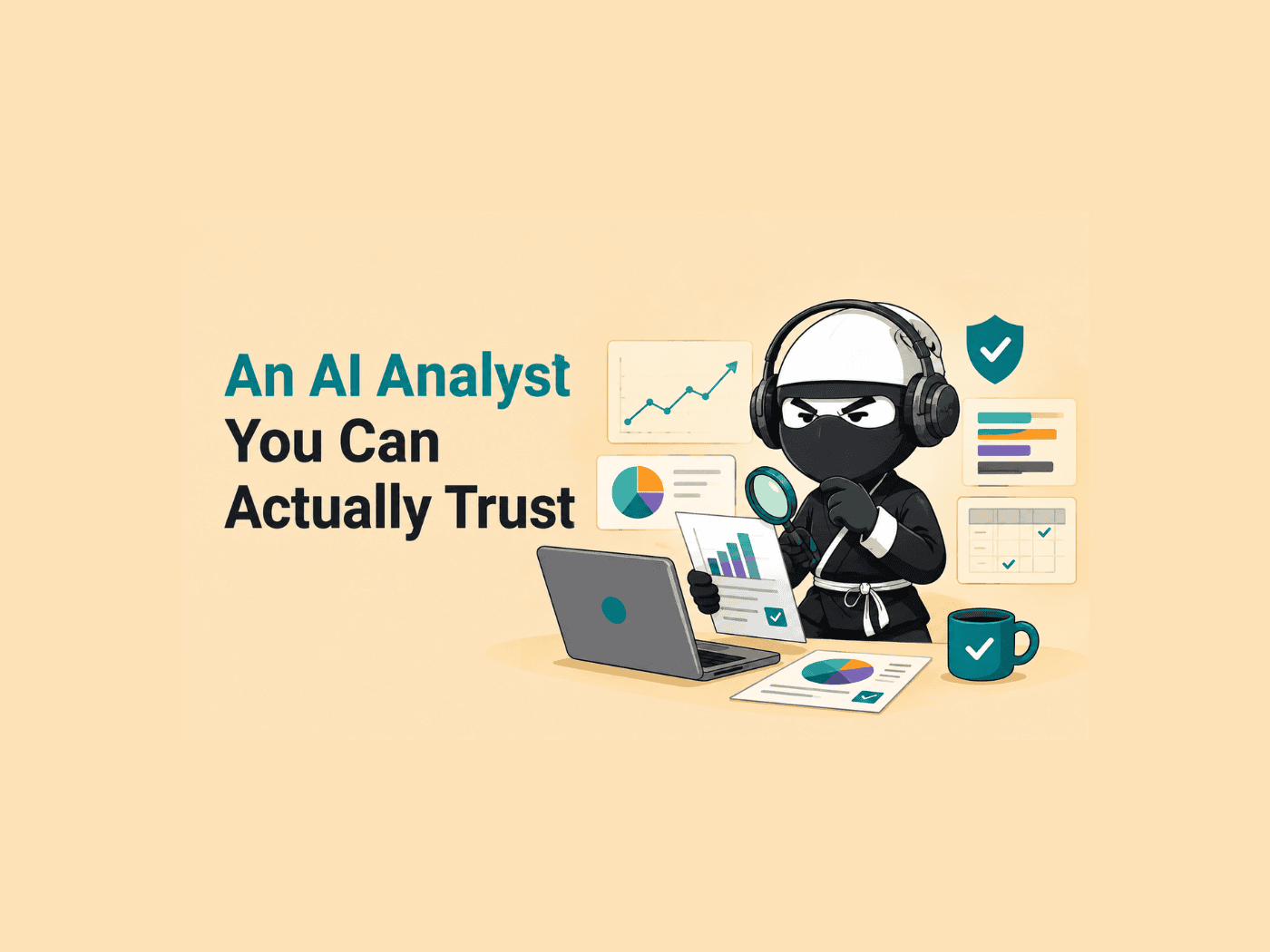
Build an AI pipeline that verifies every number before it answers
A spreadsheet that confidently gives you a wrong number is just a rumor with a toolbar. That's why we built a six-stage pipeline for an AI data analyst that thinks like a senior analyst: it checks its numbers before calling anything an answer. It's a disciplined approach to verification, not hype. If you're tired of tools that guess, explore this. For a related primer on the underlying mechanics, our guide to distributed algorithms is a solid starting point.

Build smarter data models with SQL transformations you can test and trust
Struggling to keep SQL transformations in sync across your team? That's exactly where dbt steps in. This practical guide walks through building, testing, and documenting transformations without the fluff. It's about turning messy pipelines into something you can trust, then moving on to bigger questions. For a deeper look at how structured thinking applies elsewhere, explore our piece on paragraph structure in LLMs. Start here, and make your data workflow feel genuinely manageable.

When Fuzzy Matching Fails, a Safer Architecture Emerges for Data Lakes
The matcher was supposed to finish what normalization started, but testing against real data proved otherwise: no version of it could be made safe. So the author set it aside, and what remains is a cleaner architecture built on that honest failure. It is a pragmatic take on entity key drift, favoring stability over cleverness. For readers wrestling with similar data lake challenges, this approach feels refreshingly grounded.

What Hidden Gaps in Your Data Reveal About Your Assumptions
We often treat missing values as a glitch, a blank cell to be filled or dropped. But that silence carries its own message, hiding assumptions we rarely question. This piece on Towards Data Science digs into what we overlook when data goes unrecorded, challenging us to see absence as part of the story. It is a thoughtful, grounded read for anyone who has ever trusted a dataset too quickly.
Three Signals to Measure Before Trusting Your Dirty Data
Dirty data rarely announces itself. You run a model, get a result, and wonder if the signal was ever really there or if you're just fitting noise. That's why the Entropic Scree diagnostic tool is worth your attention. It measures the actual informational volume in your messy, high-dimensional dataset, then estimates the signal-to-noise ratio, intrinsic rank, and whether standard PCA assumptions even hold. It's a practical reality check for anyone tired of pretending their data is cleaner than it is.
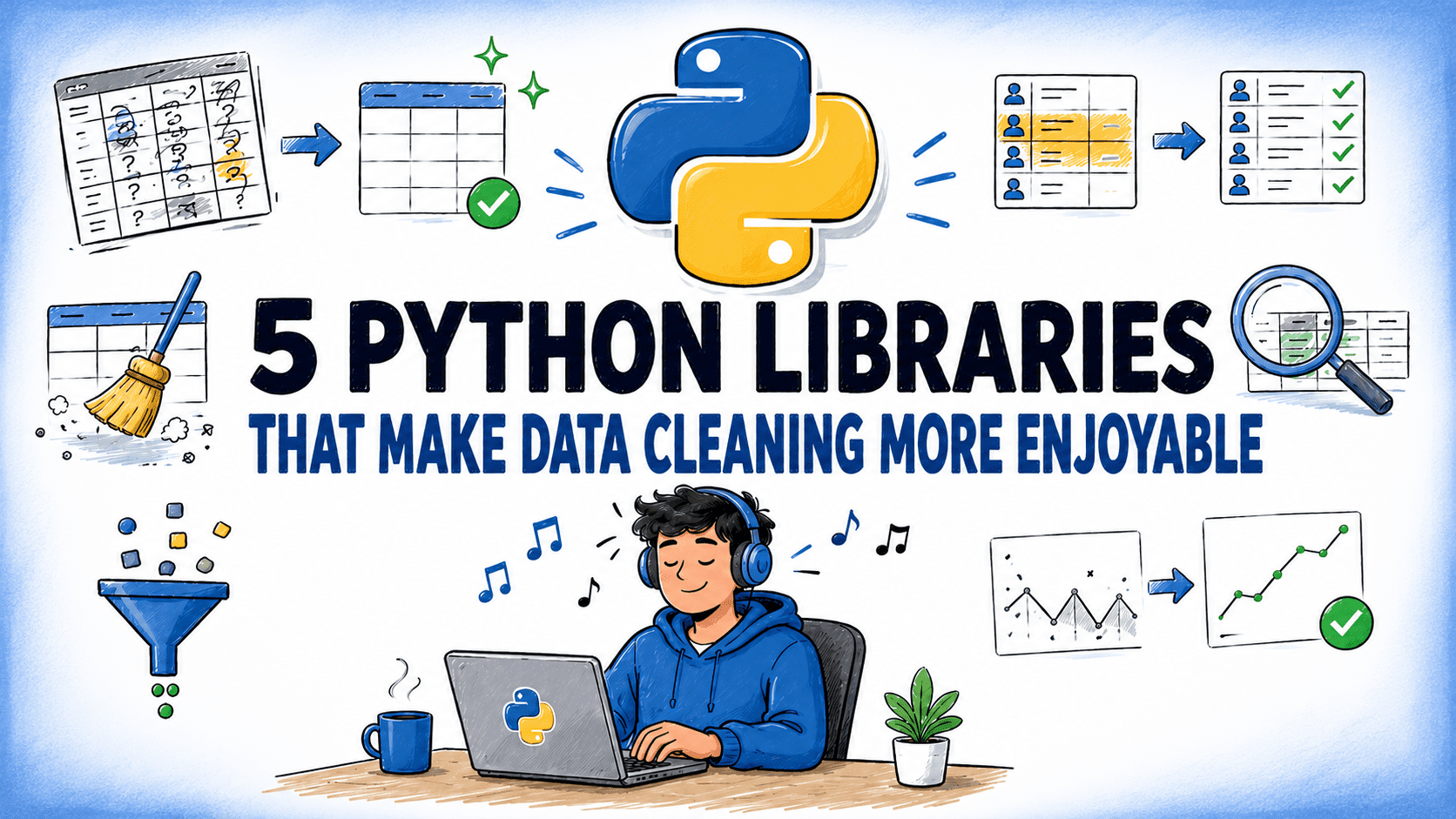
Explore Python Tools That Make Data Cleaning Feel Expressive
Cleaning data is often the least loved part of the job, but it doesn't have to be a grind. This guide highlights five Python libraries that turn tedious tidying into something expressive and even enjoyable. Each tool is chosen for its ability to simplify complex tasks while keeping you in control. If you're ready to make your workflow feel less like a chore and more like a craft, these libraries are worth exploring.

When AI Sounds Confident, Verify It Knows the Answer
Arun Mishra's eval harness exposed a flaw that should worry any team shipping LLM-assisted tools: the model was most confident precisely when it was most wrong. Qualitative review caught nothing because the explanations sounded authoritative. That is the trap. We test for fluency when correctness is what matters. Mishra's approach, measuring accuracy against synthetic ground truth, reveals the gap between plausible and correct. It is tedious work, but skipping it means deploying tools that fail quietly.

Your data pipeline isn't complete until analysis is effortless.
Loading data feels like crossing the finish line. You've built the pipeline, the tables are populated, and the job is done. Then you start building your first dbt models and realize the real work begins. Making data genuinely analysis-ready is where the journey starts. It's an honest look at moving from delivery to discovery, and it pairs well with our piece on catching AI slop before it skews your model.
Empower AI Agents: Building Trustworthy Data Foundations with Snowflake.
Many data teams added AI agents to their roadmaps this year, and the appeal is clear: an agent that compresses a two-day analysis into a two-minute conversation can genuinely reshape how analysts and business teams collaborate. But that promise hinges on trust. Point an agent at raw tables or stale data, and you get fast answers, not reliable ones. This piece explores how Snowflake's semantic governance builds the trustworthy foundation agents need.
Stop wasting hours on AI output that misses the mark
Every hour spent untangling AI-generated filler is an hour you don't get back. This story calls out the real cost of sloppy outputs, and it's not just about wasted minutes. It's about the mental drag of cleaning up noise. We appreciate the push toward sharper, more intentional use of AI. For a deeper look at how AI can mislead even its creators, check out "Talking to My AI Clone Taught Me to Question the Tech." The fix starts with demanding better.

Explore how medallion architecture simplifies your data pipeline with Python and DuckDB
Most teams hit the same wall: raw data lands in one place, and chaos follows. The Medallion Architecture cuts through that with a clear Bronze, Silver, and Gold path, turning mess into structure. This guide pairs that framework with a working Python and DuckDB example, so you can see it run, not just read about it. For more on how LLMs navigate token space, check out our piece on paragraph structure.
Explore How Legacy Systems Hide Simple Problems Behind Complex AI
The pattern is unmistakable: organizations hire for AI sophistication when their real need is data hygiene. The author sees it clearly, and they are right. It is not a talent gap. It is a readiness gap. Talented engineers are being pointed at problems that do not need agents or vector databases yet. They need clean pipelines and honest documentation. That is less glamorous work, but it is the work that matters. Before chasing the next framework, master the basics.

AI adoption matures as enterprises discover where real returns live
Enterprise AI is finally showing measurable returns, with the SAP Value of AI Report 2026 revealing that AI now powers nearly 30% of tasks in the average organization. That progress comes with a sharper appetite: expected returns on agentic AI jumped from 10% to 17% in a year. Still, most leaders admit the technology isn't reaching its full potential. The bottleneck isn't access to newer models, it's strategy, data quality, and governance.

Normalizing Live Data Tames the Chaos of IoT Sensor Streams
Real-world APIs do not behave like sample datasets. They drift. Keys mutate, schemas shift, and your lake pays the price. This first piece in our four-part series tackles Normalization, the essential first step when building a high-frequency streaming pipeline against openSenseMap's live public data. It is a smart, practical starting point. For more on scaling infrastructure, see our piece on simplifying EKS management. Expect matching algorithms, adaptive polling, and a Terraform-based Iceberg pipeline next.
Six Principles for Smarter Data Science Beyond the Hype
Harvard Business School Online cuts through the noise with a grounded take on data science and AI. The real insight? It's not about the flashiest algorithm. Clear business goals, trustworthy data, and simple models still carry the day. Careful validation and honest cost assessments keep projects realistic, while human judgment remains the anchor. We appreciate that focus on fundamentals over hype. It is a refreshing, practical counterweight to the constant chase for novelty.

Your data pipeline is the real reason your AI is confidently wrong
The failure that doesn't look like a failure is the one that quietly undoes your AI system. You ship it, stakeholders sign off, and months later, the answers drift wrong, not because the model changed, but because the data behind it didn't move with the world. That's not a retrieval problem; it's a data engineering one. Correctness, freshness, consistency, lineage, these are the checks that matter, and most pipelines still monitor for completion, not truth. If you're chasing model swaps, you're solving the wrong puzzle.
The quiet cost of AI content and what it means for data clarity
We've all seen the flood of AI-generated content, but the real issue isn't the slop itself, it's the quiet erosion of trust in what we read. In a revealing interview, Substack's CEO gets candid about how this deluge challenges platforms and readers alike. It's a conversation that deserves more attention, especially as we navigate what's real.