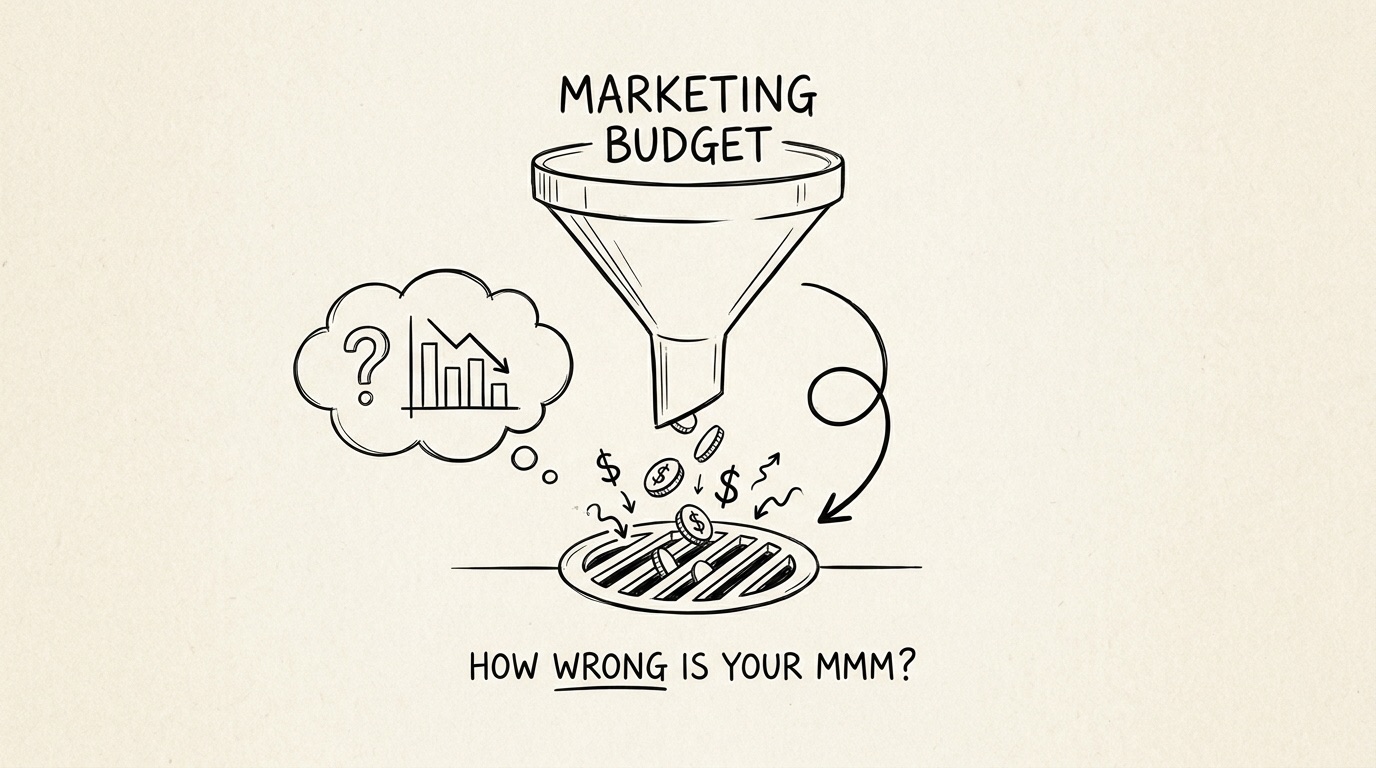
Marketing mix models are only as honest as the data they are fed, and this story exposes a painful truth: even a well-built MMM can stay wrong, not because the math fails, but because the spend it learns from never contained the information needed to answer the question. The test here is deceptively simple, shift *when* you spend rather than *how much*, and see if the model finally tells the truth. That is a smart, practical experiment, and it deserves attention from anyone who has ever nodded along to a dashboard that confidently explained why a campaign underperformed.
The core issue is that most marketing spend is not designed to generate learning. It is designed to hit a target, so budgets cluster in familiar channels and familiar weeks, leaving the model with a narrow slice of reality. If every dollar lands in the same place at the same time, the model can only infer the effect of that one pattern. Changing the timing of spend is a low-cost way to inject variation, giving the model a wider range of conditions to learn from without asking for a bigger budget. That is the kind of pragmatic thinking we respect. It does not promise a perfect model, just a less blind one, and that is a meaningful step forward.
This approach connects directly to the broader challenge of trusting automated systems. In Two AI copies keep drones and cloud in sync with 94% less data, the value comes from designing a system that works within constraints rather than demanding more bandwidth. The same principle applies here: instead of demanding more data, you redesign the data you already control. Similarly, A 1D physics solver wins, but neural networks take the lead in 5D reminds us that the right tool depends on the dimensionality of the problem. A simple shift in spend timing might be the right tool for a model that is starved for variation, even if it feels too basic to be the answer.
The practical takeaway is direct: if your MMM feels stale or overly confident, do not rebuild the model first. Look at your spend schedule. Are you testing different times, different days, different flighting patterns? If not, the model is guessing from a monotone dataset, and no amount of algorithmic sophistication will fix that. The experiment in this story offers a concrete, low-risk path to better answers. The open question is whether marketing teams will accept the discomfort of intentionally uneven spend, knowing the short-term noise is the price of long-term clarity. That is the trade-off worth watching, because it is the one that actually determines whether your model learns or just repeats your assumptions.