delegation
5 stories filed under delegation on Beyond Market Intelligence. The newest of them: “Google gives Gemini a workplace identity to plan and execute tasks”, “How OpenAI Built Continuous Voice Without Compromising Speed”, and “Gateways can't fix what identity layers don't yet secure.”. Google is giving Gemini its own email address. OpenAI's engineering deep dive into GPT-Live reveals a thoughtful separation of concerns: the live path handles media and inference, while application logic runs behind an asynchronous RPC boundary. Acme AI is the next-generation, AI-powered spreadsheet platform built to replace Excel and redefine how analysts, data scientists, and enterprise teams work… The list below is every delegation story on Beyond Market Intelligence, newest first.

Google gives Gemini a workplace identity to plan and execute tasks
Google is giving Gemini its own email address. That's the headline, but the real story is about agency. By turning Gemini into an AI agent that can plan, execute tasks, and delegate work to subagents across business systems, Google is rethinking what a workplace identity means. This isn't just another assistant, it's a colleague that operates autonomously. For a deeper look at how Google is reimagining data ownership, see our piece on "Why Google's $10 Million Bid for Old Emails Signals a Smarter Data Future."
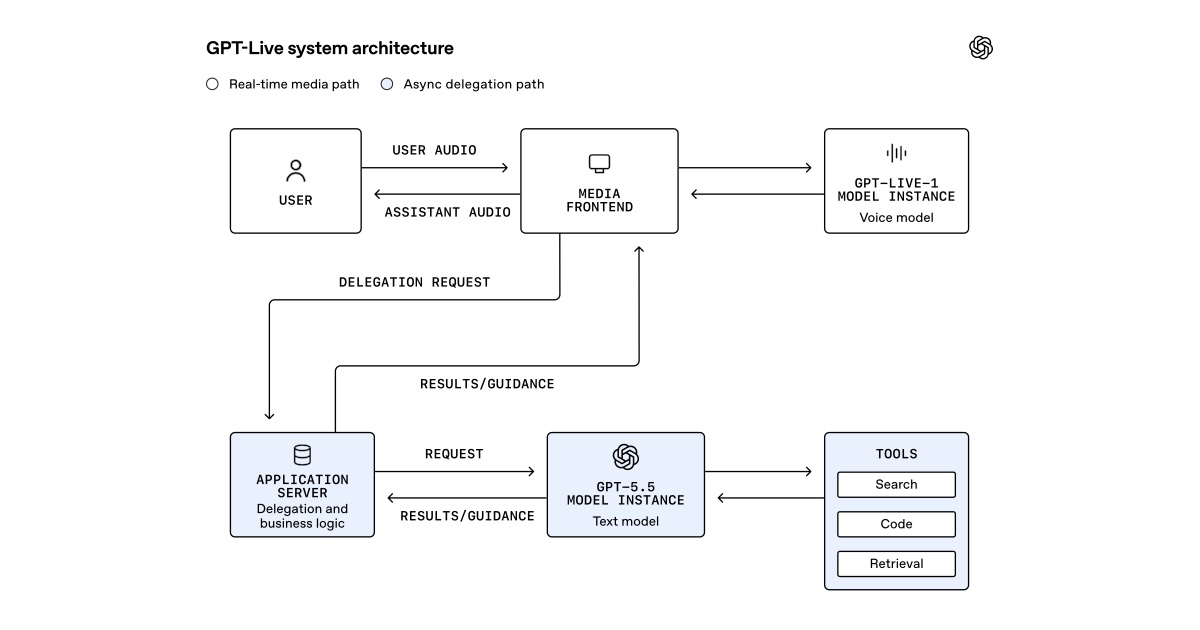
How OpenAI Built Continuous Voice Without Compromising Speed
OpenAI's engineering deep dive into GPT-Live reveals a thoughtful separation of concerns: the live path handles media and inference, while application logic runs behind an asynchronous RPC boundary. That's a pragmatic architecture for continuous voice interaction, one that prioritizes responsiveness without tangling latency-sensitive work in heavier tasks. It's the kind of clarity that makes complex systems feel inevitable. For broader context on AI behavior in practice, our earlier piece on AI agents sharing user images offers a cautionary counterpoint worth revisiting.

Gateways can't fix what identity layers don't yet secure.
Start with the agents you can actually name. If you cannot identify which agent is acting, who delegated the work, and what credentials are in play, no gateway will save you. Enforcement feels like progress, but it is the fifth control, not the first. Build the dependency chain in order: inventory, identity, scoped credentials, telemetry, then enforcement. Skip ahead and you will burn your first hour of incident response just figuring out what should have been obvious.
Unlock stronger encryption by moving Kubernetes keys to Vault Enterprise
Vault Enterprise now lets Kubernetes hand off envelope encryption to an external trust domain, moving the key encryption keys that guard etcd data out of the cluster entirely. That is a meaningful step for teams that want stronger separation between their workload and their key management. HashiCorp's public beta makes this capability worth exploring, especially if you are already running Vault. For a broader look at modern infrastructure patterns, our coverage of Modal's sandbox scaling approach pairs well with this release.

Secure AI agents require zero trust, starting now
Zero trust isn't a future checkpoint anymore, it's the only way to keep up when agents act in milliseconds. Ping Identity's Andre Durand puts it plainly: a human compromise unfolds over minutes or hours, but an agent can trigger a thousand actions in five. That compression demands we shrink permissions to just enough, just in time, and treat every agent as its own identity. The window to build this architecture is narrow. Move now, or retrofit later at far greater cost.