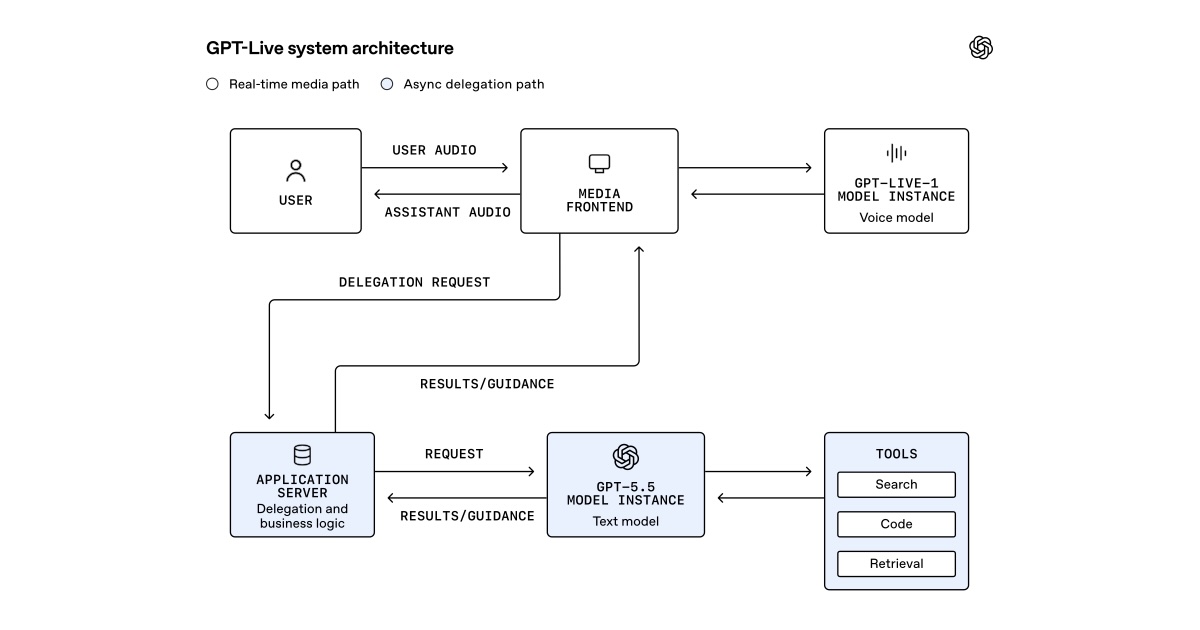
OpenAI's engineering write-up on GPT-Live is a rare glimpse behind the curtain of a system that most of us will only ever experience as a seamless voice in our ear. The architecture they describe, splitting the latency-sensitive media pipeline and inference loop from everything else, is not just a technical detail. It is a statement about where AI-native tools are heading. When a conversation can flow without the awkward pause of a spinning cursor, the interface stops feeling like a tool and starts feeling like a presence. That is the real transformation here, and it is one that deserves our attention, not because it is flashy, but because it quietly redefines what we should expect from our software.
For those of us who have grown accustomed to spreadsheets and dashboards that wait for us, this matters more than it might first appear. The separation of concerns in GPT-Live, with delegation, tool use, and persistence running behind an asynchronous RPC boundary, is a blueprint for how we should think about our own data workflows. It is the difference between a system that grinds to a halt when you ask it to fetch a value from another sheet and one that keeps talking while the work happens in the background. This is not about making voice assistants slightly faster. It is about building interfaces that respect the human need for continuity. We have seen where the lack of such care can lead, as when AI agents shared user images in research environments, or when agent swarms explore online data without clear boundaries. The architecture is not just about performance; it is about accountability.
Our take is simple: this is the kind of foundational thinking that will separate the tools we adopt from the ones we abandon. The live path is where the magic happens, but the RPC boundary is where trust is built. By pushing application logic out of the critical path, OpenAI is acknowledging that not every operation deserves the same urgency. That is a mature design philosophy, and one that we would do well to apply to our own systems. How often do we freeze a user experience because we are waiting on a database query that could have been cached, or a network call that could have been deferred? GPT-Live is a reminder that responsiveness is not about doing everything faster. It is about doing the right things at the right time.
What we would tell a reader who asks about this is to watch how this architecture influences the next wave of AI-native spreadsheets and analytics tools. If the pattern holds, the winners will be the ones that can keep the conversation alive while the heavy lifting happens out of sight. The takeaway to quote is this: "Latency is not a technical constraint; it is a design choice." The open question is whether other teams will make the same choice, or whether they will keep forcing their users to wait for the world to catch up. That is the detail to watch in the coming months.