developers
40 stories filed under developers on Beyond Market Intelligence. The newest of them: “Amazon challenges Nvidia's AI grip with new tool for alternative chips”, “Explore How AI Agents Unlock Hidden Insights in Compiled Binaries”, and “Google Antigravity SDK Now Runs Agentic Workflows Locally for Greater Data Privacy”. Amazon is taking direct aim at Nvidia's dominance in AI, and the weapon of choice is PyTorch. Reverse Engineer Anything has amassed over 200,000 GitHub stars for a reason: it connects coding agents like Claude Code directly to reverse-engineering tools such as Ghidra and IDA. Acme AI is the next-generation, AI-powered spreadsheet platform built to replace Excel and redefine how analysts, data scientists, and enterprise teams work… The list below is every developers story on Beyond Market Intelligence, newest first.

Amazon challenges Nvidia's AI grip with new tool for alternative chips
Amazon is taking direct aim at Nvidia's dominance in AI, and the weapon of choice is PyTorch. By offering a new tool that lets developers run their apps on alternative chips, including Amazon's own, the company is trying to break the hardware lock-in that has made Nvidia essential. It is a smart, practical move. For a deeper look at how AI models actually run at the kernel level, our series *From naive GEMM to FlashAttention* offers a free, code-first guide.

Explore How AI Agents Unlock Hidden Insights in Compiled Binaries
Reverse Engineer Anything has amassed over 200,000 GitHub stars for a reason: it connects coding agents like Claude Code directly to reverse-engineering tools such as Ghidra and IDA. This lets developers inspect compiled binaries, trace function calls, and uncover exactly how applications implement specific features. AI agents unlock hidden insights buried in code we can no longer read. For a deeper look at where rule-based checks fail, see our related piece on verification gaps.

Google Antigravity SDK Now Runs Agentic Workflows Locally for Greater Data Privacy
Google's Antigravity SDK now runs agentic workflows directly on local machines, giving developers meaningful control over data privacy and inference costs. Balancing local execution with optional cloud models is a practical approach, not an all-or-nothing trade-off. For anyone feeling constrained by centralized AI dependencies, this opens a more flexible path forward. It reminds us how the right tools empower builders, much like Facebook's recent move to put algorithm control directly in users' hands. Privacy and power don't have to be opposites.

How AI is empowering developers to rebuild familiar software from scratch
Projects like REA and ArtCraft are proving that AI can do more than automate tasks, it can help developers rebuild familiar software from scratch. By reverse-engineering tools like Adobe and Microsoft products without original source code, these projects are rethinking what's possible in software creation. It's a practical, empowering shift. For a deeper look at how AI is reshaping long-term strategy, see our coverage of "Architects Must Rethink Long-Term Strategy for an AI‑Driven Era."

Architects Must Rethink Long-Term Strategy for an AI‑Driven Era
Architects spend so much time solving immediate technical problems that long-term strategy becomes an afterthought. That neglect is dangerous now. AI is reshaping how software gets built, and Joy Ebertz makes clear that architects must rethink their role entirely. This isn't about learning a new tool. It's about redefining what success looks like when code can write itself. For a deeper look at the trust issues this raises, see our related piece on why AI needs a trust architecture built for human control.

React 19.3 Gives Developers a Clear Path for Client-Only Rendering
React 19.3, released September 9, gives developers a clear path for client-only rendering with its new `react-dom browser()` API. Components can now opt out of server-side rendering, solving hydration mismatches and enabling conditional data fetching. It's a practical, flexible solution for client-specific data challenges. For deeper context on how such innovations fit into broader architectural shifts, see our conversation with Michael Stiefel on rethinking long-term strategy for an AI-driven era.

Cloudflare's new CLI opens the door for AI agents to command its services
Cloudflare's new open-beta CLI, called cf, is built for a future where AI agents work alongside developers. Written in TypeScript, it offers structured output and command discovery that make Cloudflare's APIs more accessible. This is a practical step toward letting autonomous systems manage infrastructure directly. It also complements our coverage of an autonomous AI fleet probing Alibaba's map service, showing how agent-driven tools are reshaping what's possible in cloud operations.

A self-hosted inbox for background AI agents is now open source
A team of developers at AWS has open-sourced Pizza Bot, a self-hosted inbox designed for background AI agents. It lets agents run scheduled or webhook-triggered tasks, delegate work to specialized workers, and pause for human approval when needed. This is a practical step toward making autonomous agents more controllable and transparent. For more on how AI agents are reshaping workflows, see our coverage on shrinking the window for open source vulnerability fixes.

How Photon's $4.5M bet on AI agents reimagines messaging over apps
Photon's $4.5 million bet says something direct about where messaging is heading: consumers may soon prefer talking to an agent over downloading another app. The startup helps developers build AI agents that work across iMessage, SMS, email, and more. It's a practical wager that convenience will win. We see a similar thread in our coverage of "Chat with Sidekick to build your store and see it take shape instantly," where Shopify's AI agent lets merchants create stores through conversation.

Claude Sonnet 5.5 Delivers Faster Coding Smarter Agentic Workflows and Practical Cost Controls
Claude Sonnet 5.5 is the middle child of the Claude family, and that is precisely why it matters. This is the model most people will actually use, quick, capable, and cheap to run. Our practical guide covers what changed, the benchmarks that matter, and the cost controls developers should not miss. We also built one hands-on demo worth your time. For deeper context on Anthropic's broader trajectory, see our related piece on the company's own prospectus warning of existential risk and massive losses.

Meta expands enterprise AI tools with new leadership and full tech stack
Meta is bringing its full AI stack to businesses, including Muse, Meta Business Agent, and the Muse API. This isn't just another feature drop; it's a strategic commitment. By pairing new leadership with accessible tools for developers, Meta signals it understands that enterprise productivity isn't solved by isolated products. For a deeper look at how intelligent agents are reshaping the ecosystem, our piece on Google's shift from Gems to integrated skills explores a parallel trend worth tracking.

Why Psychological Safety Is Key for Developers Building With AI
Psychological safety isn't a soft skill, it's a structural requirement when AI tools rewrite the rules of software development. In this podcast, Michael Stiefel talks with Erin Doyle about how engineers now need architecture skills to navigate ambiguity in requirements. AI accelerates coding, but it also demands clearer thinking about system design. If you want a concrete example of what happens when that clarity breaks down, read our related article, "AI Made Me 5x Faster. It Also Made Me 5x Worse at My Job."

Empower Robotics Development with Feather’s Customizable Platform
A $30,000 platform might sound like a serious commitment, but for software developers tired of rigid robotics tools, it's a practical bet. Feather is building something customizable, not a locked-down box. That focus on flexibility matters. It gives teams room to iterate, test, and adapt without fighting the hardware. If you're exploring how far accessible AI can push real-world systems, our piece on real-world computer vision deployments pairs well with this mindset.

Empowering Collaboration: How Shared Standards Transform Engineering at [Bank Name]
Platform teams often get treated like infrastructure, but they're really the cultural backbone of engineering. At [Bank Name], shared standards aren't just process; they're the structure that lets open support sessions and super user awards take root. Developers depend on the platform, and the platform depends on them. That's a mutual loop, and it only moves forward when everyone commits to common ground. It's a practical, human way to build an engineering mindset.

Unlock Deeper TPU Insights: Cycle-Level Profiling Now Available in XProf
For developers wrestling with TPU workloads, opaque blocks in trace captures have long been a frustration. Google's addition of a Kernel Profiling suite to XProf changes that. This open-source profiler now exposes cycle-level details for custom Pallas kernels, turning what was once a black box into a map of precise execution paths. It's a practical step toward finer-tuned performance work. Claudio Masolo's report is worth your attention, especially if you're already exploring how AI tools reshape developer workflows.

Discover a faster, more affordable path to AI-powered software.
Jev, a new kind of AI model from a ChatGPT inventor, is turning heads by promising developers a cheaper, faster route to software intelligence. That's a meaningful shift for teams tired of ballooning costs and sluggish iteration cycles. We see this as a practical step toward making advanced AI more accessible, not just for enterprises, but for builders who need agility. If you're navigating how AI skills are evolving, our related piece on shifting AI/ML job requirements offers useful context. This is worth exploring.

Explore how AI agents simplify WhatsApp Business setup and management
Setting up a WhatsApp Business account has always meant wading through templates, testing, and troubleshooting. Meta's new MCP server changes that by letting AI coding agents like Claude and Cursor handle the boring parts. It is a practical step toward making developer workflows less tedious, and we are here for it. For more on how AI handles precise tasks, check out "Verify Your AI's Understanding: A Simple Check for Tax Season." The shift is subtle, but it is worth exploring.
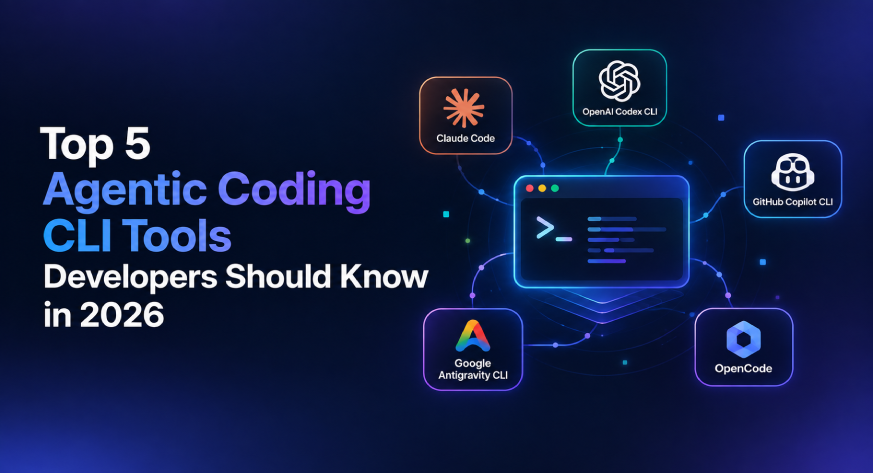
From Terminal Helper to Autonomous Developer: The CLI Evolves
A year ago, terminal AI meant asking a model to explain an error or tweak a function. In 2026, leading coding CLIs operate as full agent runtimes, inspecting repos, planning work, and verifying results. We compare five standouts, including Claude Code and Codex CLI, to show how this shift transforms daily workflows. If you are tracking how AI skills are evolving, our related piece, "Navigating AI/ML Job Requirements," offers useful context on what developers now need. Explore the tools that make complex tasks simpler.

Training Developers for an AI-Native Future
When AI agents take over the routine work that once trained junior developers, where does that leave the next generation? That's the question Michael Stiefel put to Scott Hanselman in our latest podcast. His answer is as practical as it is provocative: borrow the preceptorship model from nursing, pairing novices with seasoned mentors in structured, hands-on settings. It's a grounded alternative to the chaos of AI-era job listings. For those navigating this shift, our guide on shifting AI job requirements offers useful context.

Discover how KYAML brings clarity and confidence to Kubernetes configurations.
YAML's flexibility has long been a quiet source of frustration in Kubernetes, and KYAML offers a way forward that feels long overdue. By enforcing a stricter dialect, it trades guesswork for predictability, helping teams catch common errors before they become production headaches. That focus on clarity aligns with what we've explored in our broader coverage of AI-driven workflows, like unlocking practical tools for everyday work. For developers tired of chasing subtle indentation bugs, KYAML is a practical step toward more reliable configurations.

Nvidia acquires Hugging Face, bringing 3 million AI models to its ecosystem
Nvidia's $12.9 billion move to acquire Hugging Face signals a clear bet on community-led AI development. With over 3 million models hosted and 18 million developers building on its platform, Hugging Face has become the default hub for open-source innovation. That scale is hard to ignore. For anyone wrestling with distributed training or model deployment, this acquisition could reshape how accessible those systems become. It's a confident step toward making AI infrastructure feel less like a hurdle and more like a foundation.

Smart Code Reviews Balance AI Speed with Human Insight
Finding the right balance between speed and scrutiny is the real challenge in modern development. Ben Linders explores how mandatory AI checks paired with manual spikes for complex changes can keep developers sharp without sacrificing momentum. The approach is refreshingly practical: let AI handle low-risk approvals, but reserve human review for what truly matters. It's a sustainable model for teams that trust their code owners. For more on how AI reshapes technical workflows, our piece on verifying AI's understanding offers a useful parallel.

Explore how Cloudflare AI Search makes custom data instantly accessible for agents
Cloudflare's new AI Search gives agents and developers a built-in way to search custom data without building retrieval from scratch. It supports agent integration, multimodal queries, and works alongside other Cloudflare tools. That's practical, not flashy. For teams tired of bolting search onto every project, this feels like a step toward simpler workflows. If you're exploring how AI fits into your stack, you might also check out "Verify Your AI's Understanding: A Simple Check for Tax Season" for a grounded take on validation.

Replit's CEO on stage to share a practical vision for coding's future
When Amjad Masad takes the Disrupt Stage at TechCrunch Disrupt 2026, he'll bring a clear-eyed view of where programming is headed. As CEO and co-founder of Replit, Masad isn't just building tools; he's shaping how we think about creation itself. Expect a conversation that cuts through the noise, focusing on practical transformation rather than hype. For more context on how digital infrastructure is evolving, our piece on Cloudflare's Blog Finds Performance Gains with EmDash offers a useful parallel.