engineering leaders
Beyond Market Intelligence keeps engineering leaders in one place: 14 stories so far. The section currently leads with “From 40 Trillion Tokens, a Blueprint for Scaling AI Agent Trust”, “Redefining Dev Teams for an Agentic Era with Safety and Humanity”, and “Twenty Years of Platform Lessons: Building for Resilience Without the Complexity”. Trust is the bottleneck, not model performance. Engineering leaders facing agentic coding's surge need more than faster pipelines. Acme AI is the next-generation, AI-powered spreadsheet platform built to replace Excel and redefine how analysts, data scientists, and enterprise teams work… The list below is every engineering leaders story on Beyond Market Intelligence, newest first.

From 40 Trillion Tokens, a Blueprint for Scaling AI Agent Trust
Trust is the bottleneck, not model performance. Brendan O'Leary draws on 40 trillion tokens of usage data to map the four rungs of AI adoption, showing where context construction, multi-model routing, and feedback loops actually break down. For engineering leaders scaling agentic workflows, this is a practical blueprint. For deeper context on the infrastructure demands these agents create, see our companion piece on how CedarDB unifies operational and analytical data.

Redefining Dev Teams for an Agentic Era with Safety and Humanity
Engineering leaders facing agentic coding's surge need more than faster pipelines. Hannah Foxwell anchors them in three practical priorities: build software worth building, automate safety before speed, and preserve the human element through generalist skillsets and sustainable on-call. It's a grounded framework that keeps teams human-centered amid AI-driven velocity. For a related look at AI in action, see our coverage of Flai's $27M round fueling an AI platform booking 50,000 appointments monthly.

Twenty Years of Platform Lessons: Building for Resilience Without the Complexity
Twelve principles. That's what Matthew Liste distills twenty years of platform engineering into, a practical framework for building scalable, reliable infrastructure without drowning in complexity. His focus on avoiding technical debt, managing deprecation, and nurturing engineering culture speaks directly to the tension senior architects feel daily. This isn't about abstract theory; it's about streamlining developer workflows and delivering lasting value. For those wrestling with legacy systems, his approach feels like a clear path forward.

Treat Context Like Code to Scale AI Agents With Control
Patrick Debois proposes something quietly radical: treat context like code. For engineering leaders wrestling with non-deterministic AI agents, his argument lands with clarity. Apply testing, CI/CD, package managers, and security scanning to context itself. That approach promises control without stifling innovation. It's a practical path to scaling AI agents reliably while building lasting organizational knowledge. For deeper exploration, our coverage of Amazon CloudWatch Omni shows how AI-first observability platforms are already putting similar principles into practice.
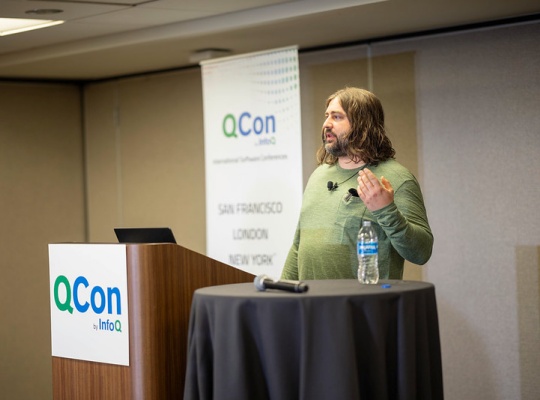
Instrumentation Without Compromise: Full Visibility, Zero Overhead
Observability shouldn't feel like a tax on your system. Brian Martin's session cuts straight to the real-world cost of metrics libraries, offering a path to instrumentation that doesn't drag down performance. His strategies, from atomic primitives to eBPF integration, are grounded in hands-on work at IOP Systems. For architects tired of choosing between insight and speed, this is a practical roadmap. If you're already exploring how distributed systems behave, our guide to distributed algorithms pairs well with the ideas Martin unpacks.

Visualizing Telemetry Data Beyond the Default Line Chart
Line charts have served observability well, but they were never designed to answer every question a modern systems engineer needs to ask. In her presentation, Yao Yue draws on 15 years of operating large-scale systems to challenge this default. She shows how moving beyond time-series basics can directly address critical capacity and fleet-sizing decisions. It is a practical, overdue call to rethink how we visualize telemetry. For those exploring how AI reshapes data work, our piece on Jev versus LLMs offers a useful companion.

Unlock 750x Performance by Merging Python Speed with C-Like Power
Chad Schuster isn't here to sell you a faster spreadsheet. He's here to show how Python's developer velocity can meet C-like performance through Numba's JIT and GPU acceleration. Drawing from large-scale actuarial modeling, he walks through the LLVM pipeline and real gains up to 750x. But he's honest about the trade-offs: OOP limitations, type inference errors, and compile-time overhead. For engineering leaders wrestling with compute-heavy systems, this is a grounded, practical look at scaling smarter.

How AI helps incident response teams see more and decide better
When Alex Palcuie, an Anthropic reliability engineer, walks you through using LLMs for incident response, he's not selling magic. He's sharing where AI genuinely acts as a superhuman observer for logs and traces, while admitting it still trips over causation versus correlation. That honesty is refreshing. For engineering leaders, the real challenge isn't adopting AI; it's weaving it into on-call work without dulling human judgment.

Sync Your Frontend to the Server with Declarative Data Bindings
Fetching data on demand is starting to feel like the past. James Arthur makes a compelling case for sync as the next frontier in frontend architecture, and his reasoning is hard to ignore. By extending reactivity to the server with Electric and TanStack DB, he replaces imperative fetching with declarative bindings that just work. The result? Insanely fast, collaborative apps built on your existing stack. It's a practical shift toward local-first development that empowers teams to move with confidence.
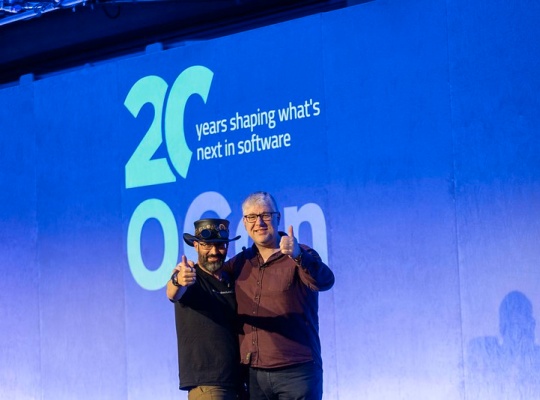
Smarter Prompts, Not Bigger Ones: Engineering Context That Works
Big context windows feel like the easy answer, but Baruch Sadogursky and Patrick Debois argue otherwise in their session, "The Right 300 Tokens Beat 100k Noisy Ones." They show why stuffed prompts drag coding agents down, then offer practical fixes like lazy-loaded skills and externalized memory banks. It is a grounded, useful take for engineering leaders wrestling with agentic workflows.

Move Beyond Token Metrics to True AI-Driven Delivery
Engineering leaders are pouring money into AI, yet software delivery often stalls. That's the puzzle Lizzie Matusov, CEO of Quotient, tackles head-on. She argues that soaring spend misses the mark when teams chase vanity metrics like token usage. Instead, she introduces a research-backed maturity framework to help leaders identify where adoption gets stuck, align their organizations, and focus on real bottlenecks across the development lifecycle. It's a grounded, practical call to move from activity to measurable outcomes.

Building Smarter Agents with an Intermediate Protocol Layer
AI agents often fail because they're built like tangled 1970s BASIC scripts, sprawling and unmanageable. Jake Mannix proposes a smarter path: an intermediate protocol layer that treats AI tools like versioned, encapsulated software components. This isn't just cleaner engineering; it's a practical defense. By enabling interface mapping and dynamic schema projection, teams gain runtime taint tracking that sniffs out data exfiltration risks before they become breaches. That's how you build velocity without sacrificing security.

Engineering AI for mobile: balancing creativity, cost, and user trust
Bhavuk Jain's session pulls back the curtain on what it takes to move AI from research to the phones in our pockets. He gets specific about the engineering behind AI Wallpapers and Circle to Search, tackling runtime guardrails and model latency without losing sight of the user. For leaders, it's a grounded look at balancing cost and experience.

Build a Context Store to Keep AI Development from Outpacing Understanding
Fast development is seductive. AI makes the first 80% of coding feel effortless, yet the structural debt hides until it surfaces as instability. That is why we find the argument for a "Context Store" so compelling. By binding spec-anchored design, tests, and fitness functions directly to the repo, Stella Berhe and her team show how we can make evolution safe. It is a practical shift from chasing speed to ensuring comprehension, and a smart next step for leaders.