engineering teams
9 stories filed under engineering teams on Beyond Market Intelligence. The newest of them: “From Ops Data to Action: How AI Makes Production Systems Understandable”, “Build Scalable Products with Less: Engineering Lessons from Startups”, and “Replace Python bottlenecks with Rust through incremental, low-risk refactoring.”. Production systems have long been black boxes, spitting out data without context. Scaling a product doesn't have to mean scaling complexity. Acme AI is the next-generation, AI-powered spreadsheet platform built to replace Excel and redefine how analysts, data scientists, and enterprise teams work… The list below is every engineering teams story on Beyond Market Intelligence, newest first.

From Ops Data to Action: How AI Makes Production Systems Understandable
Production systems have long been black boxes, spitting out data without context. This panel, featuring Michael Hausenblas, Sujana Sooreddy, Noam Levi, and Renato Losio, shows how AI changes that, turning operational data into actionable insights for incident response. It's a practical look at making systems more understandable through automation and new architectural practices. For a deeper dive into AI transforming workflows, see our related article on AI-powered spreadsheets.

Build Scalable Products with Less: Engineering Lessons from Startups
Scaling a product doesn't have to mean scaling complexity. In his latest talk, David Gudeman draws on over a decade of startup experience to show how pairing GCP, Firebase, and Cloud Run can accelerate product-market fit without overwhelming your team. He gets practical fast: cut redundant frontend state, design event-driven backends, and keep DevOps lean while building for the long haul. It's a grounded playbook for teams who want to move smarter, not harder.

Replace Python bottlenecks with Rust through incremental, low-risk refactoring.
Rewriting a working system from scratch is a gamble most teams don't need to take. Lily Mara's approach is more pragmatic: swap out Python bottlenecks for Rust piece by piece, using PyO3 to bridge the gap. The result is function-level speedups that compound, without the operational weight of microservices. It's a measured path to performance that respects what already works. For more on how databases handle similar pressure, our piece on Perplexity's CobbleDB migration offers a useful parallel.

Rightsizing Developer Platforms to Reduce Cognitive Load and Accelerate Delivery
Platform engineering is rarely a one-size-fits-all equation. John Keates tackles the real friction behind modern developer platforms: the cognitive load that shift-left practices have quietly piled onto teams. He focuses on rightsizing, not just building more. It's a practical look at matching your platform to your culture, not the other way around. For those exploring how AI tools fit into everyday workflows, our guide to unlocking ChatGPT for work offers a useful starting point.

When Code Is Easy to Write, Understanding Becomes the Architecture
As AI accelerates code production, our ability to comprehend the systems we build is quietly eroding. This isn't just a developer experience problem; it is a structural threat to safe evolution. Jacobus Meintjes and his team argue that human understanding must be treated as a core architectural characteristic, not a luxury. They offer practical metrics and checkpoints to fight cognitive debt. For a complementary view on system adaptability, see Mallika Rao's piece on adaptive recommendation systems.
Three ways to turn engineer skepticism into AI adoption
Your engineers aren't resisting change; they're resisting uncertainty. That's a critical distinction for any AI rollout. When your team pushes back, it's not a failure of vision but a signal they need clearer direction. We've seen this pattern before, and it turns around with three practical moves. Start by acknowledging their expertise, then connect the rollout to their daily workflows, not abstract goals. For a deeper foundation, our guide to distributed training offers useful context on the tech behind the shift.

Your Team's Insight Still Guides the AI in Incident Response
AI is moving fast into incident response, summarizing channels, analyzing unfamiliar code, and even suggesting fixes. That's genuine progress. But Craig Risi's piece reminds us that the hardest calls still land on humans. The technology can point the way, yet judgment, context, and accountability remain ours to carry. That's not a limitation; it's the point. For a broader look at where this intelligence is headed, our piece on AI designing its own hardware offers a fitting follow-up.
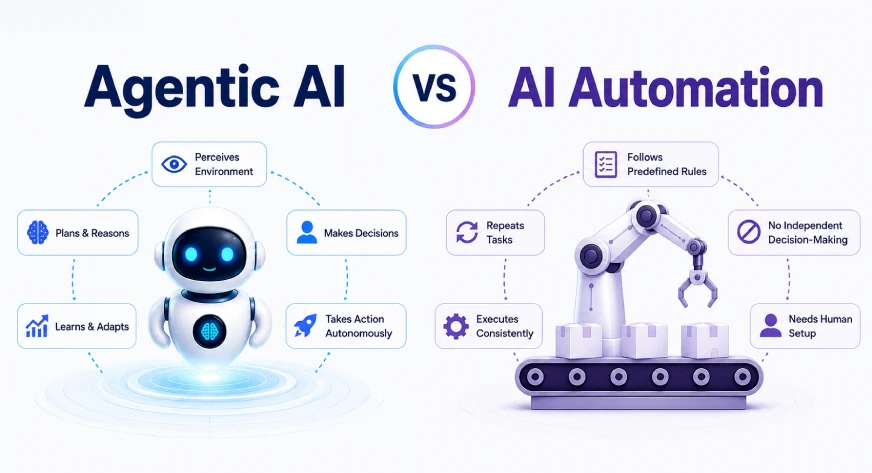
From Demos to Production: Building AI That Handles the Unexpected
A team wraps a few LangChain calls in a loop, adds tools, and calls it an agent. The demo impresses. Then production hits an unexpected input, and the workflow breaks. That is not agency; that is automation wearing a costume. The real difference is adaptability, and confusing the two costs you in downtime. For a deeper look at how agents truly learn, check out our piece on editing context instead of weights.

Build platforms people love by focusing on outcomes, not just code.
Platform engineering often fails before the code is written, and Max Körbächer knows why. In this session, he argues that successful internal developer platforms can't be built on infrastructure alone. He pushes back on that tech-first instinct, steering us toward a genuine product mindset and practical metrics like DevEx and SPACE to measure what actually matters. For anyone wrestling with adoption or tech debt, this talk offers a clear-eyed path forward.