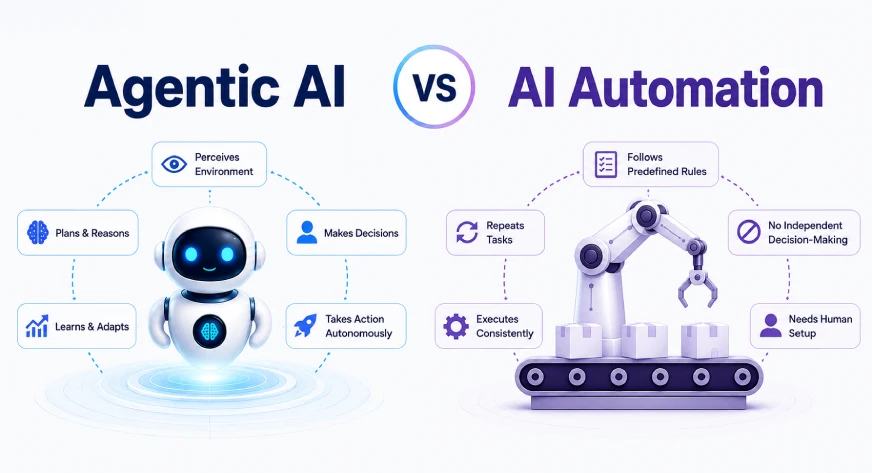
The scene described is one we recognize all too well. Someone stitches together a few LangChain calls, drops in a loop, adds some tools, and the demo sings. Everyone nods. Then production hits, an unexpected input arrives, and the whole thing unravels. This is the gap between what we call an agent and what we actually need from one. The question is whether we are building genuine agency or just dressing up deterministic workflows in smarter clothing. The difference matters, not because of semantics, but because it determines whether your system can think on its feet or just follow a script until it breaks.
Our take is straightforward: if your AI cannot handle the unexpected, you do not have an agent. You have a more fragile version of the automation you already had. That is not a failure of effort; it is a failure of framing. Real agentic AI should be defined by its ability to reason about novel situations, to pause, to re-evaluate, and to change course when the plan stops making sense. Automation, no matter how cleverly assembled, does none of that. It repeats. It does not reflect. As we have explored in Talking to My AI Clone Taught Me to Question the Tech, the surface-level impression of intelligence often masks brittle underlying mechanics. The same is true here: a loop with tools is not a mind, and treating it as one will cost you in production.
The practical consequence for our readers is not about which framework to choose. It is about how you evaluate what you have built. Ask yourself a simple question: if the input changes in a way you did not anticipate, does your system adapt, or does it crash? If the answer is the latter, you have automation with a fancy interface. That is not a crime, but it is a limitation you need to plan for. The distinction becomes even more relevant when you consider how agents actually learn and improve. As noted in Explore how AI agents learn by editing context, not model weights, progress in this space often comes from adjusting how the agent understands its environment, not from retraining the model itself. That is a meaningful difference from the static automation most teams are shipping today.
Here is the specific takeaway we would leave you with: stop calling it an agent until it can survive a sentence it has never seen before. Until then, you are not building autonomy; you are building a more elaborate dependency on your own assumptions. The teams that succeed will be the ones who are honest about the line between automation and agency, because that honesty is what tells you where to invest your engineering effort. Watch for that line in your own work. When your system meets an unexpected input and actually recalibrates, you will know you have crossed it. Until then, you are just looping.