enterprise data management
enterprise data management on Beyond Market Intelligence: a running collection of 314 stories we have gathered and hand-picked because they are worth your time. Every post here touches on enterprise data management in some way — the news, the analysis, the deep dives, and the occasional surprise find. Acme AI is the next-generation, AI-powered spreadsheet platform built to replace Excel and redefine how analysts, data scientists, and enterprise teams work with data. New stories are added to this page as we find them, so check back if you want to keep up with what is happening around enterprise data management, or subscribe to the RSS feed to get them as soon as they are published. Browse the collection below, or head back to the homepage to see everything Beyond Market Intelligence is covering right now.

New agentic memory framework uses 118K tokens per query. LangMem burns through 3.26M.
Addressing the critical limitation of context window size in AI agents, researchers at the National University of Singapore have introduced MRAgent, a novel framework for active memory reconstruction. Unlike traditional "retrieve-then-reason" approaches, MRAgent dynamically builds memory based on accumulating evidence, significantly reducing token consumption—just 118K tokens per query, compared to LangMem’s 3.26M. This innovative architecture, detailed on GitHub, promises to unlock more effective long-horizon reasoning and represents a key step toward more efficient and scalable AI agents.

Autonomous security agents need complete data. Here's how to check if yours is ready.
Autonomous security agents promise accelerated threat response, but their effectiveness hinges on complete data. Recent research highlights a critical gap: endpoint agents can’t report their own absence. Data from the 2026 Axonius/Ponemon Report reveals that, on average, 12.7% of devices lack security agents, creating blind spots that autonomous agents will inherit—and amplify. Before enabling autonomous remediation, assess your EDR data readiness using our five-gate checklist to ensure accuracy and avoid costly missteps.

Most companies think they're building a software factory. They're actually just shipping bugs faster.
Many organizations mistakenly believe they're building a software factory, when in reality, they're simply accelerating the release of bugs. Just as industrialized factories revolutionized physical production, a similar shift is now underway in software development, fueled by LLMs. However, traditional development lifecycles are ill-equipped for this new speed. A true software factory demands more than just velocity—it requires a platform with standardized processes, rigorous quality control, and inherent traceability. Otherwise, you risk generating "AI slop" faster than ever.

Liquid AI's smallest model yet LFM2.5-230M beats models 4X its size at data extraction, can run 'anywhere'
Liquid AI has released LFM2.5-230M, its smallest AI language model yet, demonstrating that architectural efficiency can outperform brute-force scaling. This 230-million-parameter foundation model excels at data extraction and is designed for on-device agentic workflows, running seamlessly on smartphones, laptops, and robotics. Notably, LFM2.5-230M surpasses models four times its size on key benchmarks, signaling a pivotal shift toward optimized AI solutions for enterprises seeking cost-effective, local processing—a strategy mirroring recent price adjustments seen in the gaming console market, as discussed in our article on Xbox.

Your enterprise AI agents should automatically remember which model is right for which task. Mindstone built the capability with Rebel
Navigating the burgeoning landscape of AI agent orchestration platforms can feel overwhelming. Mindstone’s Rebel emerges as a promising solution, offering a local-first, agentic AI operating system designed for enterprise efficiency. Released this week, Rebel utilizes a "Fair Source" license allowing teams under 100 users free adoption and customization, while larger organizations require an enterprise license.

Mistral launches OCR 4, turning document extraction into a full enterprise AI play
Mistral AI has launched OCR 4, transforming document extraction into a full enterprise AI solution. This fourth-generation model delivers structured document representations, including bounding boxes, block classification, and confidence scores, moving beyond simple text extraction. Supporting 170 languages and deployable on-premise, OCR 4 addresses critical data sovereignty concerns, particularly relevant following recent U.S. export control actions. Early enterprise feedback highlights significant cost and latency reductions, positioning Mistral as a compelling alternative for document-intensive workflows.

Stanford researchers will discuss their agentic 'scientists' that are on course to reshape drug discovery at VB Transform 2026
Drug discovery faces systemic inefficiencies, with staggering failure rates and lengthy, costly timelines. Stanford researchers are pioneering a transformative solution: deploying thousands of autonomous AI “scientist” agents within a virtual biotech to streamline the entire drug development lifecycle. Led by James Zou, this innovative system maintains crucial context and continuity, unlike traditional, siloed workflows. Learn how this hierarchical agentic AI, leveraging models like Claude, is poised to revolutionize medical research and discover strategies for managing complex workflows at VB Transform 2026.

Xiaomi's HarnessX rewrites its own AI scaffolding mid-task — and smaller models gain the most
Xiaomi's HarnessX introduces a transformative approach to AI agent development, autonomously rewriting its own scaffolding mid-task—a technique that yields particularly impressive gains for smaller models. Addressing a critical engineering bottleneck, HarnessX treats the AI harness as a modular object, enabling dynamic adaptation to application-specific requirements. Practical results demonstrate an average +14.5% performance boost, with the open-weight Qwen3.5-9B model achieving a remarkable +44% improvement on embodied planning tasks, signaling that harness evolution can be a powerful alternative to simply scaling foundation models.

Enterprise-grade AI image generation in 2 seconds is here: Krea 2 Raw and Turbo available as open weights under custom license
Enterprise-grade AI image generation in just 2 seconds is now a reality with Krea 2 Raw and Turbo, available as open weights under a custom license. Addressing concerns that AI imagery often lacks originality, Krea’s new models offer greater visual variety, prompt accuracy, and crucial customization capabilities for brands. Krea 2 Turbo’s remarkable 2-second generation speed surpasses competitors, while Krea 2 Raw provides a flexible foundation for training custom models.

Anthropic launches Claude Tag, replacing its Slack app with a persistent AI teammate that learns, monitors and works autonomously
Anthropic’s Claude Tag introduces a transformative approach to enterprise collaboration, replacing its Slack app with a persistent, AI-powered teammate. This isn't a chatbot; it's an agent designed to learn, monitor, and autonomously work within teams, delegating tasks via @Claude. Built on Claude Opus 4.8, Tag offers multiplayer interaction, proactive insights, and asynchronous project management, streamlining workflows and boosting productivity. For organizations seeking to integrate AI into their daily operations, Claude Tag represents a significant step forward—a shift from reactive tools to an always-on, intelligent collaborator.

A proof of concept forgives a fragile data path. Operational AI does not.
Moving AI workloads from pilot to production often reveals a critical bottleneck: data delivery. While demonstrations thrive on direct storage-to-compute connections, these "point-to-point" architectures crumble under the weight of sustained production traffic, leading to stalled inference pipelines and underutilized GPUs. F5 emphasizes that successful AI operationalization demands infrastructure engineered to withstand real-world failures, not just ideal conditions. Building a resilient, observable data delivery layer is paramount for unlocking AI's full potential.

AI hit the memory wall — now it needs a new context tier
AI inference is rapidly evolving beyond simple question-and-answer interactions, creating a new bottleneck: context management. As agentic AI systems and expanding context windows demand persistent, stateful data, existing storage architectures are struggling to keep pace. Solidigm proposes a dedicated context tier—a layer of high-performance flash—to efficiently store and serve this critical inference data, optimizing GPU utilization and boosting overall ROI. This emerging tier, formalized by Nvidia as CMX, represents a fundamental shift in AI infrastructure planning.

Researchers introduce Self-Harness, a framework that lets AI agents rewrite their own rules, boosting performance up to 60%
Researchers are introducing Self-Harness, a framework enabling AI agents to systematically refine their own operational rules, potentially boosting performance by up to 60%. While building frontier AI models remains complex, customizing the “harness”— the system governing agent behavior—is increasingly valuable for enterprises. Self-Harness addresses the challenge of manual harness tuning by leveraging the agent's own execution traces to identify and correct weaknesses, moving beyond intuition-based adjustments.

No Claude Fable 5? No problem: Sakana achieves frontier performance with new Fugu multi-model, auto synthesis system
Following Anthropic’s recent move to restrict access to its powerful Claude Fable 5 and Claude Mythos 5 models, Sakana AI has launched Fugu, a novel multi-model orchestration system designed to deliver frontier-level AI performance via a familiar OpenAI-compatible API. This innovative system dynamically routes queries across a pool of specialized AI agents, providing resilience against vendor lock-in and geopolitical export controls.

7,000 Langflow servers are under attack. LangGraph and LangChain have the same holes
Three widely deployed AI agent frameworks – LangGraph, Langflow, and LangChain – share a critical vulnerability, exposing sensitive data like OpenAI keys, database credentials, and CRM tokens. Recent attacks exploiting a SQL injection in LangGraph and a path traversal in Langflow demonstrate that these frameworks, adopted rapidly, have outpaced security measures. Now, researchers have identified a similar flaw in LangChain-core. Addressing this requires immediate action: patching to the latest versions and reviewing framework configurations to minimize exposure.

Anthropic's Claude Code Artifacts update brings live, shared dashboards and interactive workspaces to enterprises
Anthropic’s Claude Code now delivers live, shared dashboards and interactive workspaces for enterprises through its new Artifacts feature. Transforming a Claude Code session into a custom, shareable HTML webpage, Artifacts allow users to connect live code and data sources, creating dynamic visualizations for teams. This eliminates the need for manual status updates and facilitates clearer communication between engineers and stakeholders. As highlighted by Claude Code lead Boris Cherny, Artifacts are "a game changer" for collaborative workflows, and closely mirror a recent feature release from OpenAI.

New AI optimization framework beats Claude Code and Codex by 2.5x on the same compute budget
Engineering teams face a persistent challenge: deploying AI agents that, despite initial success, often hallucinate or miss critical constraints in production. Addressing this requires tedious trial-and-error, making it difficult to pinpoint effective adjustments. Introducing Arbor, a new AI optimization framework developed by researchers at Renmin University of China and Microsoft Research, which delivers over 2.5 times the verifiable performance gains of standard AI coding agents like Claude Code and Codex – all within the same compute budget.

Copilot searched your mailbox. LiteLLM handed out admin keys. Run this 5-check audit before your stack is next
Enterprise AI is rapidly expanding, but a concerning pattern is emerging: external input is being accepted without robust trust boundaries. Recent disclosures like SearchLeak (affecting Microsoft Copilot) and vulnerabilities in LiteLLM highlight this risk. Four independent teams have now uncovered similar flaws across diverse tools, demonstrating a systemic operating failure. This five-check trust-boundary audit maps these gaps to concrete actions, allowing you to proactively address vulnerabilities and communicate risks clearly to your board—starting before lunch.

Adobe embeds agentic AI workflows across Creative Cloud, shifting from media generation to production orchestration
Adobe is redefining creative workflows with the public beta release of its embedded "creative agent," now available across Creative Cloud applications like Premiere Pro and Photoshop. Moving beyond simple media generation, this agent orchestrates complex production tasks—from batch file management to brand asset updates—by directly accessing software APIs. Powered by new "Elements" and "Projects" technologies for visual consistency and contextual memory, Adobe empowers creatives to delegate tedious tasks, maintaining full aesthetic control.
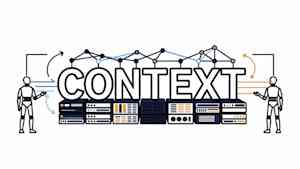
AWS enters the context layer race with a graph that learns from agents, not manual curation
Amazon is directly addressing a significant challenge in AI adoption: the complexity of building and maintaining context layers. AWS Context, a new knowledge graph service, automatically learns and evolves from agent usage, eliminating the need for manual curation. This innovative approach extends existing AWS identity models, offering zero-integration friction for organizations already leveraging S3, Glue, and Lake Formation.

Databricks says it solved the decades-old data pipeline problem that's been slowing AI agents
For decades, data professionals have grappled with unifying operational and analytical databases—a challenge now acutely amplified by the demands of AI agents. Databricks is addressing this structural problem with Lakehouse//RT and LTAP, aiming to eliminate the latency and complexity of traditional data pipelines. Lakehouse//RT delivers millisecond query speeds directly on governed data, while LTAP stores transactional data in Delta and Iceberg format.

Vibe coding can build your pipeline. It can't explain it six months later
Vibe coding offers remarkable speed for generating isolated implementations, but prompts’ inherent temporality creates challenges for enterprise data platforms. These platforms, often fragmented across diverse teams and technologies, risk accumulating inconsistent logic and hidden dependencies as operational context resides in scattered conversations rather than the system itself. Spec-driven development (SDD) addresses this by converting prompts and knowledge into executable, versioned specifications—persistent operational memory for both humans and AI.

85% of IT teams claim every AI agent is under control. Only 42% actually know who owns them.
Recent Ivanti research reveals a concerning disconnect: while 85% of IT teams confidently assert every AI agent has a designated owner, a stark 42% admit that ownership remains unclear. This gap, a staggering 43 points, highlights a critical vulnerability as organizational leaders are nearly twice as likely to conceal AI usage, often citing a "secret advantage.

MCP solved tool calling. A2A solved coordination. What solves transport?
The AI agent ecosystem is rapidly evolving, mirroring historical patterns of protocol proliferation followed by consolidation. While Model Context Protocol (MCP) has established itself for tool calling and Agent2Agent (A2A) for task coordination, a critical transport layer challenge remains: enabling direct peer-to-peer connections across networks. Current protocols, built on HTTP, struggle with NAT traversal, creating latency and potential failure points.