error analysis
4 stories filed under error analysis on Beyond Market Intelligence. The newest of them: “Measurement error can make nonlinear data look deceptively linear”, “Discover robust methods that empower linear regression to handle outliers”, and “When an AI judge agrees with itself, trust becomes the question”. Measurement error can quietly disguise nonlinear data as a straight line, and that deception has real consequences for anyone building models on shaky foundations. Outliers don't need to derail your regression. Acme AI is the next-generation, AI-powered spreadsheet platform built to replace Excel and redefine how analysts, data scientists, and enterprise teams work… The list below is every error analysis story on Beyond Market Intelligence, newest first.
Measurement error can make nonlinear data look deceptively linear
Measurement error can quietly disguise nonlinear data as a straight line, and that deception has real consequences for anyone building models on shaky foundations. When your visual patterns look tidy but the underlying relationships aren't, your analysis inherits that hidden distortion. It's a reminder that data hygiene matters as much as algorithm choice. For those exploring how modern tools handle these nuances, our related piece on Polars 2.0 offers a practical look at what thoughtful engineering can bring to your workflow.
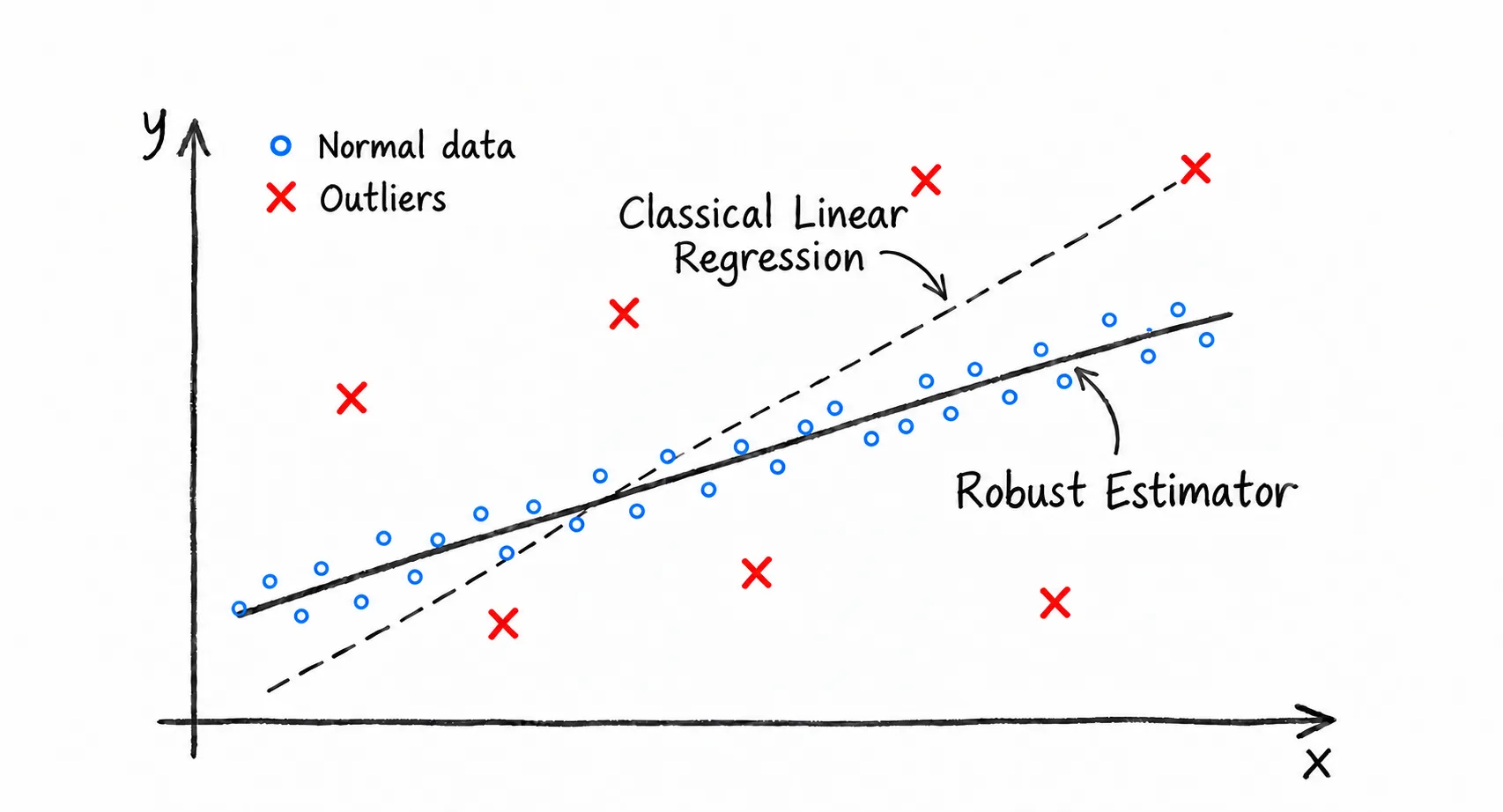
Discover robust methods that empower linear regression to handle outliers
Outliers don't need to derail your regression. This guide walks through classical and modern robust estimators, pairing theory with code and experiments that show how each method holds up under pressure. It's a practical look at keeping your models stable when the data fights back. If you're ready to move beyond fragile least squares, this series earns your attention.

When an AI judge agrees with itself, trust becomes the question
When an LLM judge keeps agreeing with itself, the feedback loop feels reassuring. It isn't. This story follows a production incident where a model's self-approval masked real flaws, exposing a quiet danger in relying on AI to evaluate AI. It's a practical look at trusting your tools, not blindly. For anyone wrestling with similar doubts, the related piece on questioning your AI's understanding offers a useful parallel. Blind agreement is comfortable; genuine verification takes more work.
Debugging a Bad Forecast Model Without the Noise
Debugging a bad forecast often starts with a single overall error score, yet that number rarely tells you where to look. Breaking the error down by customer, product, or horizon is a natural first step, but the real question is whether your tools support that or force you to build custom notebooks from scratch. That gap matters. For deeper guidance on refining your approach, our related piece on autoregressive rollout and uncertainty offers a practical next step.