estimator
Beyond Market Intelligence keeps estimator in one place: 3 stories so far. The section currently leads with “Beyond DoubleML: A Practical Test of Doubly Robust Dose-Response Estimation”, “A 19th-century fisheries trick estimates AI recall within 2 points”, and “Simplify complex gradients by shifting randomness outside the computation graph”. When DoubleML hits its limits, you need a different approach. A 19th-century fisheries trick just proved it can estimate AI recall within two points. Acme AI is the next-generation, AI-powered spreadsheet platform built to replace Excel and redefine how analysts, data scientists, and enterprise teams work… The list below is every estimator story on Beyond Market Intelligence, newest first.
Beyond DoubleML: A Practical Test of Doubly Robust Dose-Response Estimation
When DoubleML hits its limits, you need a different approach. Kennedy's doubly robust estimator offers a practical alternative for dose-response estimation. The simulations here test it against DoubleML directly, using partial pooling across 200 stores and a DiD fix to handle hidden confounders. It's a grounded, technical comparison that moves beyond theory into what actually works. For more on pushing analytical boundaries, see how Booking.com built a data platform for 400 billion daily predictions.
A 19th-century fisheries trick estimates AI recall within 2 points
A 19th-century fisheries trick just proved it can estimate AI recall within two points. Testing on 294 CUAD contracts with a 10% hand audit, the capture-recapture method landed remarkably close to true recall for most agents. That's an elegant solution to a modern problem, no hype, just a clever statistical tool from the 1890s doing the job. For more on how AI can refine your thinking, see our related piece on letting AI polish ideas, not dream them up.
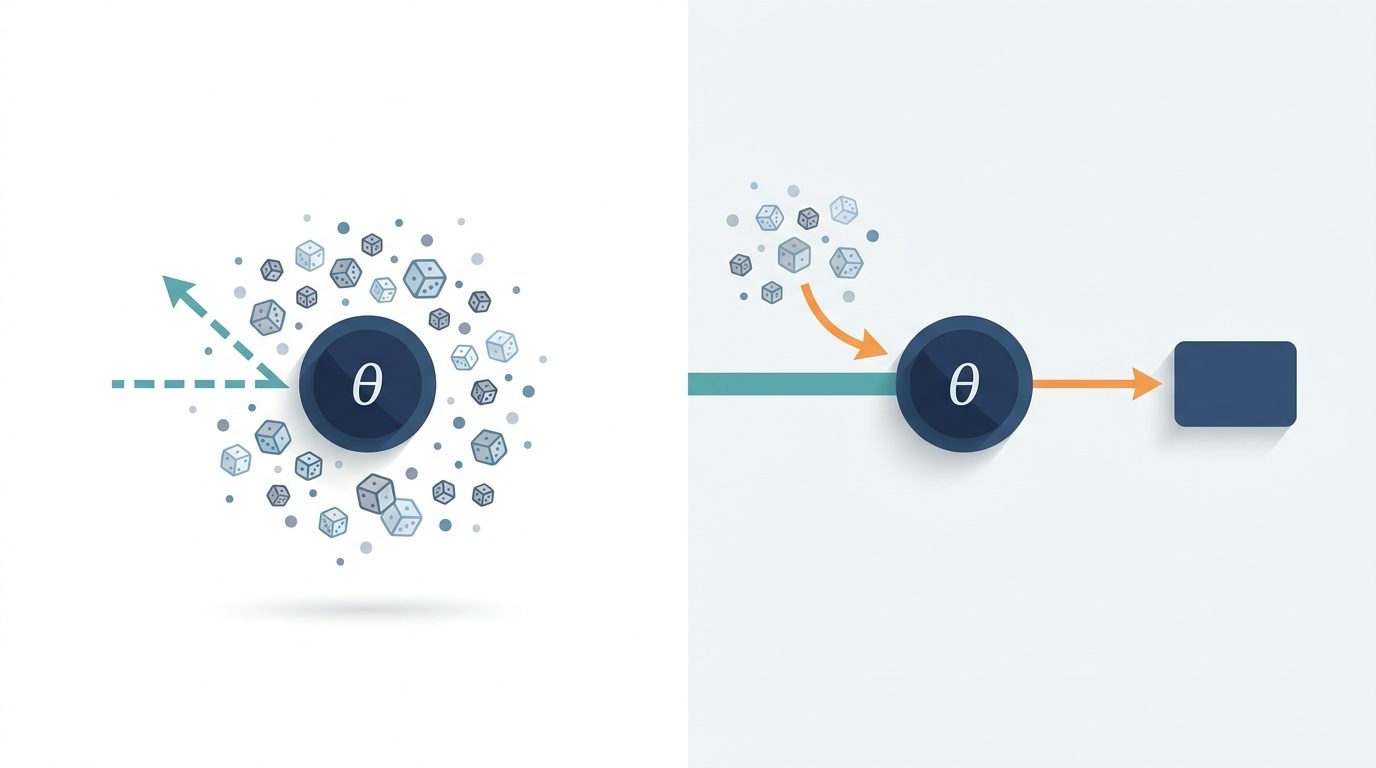
Simplify complex gradients by shifting randomness outside the computation graph
Noisy gradients are the price of sampling inside the computation graph. Moving randomness outside the computation graph changes everything. By reparameterizing, you keep the model differentiable while trimming variance that slows training. It is a practical, accessible breakdown of a technique that feels abstract until you see it applied. If you are exploring how to make your own models more stable, this is worth your time. For another angle on practical ML, our piece on real-world computer vision deployments pairs well here.