EV
EV at Beyond Market Intelligence is a file of 15 stories. The newest of them: “A former Ford EV chief joins Rivian's startup to advance AI-native data tools”, “Tesla's EV deliveries climb past 486,000 as global momentum holds”, and “BMW proves EVs can underprice gas cars with a single chassis”. A former Ford EV chief and Apple car project veteran, who also oversaw Tesla Model 3 development, has joined a Rivian startup to push AI-native data tools forward. Tesla delivered more than 486,000 EVs in the third quarter, a figure that slides below last year's record but signals the company is moving in a positive direction. Acme AI is the next-generation, AI-powered spreadsheet platform built to replace Excel and redefine how analysts, data scientists, and enterprise teams work… The list below is every EV story on Beyond Market Intelligence, newest first.

A former Ford EV chief joins Rivian's startup to advance AI-native data tools
A former Ford EV chief and Apple car project veteran, who also oversaw Tesla Model 3 development, has joined a Rivian startup to push AI-native data tools forward. That kind of deep automotive engineering experience signals something worth watching. For context on how other industries are quietly rethinking infrastructure, see our coverage of "How Cambridge Heavy Industries is quietly building a desktop fusion future."

Tesla's EV deliveries climb past 486,000 as global momentum holds
Tesla delivered more than 486,000 EVs in the third quarter, a figure that slides below last year's record but signals the company is moving in a positive direction. Global momentum is holding, and that matters. While we wait for the CEO to flesh out his vision of abundance, a topic we examined in "A Year Later, Tesla's Vision of Abundance Remains Undefined", the numbers suggest demand remains resilient. The path forward is about execution, not just ambition.

BMW proves EVs can underprice gas cars with a single chassis
BMW has done something quietly radical: the new 3 Series proves an EV can actually underprice its gas counterpart. By engineering a single chassis that accommodates both powertrains, the company sidesteps the costly platform redesigns that have kept electric cars expensive. It's a practical, confidence-inspiring move that reframes the affordability debate. For more on how electrification is reshaping logistics, read our coverage of FedEx's $300 million electric truck order from Harbinger.

Volkswagen doubles efficiency norms with an AI-inspired approach to design
Volkswagen's new halo EV nearly doubles the efficiency of the most economical production car on the road, the Lucid Air. That is not a small gap; it is a statement. By borrowing a clever idea from Slate, the automaker proves that radical efficiency does not require sacrificing practicality. We find that approach refreshingly grounded. It is one thing to chase specs, another to make them usable. For a deeper look at how data-driven decisions shape modern innovation, our piece on AI-native companies offers useful context.

Tesla confirms second-gen Roadster reveal for October 1
After nearly eight years of waiting, Tesla has confirmed it will finally unveil the second-generation Roadster on October 1. The halo sports car, first announced in November 2017, is making its long-awaited return. It is a bold move for a company that thrives on anticipation. While the delay tested patience, the promise of a production-ready design suggests Tesla is ready to back up its ambitious claims.

GM EV brake failures raise urgent safety questions for drivers
Federal regulators are taking a harder look at GM's EVs after a driver reported resorting to steering a 2024 Blazer EV into a curb just to stop. That's not a minor inconvenience; it's a safety failure. When braking systems falter, the promise of smart technology rings hollow. We're watching this closely because trust in EVs depends on fundamentals working quietly in the background. For more on how data and control systems intersect, our piece on AI in fintech and healthcare offers useful context.

Ford's Fathom EV prototype builds start in early 2027
Ford's commitment to its electric future is taking shape on the factory floor, with the $2 billion overhaul of its plant on track to support the Fathom EV truck. Prototype builds are expected to begin in the first quarter of 2027, a timeline that signals steady, deliberate progress rather than empty promises.

Lucid's affordable EV now arrives in 2027 as robotaxi plans take priority
Lucid Motors just pushed its affordable EV, the Cosmos, to the second half of 2027, and CEO Silivo Napoli is betting the extra time matters more than the delay. He's focused on getting the car right, not just out the door, while also juggling the nearer-term robotaxi push with Uber and Nuro. That's a sensible trade. Rushing a mass-market model would undercut the trust Lucid has built.

River raises $120M to scale production and expand EV lineup
River just raised $120 million in a Series C, and that's a serious signal for the Indian EV market. The company isn't just scaling production; it's laying groundwork for a new factory and models slated for 2027, with an eye on profitability. That's a mature, focused path forward. For teams watching how AI-native tools are reshaping industries, this momentum feels familiar. It's about building infrastructure with intent. If you're tracking similar shifts in tech infrastructure, our piece on Nscale's $3.36B raise offers useful context.

Lucid's path forward focuses on a midsize EV and smarter spending
New CEO Silvio Napoli has laid out four must-win priorities for Lucid, and the list is telling: launch the midsize EV, finish the Saudi factory, cut costs, and pursue robotaxis. That first item is the real test. A $1.4B cash savings plan buys time, but time only matters if the product lands. The robotaxi bet is ambitious, though it feels like a distraction from the immediate survival math. Lucid needs execution, not vision.

Tesla hits 10 million EVs, marking a key step toward Musk's pay goal.
Tesla just rolled its 10 millionth electric vehicle off the line, a quiet but significant marker. That puts the company halfway toward one of the four core goals Elon Musk must hit to unlock his full $1 trillion pay package. It's a concrete sign of scale, not hype. For anyone watching the broader EV push, this is momentum worth tracking. And if you're following Tesla's logistics, our piece on the Semi production ramp-up pairs well with this milestone.

Sila secures $300M to scale battery materials for over 100,000 EVs
Sila's fresh $300 million round is a clear signal that the EV market's momentum isn't fading. The funding will let the company scale its silicon-carbon anode material production, enough to power over 100,000 electric vehicles. That's not just a win for Sila; it's a step toward making batteries more efficient and accessible. While others hesitate, Sila is doubling down on the fundamentals. For more on how AI-native companies are attracting serious capital, check out our piece on the $5.75B investment surge.

Einride charges forward with $38M acquisition to scale electric trucking
Einride's $38 million acquisition marks its first move as a publicly traded company, and it's a smart one. By expanding its EV-charging ecosystem, the company is tackling the infrastructure gap that often stalls electric trucking at scale. That's where the real work happens. This isn't just about adding chargers; it's about building the backbone for a cleaner freight network. For context on how AI is reshaping logistics and infrastructure, our piece on AI-Native Companies Drive $5.75B Investment Surge offers a useful parallel.
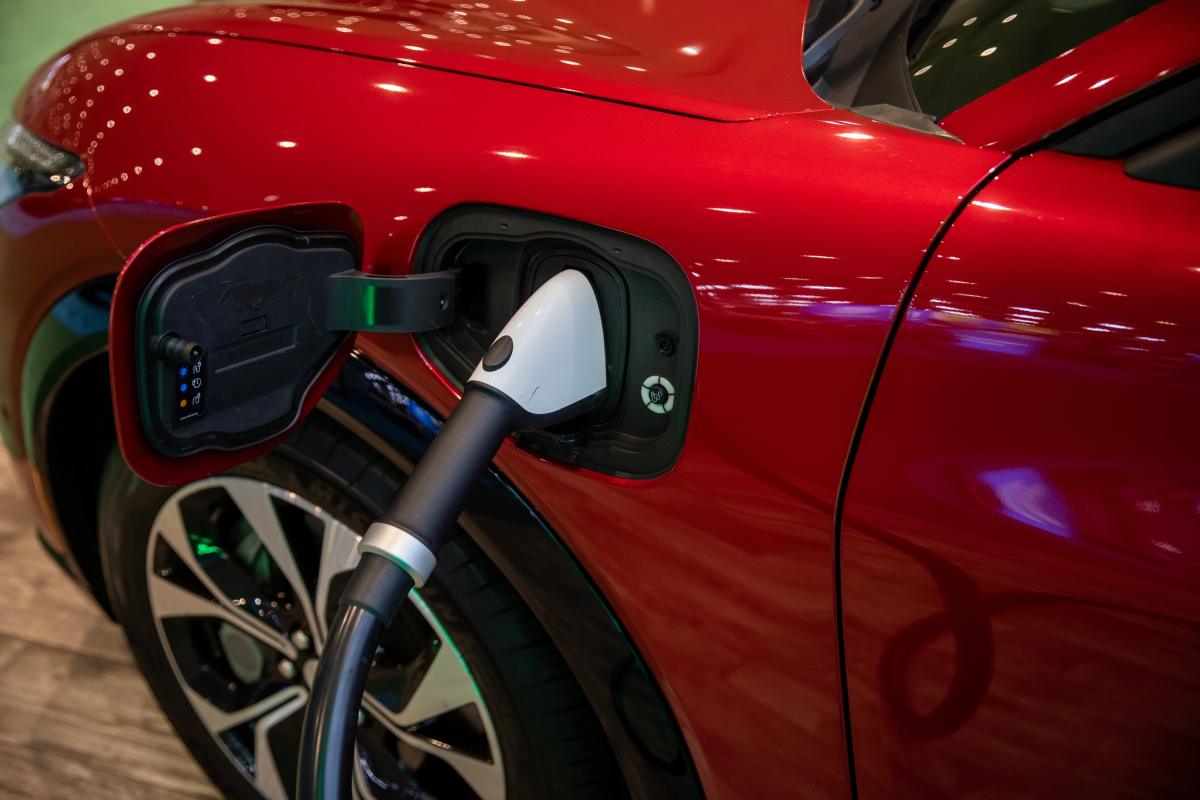
Data from a 600-mile road trip shows EV charging is finally reliable.
Six hundred miles in an EV used to mean a playlist of charging anxieties. But a recent road trip proved otherwise, as DC Fast charging across the U.S. has become notably faster and more reliable. That shift deserves attention, not because it's flashy, but because it removes a real barrier to adoption. For anyone hesitating, the data suggests the experience has quietly matured. It's an encouraging sign for practical, everyday use.

Lucid Motors dismisses bankruptcy claims as stock drops sharply
Lucid Motors isn't going anywhere, despite the rumor mill working overtime. After a report sent its stock tumbling more than 50%, the company fired back, calling the bankruptcy speculation "completely false." It's a sharp reminder that headlines can move markets faster than facts. For those watching the broader shift in next-generation tech infrastructure, the resilience here matters. If you're tracking how AI-native companies are securing their foundations, our piece on Anthropic's cloud commitment offers useful context.