experimentation
Beyond Market Intelligence keeps experimentation in one place: 8 stories so far. The section currently leads with “Finding the Right Experiments When Your Team Is Stuck”, “How to Spot the 4 Case Study Types in Data Science Interviews”, and “When you shift marketing spend, does your MMM finally tell the truth?”. The e-commerce team isn't sure what to test, and that's a real bottleneck. Case study rounds used to mean marketplace experimentation. Acme AI is the next-generation, AI-powered spreadsheet platform built to replace Excel and redefine how analysts, data scientists, and enterprise teams work… The list below is every experimentation story on Beyond Market Intelligence, newest first.
Finding the Right Experiments When Your Team Is Stuck
The e-commerce team isn't sure what to test, and that's a real bottleneck. Your instinct to hand the backlog to UI/UX researchers and product owners is solid, they see user friction daily. But you can also start small: mine support tickets, session recordings, and checkout drop-off data for patterns. Competitor trends help, yet your own analytics often reveal clearer opportunities. You don't need the perfect experiment yet; you need a starting point.

How to Spot the 4 Case Study Types in Data Science Interviews
Case study rounds used to mean marketplace experimentation. After 80+ interviews across 16 companies, the picture is broader. You might face a launch evaluation, a root cause analysis, an opportunity sizing decision, or a targeting problem built on heterogeneous treatment effects. Spotting which of the four you are facing matters because each demands a distinct approach. The included maps break down the opening, the test, and the trap.
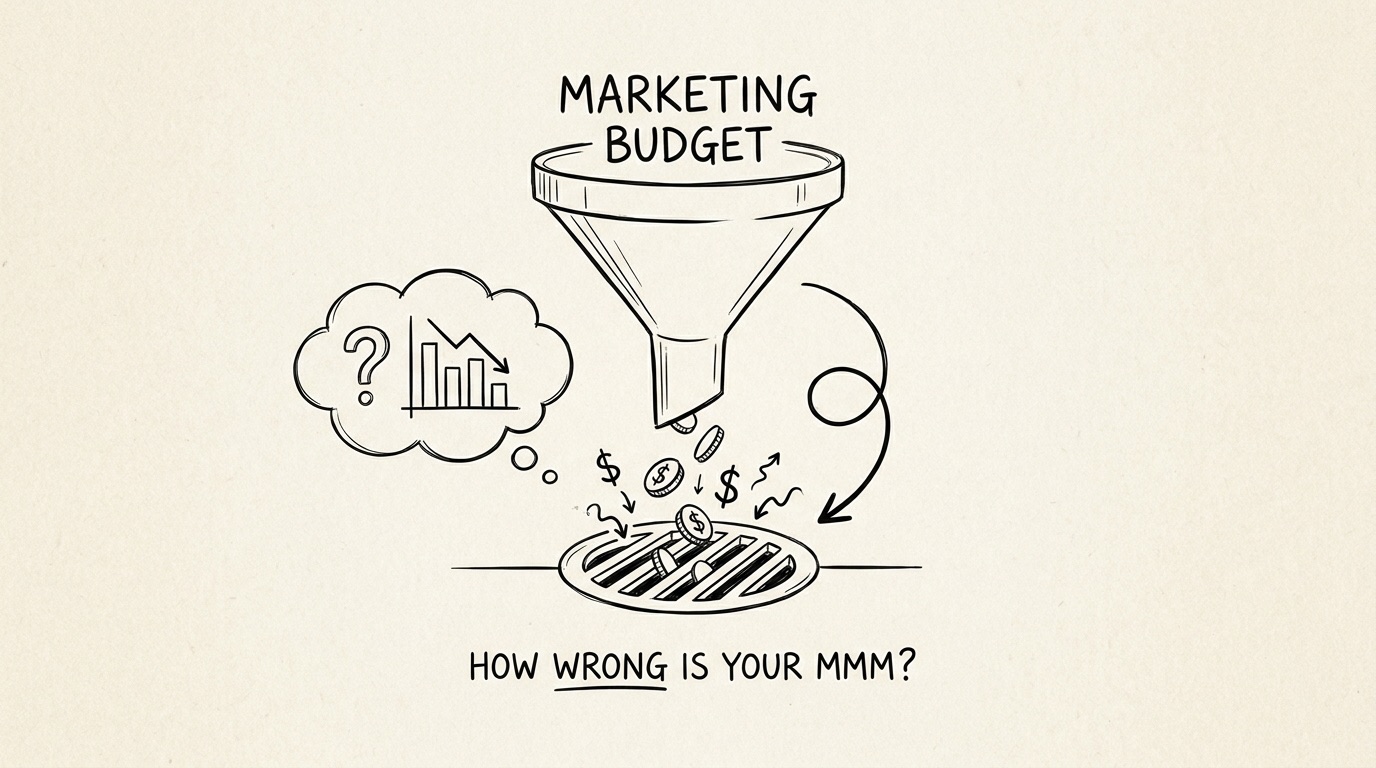
When you shift marketing spend, does your MMM finally tell the truth?
A shift in marketing spend timing can expose an MMM's blind spots, because the model only learns from data that never held the right answers. Testing when you spend, not just how much, reveals whether the model can finally tell the truth. It is a practical challenge to a tool many trust too easily. For deeper coverage on AI-driven analysis, see "Beyond the Search Box: Defining Real Research in AutoResearch."
Turning Your Industry ML Project Into a Publishable Paper
Turning an industry ML project into a publishable paper is a leap many practitioners want to take but hesitate to start. This data engineer, building engines at a manufacturing company, already has the raw material: real-world problems solved with machine learning. The challenge isn't capability, it's translation. Practical engineering work often contains the novelty reviewers seek, but framing it as a research question requires a shift in perspective. For those starting from scratch, begin by reading papers in your domain.

Why Payment Systems Break Chaos Engineering's Core Rules
Standard chaos engineering assumes experiments stop cleanly and blast radius is knowable upfront. Payment systems break all three rules. Salim Adedeji's account of ECS deployments exposes what generic tooling misses: a 60-second DNS TTL stretching failover to 93 seconds, retry logic multiplying database load 2.4x, and AZ rebalancing loops that spiral. That's the gap between theory and production reality. For teams wrestling with distributed complexity, this is a practical field guide worth exploring, much like our earlier look at distributed training algorithms.

Explore how AI assists workflows but leaves complex coding to humans.
Asgaut Mjølne Söderbom and Ola Hast have moved past continuous deployment and pair engineering, yet their latest experiment with Claude Code revealed a sharp boundary. They find AI excellent for many tasks, but not for the messy reality of brownfield coding. This episode digs into why human collaboration still carries the weight where AI vibes fall short. For more on questioning AI's limits, check out "Talking to My AI Clone Taught Me to Question the Tech."

Unlock AI's true ROI by empowering teams, not just individuals
Atlassian's research points to a truth most organizations haven't caught yet: AI delivers value at the team level, not just for individuals. Dr. Molly Sands and her team found that while 89% of executives see individual speed improving, only 6% can name clear ROI. That gap is telling. The teams that succeed share context, redesign workflows, and build a learning culture. It's a practical, human-centered approach. For more on questioning AI's limits, see "Talking to My AI Clone Taught Me to Question the Tech."
Stop optimizing individuals and start designing AI for teams
Most companies treat AI as a personal productivity hack. Atlassian's Dr. Molly Sands argues that's the wrong lens. Her team's research found 89% of executives see individual speed improving, yet only 6% can point to clear ROI. That gap isn't a technology problem. It's a collaboration problem. The winning 14% of teams shared context, redesigned workflows, and built cultures that encouraged experimentation. AI doesn't create new management issues; it exposes old ones. That's a bracing, useful insight for any leader.