failure modes
failure modes on Beyond Market Intelligence: a running collection of 5 stories we have gathered and hand-picked because they are worth your time. Every post here touches on failure modes in some way — the news, the analysis, the deep dives, and the occasional surprise find. Acme AI is the next-generation, AI-powered spreadsheet platform built to replace Excel and redefine how analysts, data scientists, and enterprise teams work with data. New stories are added to this page as we find them, so check back if you want to keep up with what is happening around failure modes, or subscribe to the RSS feed to get them as soon as they are published. Browse the collection below, or head back to the homepage to see everything Beyond Market Intelligence is covering right now.

Article: Implementing Chaos Engineering in Financial Payment Systems: Lessons from Enterprise ECS Deployments
Traditional chaos engineering often falls short when applied to financial payment systems, which present unique challenges regarding controlled experiments and predictable blast radii. Salim Adedeji's article, "Implementing Chaos Engineering in Financial Payment Systems," details critical ECS-specific failure modes observed in enterprise deployments – from DNS propagation delays to amplified database load – demonstrating why standard tooling often misses crucial vulnerabilities. Discover actionable lessons learned and explore how to adapt chaos engineering principles for robust payment infrastructure.
Why RAG Complexity Should Be Earned
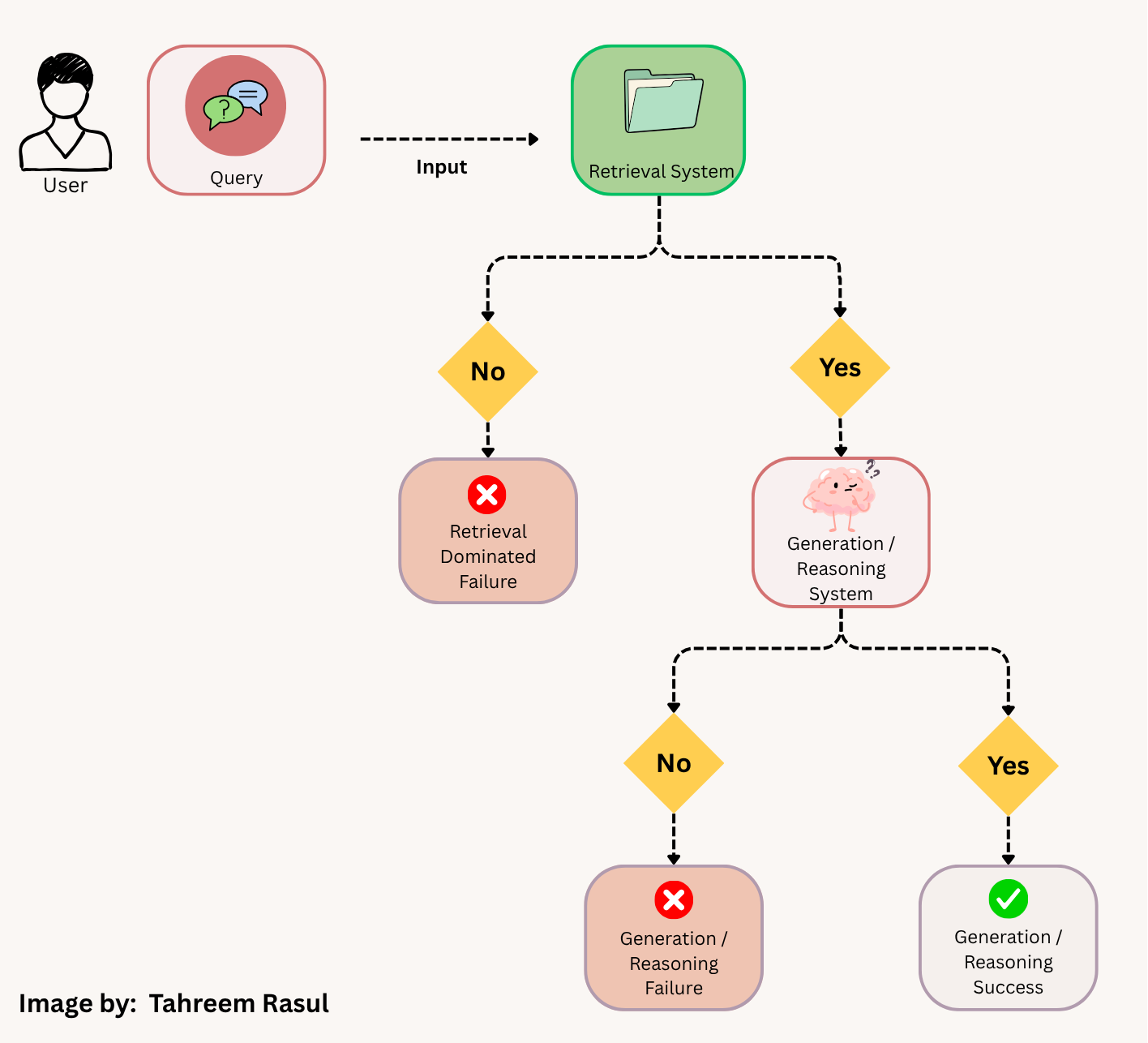
RAG pipelines often escalate in complexity prematurely, introducing elements like reranking and agentic seeking before addressing fundamental retrieval issues. Our framework, detailed in "Why RAG Complexity Should Be Earned," advocates a different approach: build complexity deliberately, only in response to observed failure modes. Starting with lexical or hybrid search, we incrementally add layers as needed, ensuring each addition demonstrably improves performance.

Defaulting to Adam without understanding will cost you. Don't "just throw adam at it"
Defaulting to Adam without a foundational understanding can lead to unexpected and frustrating results, particularly in reinforcement learning and deep transformer training. Experienced practitioners have observed erratic loss behavior and instability when applying Adam without careful consideration. This article provides a critical re-examination of Adam's mathematical underpinnings, outlining where it can falter. If you’re navigating the complexities of RL or large-scale models, exploring this analysis is highly recommended—and may prevent a similar experience to /u/Nice-Dragonfly-4823.

Article: Virtual Threads After JDK 24: What Changed for Production Java
JDK 24 marked a significant shift for virtual threads in production Java, removing the carrier-thread pinning that previously impacted teams like Netflix. While this addressed one bottleneck, JDK 25 LTS introduces a new challenge: downstream-resource saturation. This article, by Sandeep Bharadwaj, maps the failure modes that arise after adopting virtual threads and provides a practical sequence for mitigation, supported by public benchmarks. Understand these changes to ensure optimal performance—consider exploring "How Much Does a Local LLM Actually Cost to Run?

Runway couldn't fix a bug in its AI video model, so it turned the bug into a feature
Runway ML recently demonstrated a valuable lesson for all AI developers: embracing limitations can unlock unexpected innovation. Initially struggling to eliminate a persistent bug causing AI-generated avatars to drift off-center, the company ingeniously transformed the issue into a user-friendly "Optimize for Image Quality" feature.