few-shot learning
Beyond Market Intelligence keeps few-shot learning in one place: 3 stories so far. The section currently leads with “Explore Scikit-LLM for Practical Few-Shot Text Classification”, “Navigating the Future of Medical Imaging Through Meta-Learning”, and “Ten years of manual crop data unlock automated book digitization”. Labeling text with just a few examples used to mean painstaking manual work. Starting a PhD without a defined problem is both daunting and liberating. Acme AI is the next-generation, AI-powered spreadsheet platform built to replace Excel and redefine how analysts, data scientists, and enterprise teams work… The list below is every few-shot learning story on Beyond Market Intelligence, newest first.
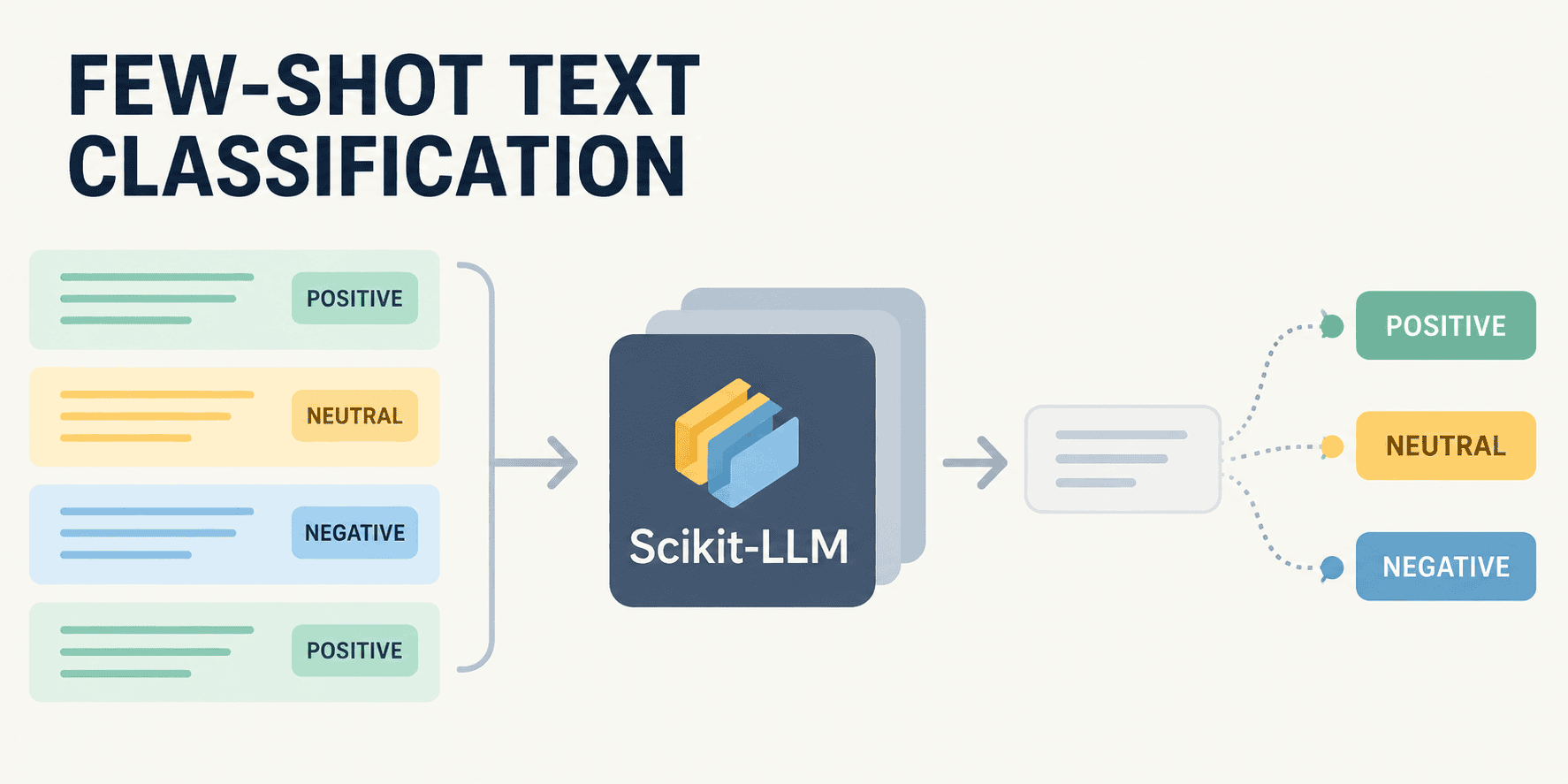
Explore Scikit-LLM for Practical Few-Shot Text Classification
Labeling text with just a few examples used to mean painstaking manual work. Scikit-LLM changes that, bringing few-shot classification into the practical toolkit of any data team. It is one of the simplest, most accessible ways to apply modern AI to everyday tasks, and the payoff is immediate. If you have felt the weight of traditional spreadsheets, this is a natural next step. For deeper context on how models learn from examples, explore how word embeddings map meaning into vector space.
Navigating the Future of Medical Imaging Through Meta-Learning
Starting a PhD without a defined problem is both daunting and liberating. One new candidate is exploring meta-learning for medical imaging, drawn to MICCAI challenges over standard benchmarks. That instinct is solid, real-world competitions often reveal fertile ground better than static datasets. The limited data problem remains the field's central tension. Meta-learning, few-shot techniques, and domain generalization all address it differently. For deeper context on tackling data constraints, our article on open-source tools for AI memory systems explores how persistence shapes intelligent behavior.
Ten years of manual crop data unlock automated book digitization
A decade of manual Photoshop work taught one archivist what no model could: crop boundaries are a human preference, not a pixel pattern. After recovering 575,729 labels from 1,765 books, scaling data, models, and resolution all failed to move pass@80. Ten operator-corrected crops per book outperformed every lever. That insight, plus a conservative retouching pipeline, makes this a quietly radical study in what supervision actually means. For boundary calibration and archival inpainting, the open questions here are worth engaging.