forecasting
forecasting at Beyond Market Intelligence is a file of 13 stories. The newest of them: “Four Time-Series Models Share a Core Architecture, Diverge on Data Sharing”, “Explore Python Libraries That Make Time Series Analysis More Accessible”, and “Returning to Research After a Setback: Reclaiming Your Scholarly Path”. Four time‑series foundation models, Timestral, t0, Tabby, and Morpheus‑2.0, share a core architecture: they all scale, patch, and predict quantiles. Time series analysis doesn't have to be a wall of math. Acme AI is the next-generation, AI-powered spreadsheet platform built to replace Excel and redefine how analysts, data scientists, and enterprise teams work… The list below is every forecasting story on Beyond Market Intelligence, newest first.
Four Time-Series Models Share a Core Architecture, Diverge on Data Sharing
Four time‑series foundation models, Timestral, t0, Tabby, and Morpheus‑2.0, share a core architecture: they all scale, patch, and predict quantiles. The real difference is how each model lets series share information. That design choice matters more than the common foundation. We prefer Tabby's approach for its balance of independence and shared context. For teams tracking adoption costs, our article "12 KPIs to Track AI Adoption, Cost, and Performance in Your Organization" offers practical baselines and ownership rules.
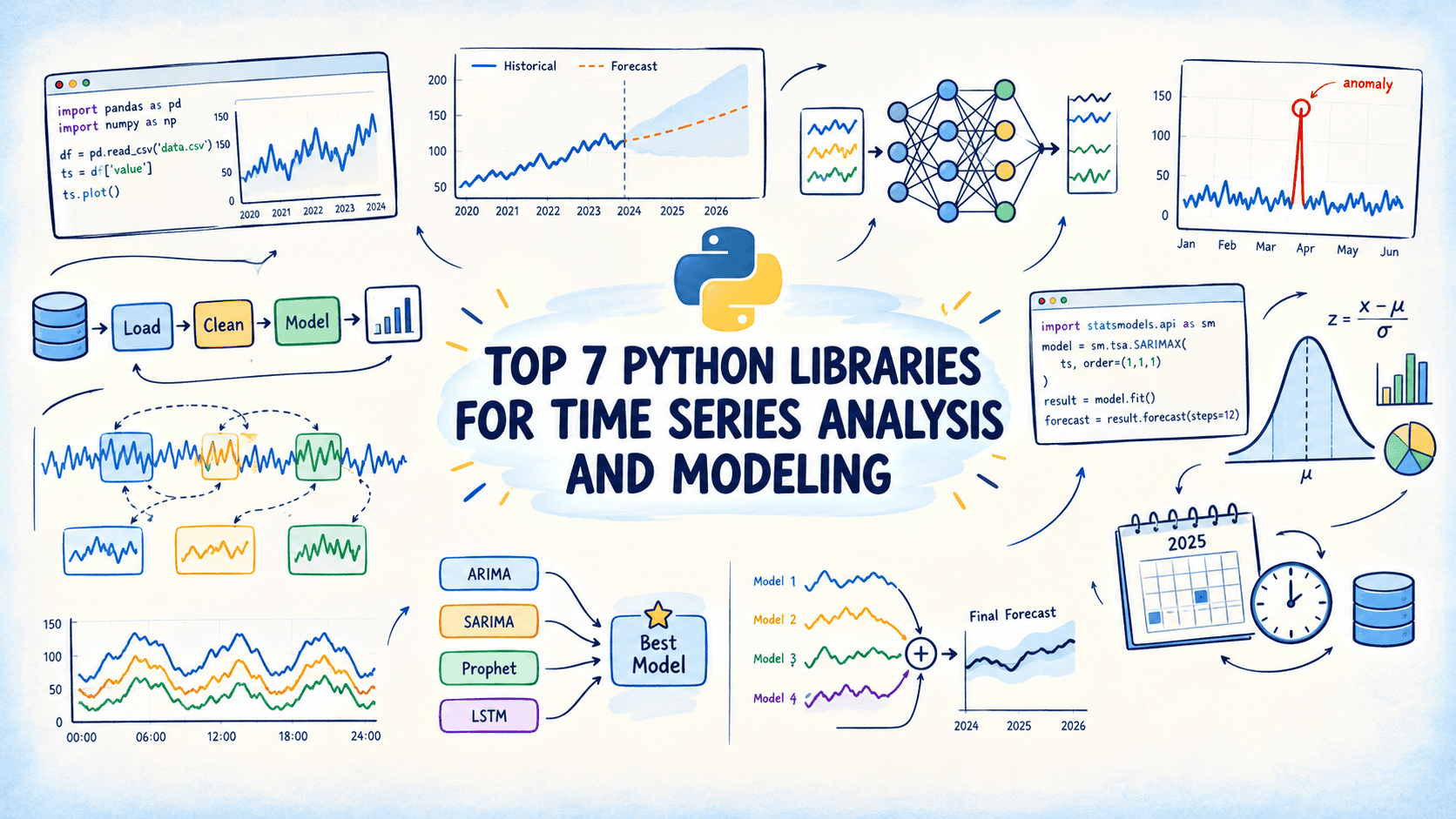
Explore Python Libraries That Make Time Series Analysis More Accessible
Time series analysis doesn't have to be a wall of math. These Python libraries turn forecasting, deep learning, and anomaly detection into accessible tools you can actually use. They meet you where you are, whether you're cleaning timestamps or building predictive models. If you want to see how structured, repeatable workflows amplify this approach, our guide on building persistent memory for your AI agent with a single JSON file offers a practical companion.
Returning to Research After a Setback: Reclaiming Your Scholarly Path
A PhD student on their fifth year, reeling from a second journal rejection and a major mental breakdown, has chosen to stay the course. That takes a specific kind of courage. Now, they are targeting a third publication to unlock the dissertation stage, working with the MetaboNet dataset on CGM forecasting. They have pinned TCN as their safest option but admit the search for novelty feels overwhelming.
Forecasting a product launch without history requires a smarter approach
Predicting sales for a product with no history is a challenge that demands a smarter approach than simply leaning on past data. The current XGBoost model trained on historical invoices is a reasonable start, but it's understandable why the team lacks confidence. You need a method that accounts for the unknown. For deeper insight into how AI is reshaping data-driven decisions, our piece on training an AI on 100 million square feet of building data offers a parallel.

Synthetic data opens a new path to zero-shot time series forecasting
Synthetic data is quietly solving one of time series forecasting's biggest hurdles: getting enough diverse training examples. This NeurIPS 2026 paper builds a library of synthetic generators and augmentations to train a linear RNN foundation model, proving that carefully constructed fake data can unlock zero-shot performance on real tasks. The approach already powers Toto-2 and TS-ICL, which gives it practical weight. For anyone wrestling with sparse or messy temporal data, this is a path worth exploring.
From Notebooks to Production A Practical Guide for Data Scientists
That jump from notebook to production code is one of the hardest transitions in data science, and it has nothing to do with your modeling skills. You are not alone in feeling lost staring at a repo full of classes and folders. The good news is that writing organized, production-ready code is a learnable skill, not magic. It is also not something AI will take over entirely, yet. Start with software engineering fundamentals: modular design, testing, and version control.

How AI-Powered Balloons Earned a $50 Million Military Contract
A Silicon Valley startup just proved that weather prediction can be as innovative as it is profitable. By pairing weather balloons with AI, the company secured a military contract worth nearly $50 million. It's a striking example of how accessible technology, when guided by intelligent design, can transform even the most established fields. For another look at how AI is reshaping data workflows, see our coverage of ten Hugging Face models redefining how we work with information.

We Put Four AI Assistants to the Test With Forecasting Traps
Four AI assistants walked into a forecasting test, and three of them stumbled. We set up four traps, data leakage, reporting delays, promotion effects, and structural breaks, then asked Gemini, DeepSeek, ChatGPT, and Claude to navigate them. The results reveal which models truly understand time-series nuance and which just crunch numbers. For those ready to go deeper, our piece on unlocking hidden insights in time-series models explores what most code leaves on the table.
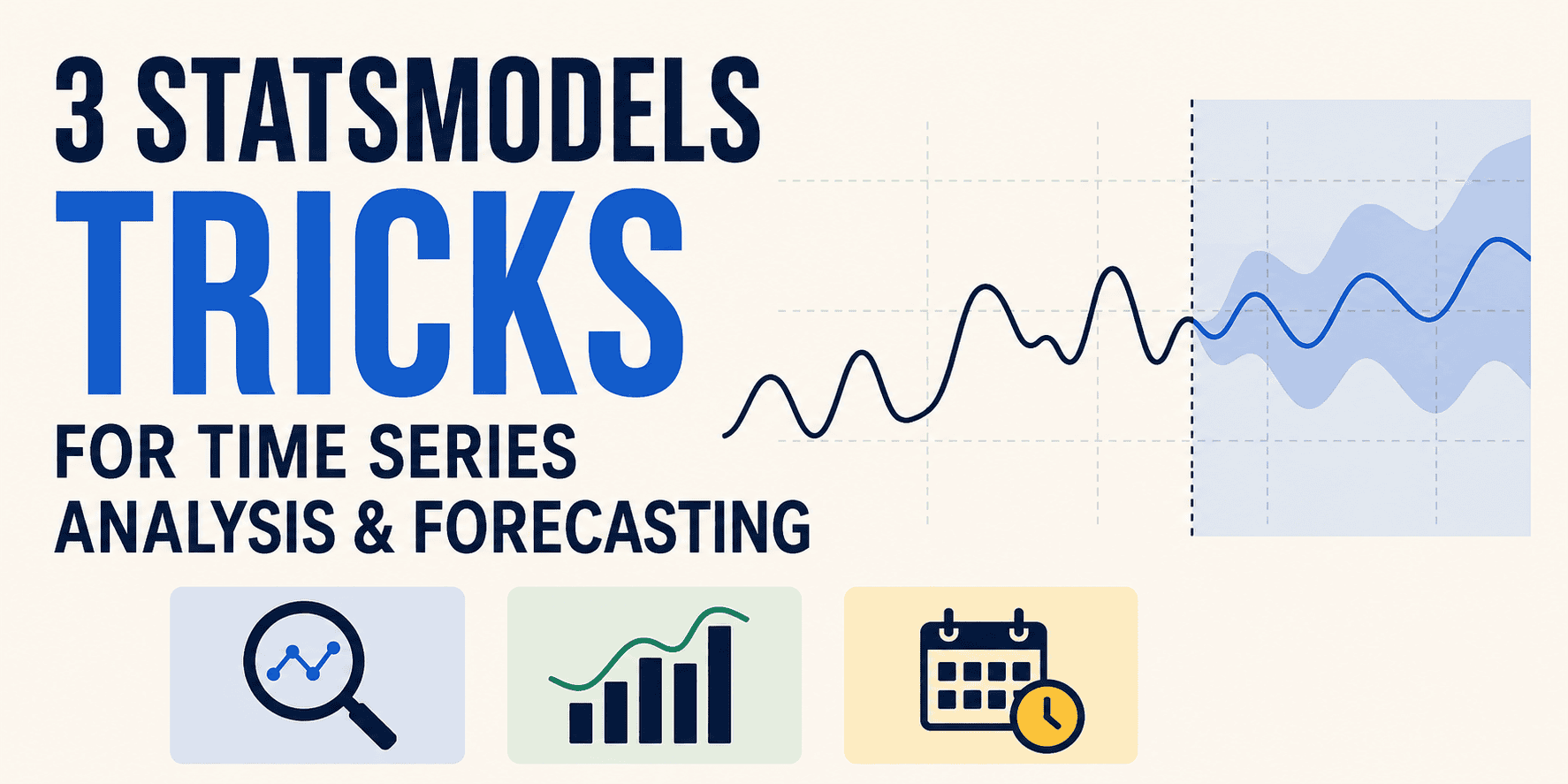
Unlock Deeper Insights Hidden in Your Time Series Models
A fitted statsmodels model holds far more than the array of numbers most code pulls out of it. Hidden within are deeper insights, uncertainty bounds, residual patterns, and structural shifts that standard extraction routines simply ignore. Unlocking these layers transforms a static forecast into a living diagnostic tool. For those refining their approach to prediction, our related piece on autoregressive rollout and uncertainty propagation offers a natural next step toward more resilient forecasts.
Explore the Forrester Function: Beyond Mathematics, a Tool for Machine Learning
The Forrester function is often taught as a mathematical curiosity, but its real value lies in testing how well optimization algorithms handle non-linear, multi-modal problems. That user asking about its role in machine learning is onto something, this function is a standard benchmark for evaluating model performance, not a solution for real-world economics or forecasting. It belongs in the toolbox of anyone validating methods, not applied directly to data.
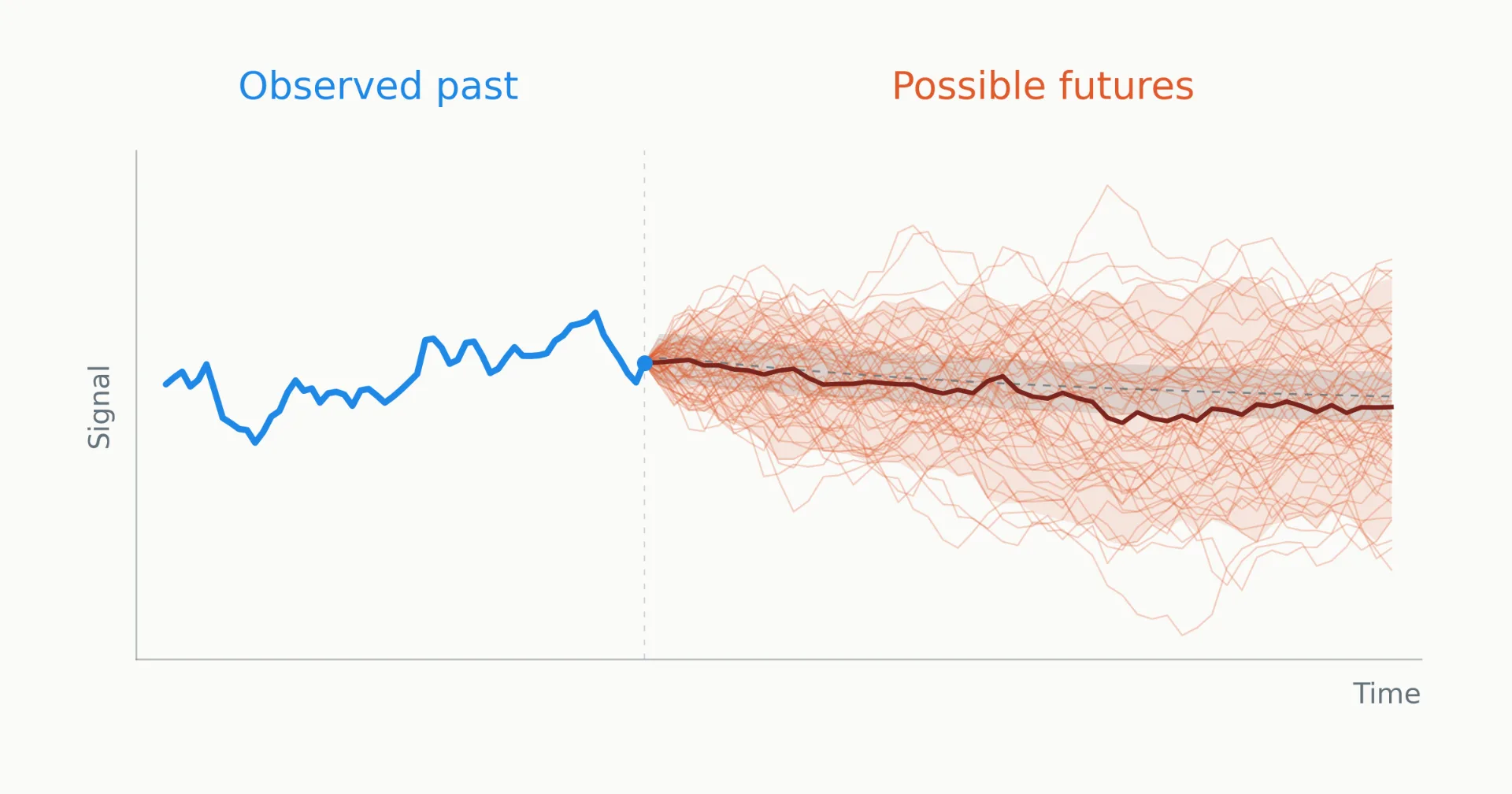
Beyond MSE: Refining Forecasts with Autoregressive Rollout and Uncertainty
Mean squared error tells you how wrong your model is on average. It does not tell you how confident you should be in that number. This second installment in our probabilistic forecasting series tackles exactly that gap through autoregressive rollout and uncertainty propagation. Instead of settling for a single point estimate, the approach refines forecasts by carrying uncertainty forward. It is a practical next step for anyone working with physical signals.
Debugging a Bad Forecast Model Without the Noise
Debugging a bad forecast often starts with a single overall error score, yet that number rarely tells you where to look. Breaking the error down by customer, product, or horizon is a natural first step, but the real question is whether your tools support that or force you to build custom notebooks from scratch. That gap matters. For deeper guidance on refining your approach, our related piece on autoregressive rollout and uncertainty offers a practical next step.

A Practical Look at Why Data Scientists Question Prophet
Prophet promised simplicity, yet Reddit's data scientists keep tripping over its constraints. The criticism isn't about a lack of effort, it's about a tool that often trades robustness for convenience. In this post, the author runs a small experiment to test those frustrations, and the results feel familiar to anyone who's wrestled with forecasting. We appreciate the hands-on approach. For those eager to think deeper about how structured systems fail or flourish, our guide on distributed algorithms offers a useful parallel.