formula generator
formula generator at Beyond Market Intelligence is a file of 108 stories. The newest of them: “Explore smarter time tracking with AI that simplifies your calculations.”, “Discover how AI can simplify your nutrition spreadsheet calculations”, and “Your Spreadsheet Shouldn't Freeze While You Work”. Managing time calculations in spreadsheets can be challenging, especially when dealing with clock in/out data. Hello! Acme AI is the next-generation, AI-powered spreadsheet platform built to replace Excel and redefine how analysts, data scientists, and enterprise teams work… The list below is every formula generator story on Beyond Market Intelligence, newest first.
Explore smarter time tracking with AI that simplifies your calculations.
Managing time calculations in spreadsheets can be challenging, especially when dealing with clock in/out data. In this scenario, you have an XLS file with three columns: clock in, clock out, and total time worked. While the first two columns display time correctly, the total time calculation leads to errors due to formatting issues. This guide will help you navigate these complexities, ensuring your data reflects accurate total hours worked without the frustration of error values. Let's explore effective solutions to streamline your time tracking process.
Discover how AI can simplify your nutrition spreadsheet calculations
Hello! It sounds like you're embarking on an exciting journey to create a nutrition spreadsheet that efficiently calculates ingredient amounts to meet your calorie and macronutrient targets. You're right in seeking a solution that allows for flexibility within your constraints. Instead of relying on exact solutions, consider implementing a formula that introduces a margin of error, enabling more realistic ingredient weights. This approach can help balance your recipe outcomes while ensuring they remain practical and achievable.
Your Spreadsheet Shouldn't Freeze While You Work
It sounds like you're experiencing significant performance issues with your Excel workbook, especially when handling large datasets across multiple sheets. As a Customer Services Manager, your need for efficient scheduling and error tracking is crucial. Fortunately, there are several strategies you can explore to optimize your workbook and reduce freezing times. These may include simplifying formulas, minimizing the use of volatile functions, or even considering alternative data management solutions that can handle larger datasets more efficiently. Let’s dive into actionable tips to enhance your experience.
Simplify Complex Delivery Schedules with AI-Powered Calculations
Managing delivery schedules across multiple vendors can be complex, especially when their final order "drop" days differ. To streamline this process in Excel, you can create a formula that calculates the weekdays between each vendor's delivery days. For instance, if a vendor delivers on Mondays, Wednesdays, and Fridays, but has varying drop dates, you can automate the identification of auto-order days. This method allows you to visualize the days between drops, ensuring you never miss an order while simplifying your workflow.
Explore smarter ways to handle dynamic arrays in your spreadsheets.
Navigating large datasets in Excel can be daunting, especially when formulas need to be dragged down unnecessarily, creating empty rows. You’re seeking a way to reference an array of arrays within your formulas, allowing for dynamic adjustment based on your data size. While traditional methods may fall short, exploring functions like BYROW, SCAN, and MAP could offer innovative solutions to streamline your approach.
Understanding Z scores: A simple fix for unexpected results in Excel
If you’re encountering unexpected results when generating descriptive statistics for your Z scores, you’re not alone. This common challenge often arises from formula applications or data handling nuances. The formula you're using, =STANDARDIZE(x, mean, stdev), is foundational, but ensuring the accuracy of your mean and standard deviation inputs is crucial. Your goal is to achieve reliable averages and standard deviations, ideally around 2. Let’s explore potential pitfalls and solutions that can enhance your understanding and streamline your data analysis in Excel.
Uncover hidden inventory mismatches with a smarter comparison formula
If you've ever struggled to filter your spreadsheet data based on dynamic values, you're not alone. Many users face challenges when trying to list items in one column based on criteria from others. In this guide, you'll learn how to extract values from column B where the corresponding values in column E are less than those in column C. By mastering this formula, you’ll streamline your data analysis and set the stage for further insights, like inventory needs.
Combine Text Cells Efficiently with Smart Filtering and Custom Separators
Struggling to format your data for vendor requirements? You’re not alone. Combining multiple text cells in Excel can be tedious, especially when you need to separate values with specific characters while filtering out blanks. Fortunately, there's an efficient solution. By utilizing the TEXTJOIN function in Excel 365, you can seamlessly merge text from multiple cells into one, ensuring that unnecessary gaps are filtered out. Keep reading to discover how this simple formula can save you hours of manual work and streamline your data preparation process.
Collect field data without training, using a spreadsheet that just works.
Are your field staff overwhelmed by complex software when all they need is a simple way to report information? You’re not alone in seeking a streamlined solution for tasks like timesheets, especially when your team prefers straightforward methods over intricate features. Imagine a user-friendly spreadsheet that eliminates distractions and focuses solely on inputting data, ensuring ease of use for everyone. By simplifying spreadsheet interactions, you can enhance data collection while empowering your team.
Average Last Four Weekly Totals Using Today's Week Number
If you’re struggling to return the row that matches today’s week number in your spreadsheet, you’re not alone. Many users encounter the frustrating #VALUE! error when trying to match week numbers directly. The good news is that with Office 365, this process should be straightforward. Your existing formula seems close, but the issue may lie in how the INDEX function generates the array.
Streamline your academic scheduling with smarter sheet coordination
Are you struggling to keep your auxiliary "Release Tracking" sheet in sync with the primary "Master Schedule" in your online workbook? This common challenge can hinder your ability to manage faculty workload efficiently. By utilizing unique IDs and structured formulas, you can maintain the integrity of your tracking without cluttering the Master Schedule. In this guide, we’ll explore practical strategies to ensure your status selections on Release Tracking remain accurate, even as the Master Schedule evolves.
Simplify Calendar Generation with a Smart Excel Approach
Creating a calendar in Excel can often feel daunting, especially with the complexities of the Gregorian Calendar. However, generating a full-year calendar is simpler than you might think. Using a specific formula, you can generate all the weekdays for 2026, accommodating month and year boundaries effortlessly. This approach not only streamlines the process but also produces a clear structure that's easy to modify.

Design Smarter by Reducing the Digital Footprint of Every Pixel
In a world where every high-resolution image and complex animation comes with a hidden cost, the need for sustainable UX has never been more pressing. Designers are now challenged to rethink their approach, prioritizing responsibility over excess. As we look ahead to 2026, the hallmark of sophisticated design will be its ability to minimize impact while maximizing user experience. This guide will explore eco-friendly interface strategies that not only enhance performance but also align with the values of a more sustainable future.
Local automation meets modern efficiency: a VBA-powered Project Manager for German businesses.
Are your current invoicing solutions feeling outdated and cumbersome? Discover how I transformed Excel 2003 into a high-performance Project Manager optimized for German businesses, offering a cost-effective alternative to expensive subscription software. By leveraging advanced VBA logic, I created a seamless, standalone app experience that operates entirely offline—no monthly fees, just pure local automation. Dive into the details of this innovative tool, including UI locking and security features, and see how you can harness the power of legacy technology for modern needs.
Explore XLChek: An Open-Source Tool for Safer Spreadsheet Structures
Are hidden structural issues in your Excel models causing silent failures? Meet XLChek, an open-source structural risk analyzer that scans .xlsx files offline, pinpointing risks like circular references and orphan calculations. Designed for advanced Excel users and model builders, this read-only tool generates clear HTML reports, ensuring your spreadsheets maintain structural integrity without the need for data uploads. I invite your critical feedback on its utility and potential risks it may overlook. Join me in refining this tool for better financial modeling and operational accuracy.
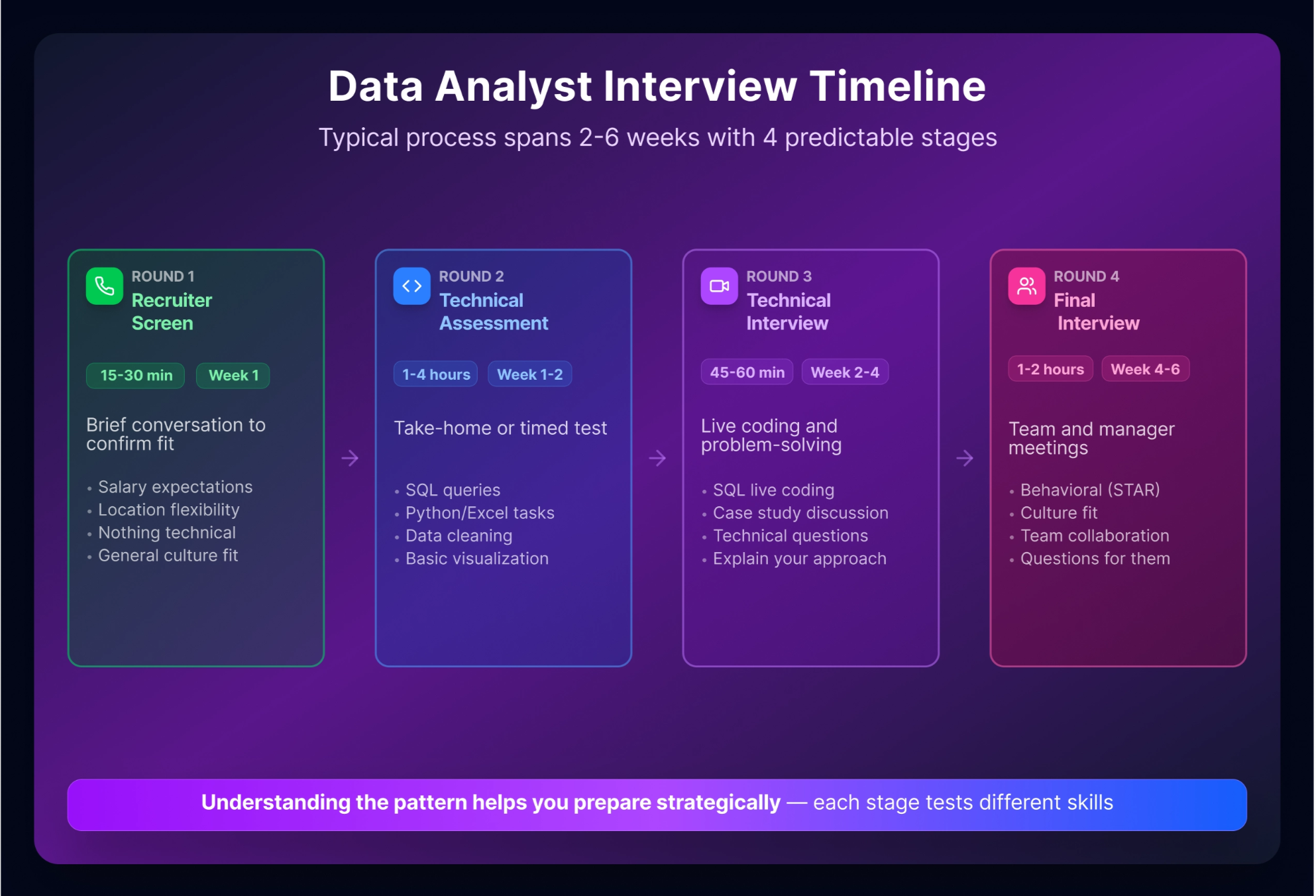
From SQL anxiety to interview confidence with 40 actionable questions
Preparing for a Data Analyst interview can be daunting, especially when self-doubt creeps in: "Am I ready? What if I freeze?" This guide alleviates those concerns by providing over 40 essential interview questions and answers tailored for entry-level candidates. With a strong foundation in SQL, Python, and statistics, you can confidently navigate the interview landscape. Dive in to discover the insights and strategies that will empower you to showcase your skills and secure that coveted position in 2026. Let’s transform your anxiety into assurance.
Discover how to pull unique names from a list without manual effort.
Are you tired of generating random names from a list only to find repeats? With Microsoft Office 365, you can harness the power of XLOOKUP to create a series of formulas that deliver unique names without duplication. Imagine a row where each formula seamlessly eliminates the names already chosen to ensure variety. In this guide, we'll explore how to set up these XLOOKUP formulas effectively, transforming your approach to random name selection while enhancing your productivity.
Stack columns with dynamic lookups across your spreadsheet tabs
Are you struggling to create a two-column array with HSTACK in your spreadsheet? You’re not alone. Many users encounter challenges when trying to dynamically sum values based on corresponding entries from another tab. In your case, it seems the formula is only working for the first row, leaving you with incomplete data. By leveraging the LET function, you can streamline your approach. Keep reading for a clearer breakdown of how to adjust your formula for seamless integration, ensuring all rows reflect the correct sums dynamically.
Stuck on a formula? Check your cell format and parentheses first.
Are you puzzled by a formula that isn’t returning a value? You're not alone. The formula =ROUND(B1 - (0.05 * B1) + (0.03 * B2) may seem straightforward, but several factors can cause it to fail, including cell formatting issues and errors in referenced cells. The red border around the cell could signal an error, indicating that your data may need attention. Dive in to uncover specific reasons for this formula's behavior and learn how to resolve the issue effectively.
When your table refuses to generate, it's time to explore what's missing.
Are you frustrated because your Excel table entries aren’t generating automatically? You’re not alone—many users face this issue, especially when working with complex formulas. The good news is that understanding the right steps can help you unlock the full potential of your data. In this tutorial, we’ll walk through common pitfalls and provide clear solutions to ensure your table populates as intended. Keep reading to discover practical tips that will transform your Excel experience and streamline your workflow.
Transform messy delimited data into clean, structured rows with ease
Are legacy spreadsheets holding you back from effortlessly managing your data? Many users face the challenge of splitting delimited strings while retaining associated values, creating unnecessary complexity in their workflows. In this guide, we’ll explore a streamlined solution using a single formula to achieve this transformation. You’ll learn how to split strings and join values seamlessly, enhancing your data organization and efficiency. Dive in to discover the straightforward steps and powerful techniques that can elevate your spreadsheet game today!
Explore a smarter way to pull invoice data without spreadsheet crashes.
Are you tired of Excel freezing when pulling in data for individuals with numerous invoices? This common frustration can hinder your productivity and stall your projects. Fortunately, there are efficient solutions that leverage AI-native technology to streamline your data management without crashing your system. By exploring alternatives like INDEX/MATCH instead of traditional VLOOKUP, you can enhance performance and ensure smooth operation, even with extensive datasets. Read on to discover how to optimize your formulas and transform your spreadsheet experience for the better.
One formula, no code: solving 100 math problems entirely in Excel
Are legacy spreadsheets holding you back from tackling complex math challenges? Discover how I solved all 100 Project Euler problems using just Excel and a single formula per solution—no VBA required. This journey transformed my approach to problem-solving, showcasing how Excel's capabilities can rival traditional programming languages for specific tasks. Join me as I share insights, innovative techniques, and the surprising power of functions like REDUCE and SEQUENCE.
Which AI writes your most complex Excel formulas and VBA
Navigating the world of complex Excel formulas and VBA can be daunting, especially with so many AI options available. If you’ve been using ChatGPT and Gemini, you might have noticed that Gemini shines in generating intricate Excel formulas. Yet, there's buzz around Claude (Opus) being the top contender for coding tasks. Which AI service truly stands out for your needs? Dive in to explore insights that can help you harness these tools effectively and make an informed choice that elevates your productivity.