foundation models
foundation models at Beyond Market Intelligence is a file of 7 stories. The newest of them: “Synthetic data opens a new path to zero-shot time series forecasting”, “Capital One's open-weight models power a scalable multi-agent AI platform”, and “How 37,000 AI agents collaborate to transform drug discovery”. Synthetic data is quietly solving one of time series forecasting's biggest hurdles: getting enough diverse training examples. Capital One isn't waiting for a better off-the-shelf model. Acme AI is the next-generation, AI-powered spreadsheet platform built to replace Excel and redefine how analysts, data scientists, and enterprise teams work… The list below is every foundation models story on Beyond Market Intelligence, newest first.

Synthetic data opens a new path to zero-shot time series forecasting
Synthetic data is quietly solving one of time series forecasting's biggest hurdles: getting enough diverse training examples. This NeurIPS 2026 paper builds a library of synthetic generators and augmentations to train a linear RNN foundation model, proving that carefully constructed fake data can unlock zero-shot performance on real tasks. The approach already powers Toto-2 and TS-ICL, which gives it practical weight. For anyone wrestling with sparse or messy temporal data, this is a path worth exploring.

Capital One's open-weight models power a scalable multi-agent AI platform
Capital One isn't waiting for a better off-the-shelf model. At VB Transform 2026, Kel Vanee described how the bank built a multi-agent platform by deeply customizing open-weight models with proprietary data, treating that data as an advantage no frontier model can match. The approach scales beyond one use case, lifting performance across the portfolio. It's a practical blueprint for financial services, and for readers exploring how AI agents handle complex workflows, our related piece on bridging retrieval and action offers a useful parallel.
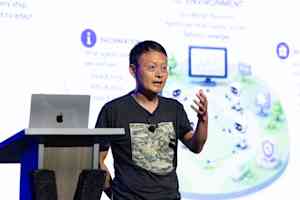
How 37,000 AI agents collaborate to transform drug discovery
The assumption that one engineer equals one AI agent is already outdated. At Stanford, James Zou's team has scaled past that model, building a virtual biotech where 37,000 specialized agents collaborate like a real company. The results speak for themselves: the system designed a drug that Merck later independently validated, earning FDA breakthrough status. For developers, the lesson isn't about building smarter single agents, it's about designing environments where thousands can work together. That's a shift worth exploring, especially as orchestration becomes the real bottleneck.

AI adoption matures as enterprises discover where real returns live
Enterprise AI is finally showing measurable returns, with the SAP Value of AI Report 2026 revealing that AI now powers nearly 30% of tasks in the average organization. That progress comes with a sharper appetite: expected returns on agentic AI jumped from 10% to 17% in a year. Still, most leaders admit the technology isn't reaching its full potential. The bottleneck isn't access to newer models, it's strategy, data quality, and governance.
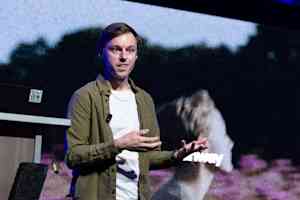
When a bug resists fixing, the smartest feature is a new path forward.
For weeks, Runway chased a bug that made AI avatars drift off-center during real-time video generation. The fix wasn't a clever back-end patch, it was a front-end feature that simply re-centered the user's image before generation began. That pivot turned a limitation into a perceived benefit. Ryan Phillips, head of enterprise product at Runway ML, shared this lesson at VB Transform 2026, arguing that even teams building on foundation models rather than training their own can borrow from Runway's disciplined approach to evaluation and iteration.

Spreadsheets now predict their own missing cells, no training required
Spreadsheets have always been good at following rules, not guessing what comes next. Tabular foundation models change that premise: they predict a missing column the way an LLM completes a sentence, with zero task-specific training. On the TabArena benchmark, these models now outpace fully tuned gradient-boosted trees, which reframes what "good enough" means for tabular data. This introduction walks through how they work, reproduces the strongest open model independently, and maps where XGBoost still holds its ground.

Capital One's new open-source tool finds code flaws and suggests fixes before they ship
Capital One has released VulnHunter, an open-source, agentic AI tool designed to find software flaws before attackers do. It scans source code, maps potential exploit paths, and proposes fixes before production deployment. What stands out is the "attacker-first forward analysis" and built-in falsification engine, which actively tries to disprove its own findings. For a company scarred by its 2019 breach, this is a confident, practical move. It signals a mature bet: the best defense is helping everyone secure their code, not just your own.