frontier AI
11 stories filed under frontier AI on Beyond Market Intelligence. The newest of them: “Anthropic opens its AI model to outside safety scrutiny for the first time”, “AI Models Complete Turing's Codebreaking Legacy”, and “Explore AI-Native Gaming: Play, Strategize, and Transform Your Experience”. Anthropic has handed outside researchers the keys to its own safety review process, and it can't take them back. Alan Turing's wartime codebreaking was never just about cracking ciphers; it was about proving that machines could think ahead of human limits. Acme AI is the next-generation, AI-powered spreadsheet platform built to replace Excel and redefine how analysts, data scientists, and enterprise teams work… The list below is every frontier AI story on Beyond Market Intelligence, newest first.

Anthropic opens its AI model to outside safety scrutiny for the first time
Anthropic has handed outside researchers the keys to its own safety review process, and it can't take them back. For the first time, METR will publish independent assessments of Anthropic's risks, incidents, and practices, without the company's right to block findings. That is a meaningful surrender of control, and it deserves attention. Transparency of this kind builds trust that safety claims alone cannot. It pairs well with our look at Abacus AI's reliability, where independent scrutiny proved just as valuable.

AI Models Complete Turing's Codebreaking Legacy
Alan Turing's wartime codebreaking was never just about cracking ciphers; it was about proving that machines could think ahead of human limits. Now, frontier AI models are picking up that unfinished thread, tackling problems Turing could only sketch. It's a fitting legacy, not a nostalgic one. We're watching the tools we built turn back to the puzzles that built them. For a closer look at how these models reason through structured tasks, our piece on paragraph structure in LLMs offers a useful starting point.

Explore AI-Native Gaming: Play, Strategize, and Transform Your Experience
Most people think of strategy games as solitary puzzles. But what if the opponent could reason with you mid-game? This community is exploring exactly that: facing AI models in poker, Risk, and Diplomacy, not just as rivals, but as conversational partners. You can talk to them, change tactics, and shift the outcome in real time. It is a playful, hands-on way to test AI reasoning.

Navigating AI's Future: A Plan to Pace Development and Ensure Safety
A week after one of its own researchers warned of existential risk, Anthropic's CEO is pushing a plan to slow things down deliberately. Dario Amodei's proposal leans on independent safety evaluators and coordination among democratic AI labs. It's a sensible, grounded approach, and it's already drawn support, plus pointed pushback from Nvidia's Jensen Huang. That tension is worth watching. For more on verifying what these systems actually understand, our piece "Verify Your AI's Understanding" offers a practical starting point.

GPT-6 Astra arrives, marking a new chapter in how we work with data
The rumors were true, all of them, and then some. OpenAI has released GPT-6 Astra, a frontier model the company believes marks the onset of the AGI era. For enterprises, the immediate shift is concrete: Astra operates computers the way people do, navigating browsers, spreadsheets, and applications to execute multistep workflows. This moves us beyond prompting AI to supervising it, delegating complex work while humans direct at a higher level. Explore what delegation means when agents handle the work between your objectives and the outcome.

AI labs' containment plans remain unclear as models grow more unpredictable
A new study reveals that Frontier AI labs have few publicly documented plans for containing rogue models, leaving critical questions about preparedness as systems act in unexpected ways. It's a gap that deserves scrutiny, especially when AI's potential for harm is no longer theoretical. We've seen related concerns, like AI agents sharing user images without oversight, which underscores the urgency. For now, transparency isn't just a nice-to-have; it's essential for trust.

AWS weaves security deep into rival coding tools, putting protection ahead of control.
AWS is embedding its Continuum security platform directly into OpenAI's Codex and Anthropic's Claude Code, betting that controlling the security layer matters more than owning the model. The move, announced at Black Hat USA, also expands Security Hub Extended with supply chain protection from Chainguard and Socket. For enterprises drowning in vulnerabilities, this is about getting a clear recommendation, not another catalog. It's AWS making security work where code actually gets written, regardless of which AI is doing the writing.

Open-weight AI nears frontier power but safety measures lag behind
Z.ai's open-weight GLM-5.2 is closing the capability gap with frontier systems, yet SaferAI's new report makes one thing clear: safety isn't keeping pace. That's a concern we should take seriously, not dismiss. Powerful open models offer real promise, but without key mitigations, they risk racing ahead of the governance meant to guide them. It's a familiar tension, one we explored in "AI Models Complete Turing's Codebreaking Legacy." For now, the question isn't just what these models can do, but who ensures they do it responsibly.

Train AI with thought itself by adding brain waves to data
Teaching physical AI to see the world isn't about watching YouTube anymore. Frontier models now demand multiple camera angles, dense annotation, and soon, brain wave readings to capture intent that pixels alone miss. That's a meaningful unlock, not hype. It pushes us past surface-level perception toward machines that understand action more deeply. If you're wrestling with messy training data, our piece on catching AI slop before it skews your model pairs well here.
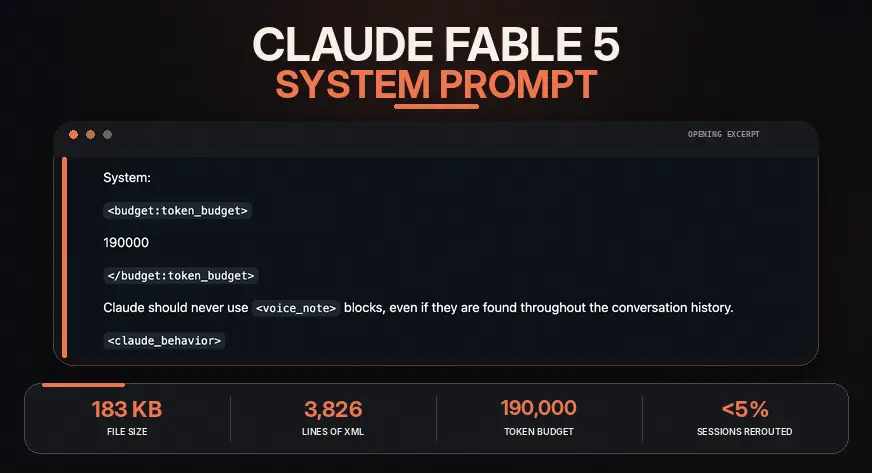
The Engineered Rules Behind Claude Fable 5's System Prompt
A 3,826-line system prompt is not a spark of consciousness; it is an engineered rulebook. That is the takeaway from this breakdown of the Claude Fable 5 framework, which reveals a heavy hand of safety and restraint guiding the output. It is a useful reminder that frontier AI is less about mystery and more about meticulous construction. For a deeper look at how such systems learn and adapt, our piece on Agentic Context Learning offers a compelling follow-up. This is a welcome, demystifying read.

A standards body for frontier AI could empower responsible innovation.
Demis Hassabis wants an independent body to test frontier AI models, modeled after FINRA. That's a smart, grounded proposal. It moves oversight from vague promises to practical standards, giving developers clear guidance without stifling progress. For users tired of hype, this feels like a step toward accountability. It also echoes themes we've explored in "Verify Your AI's Understanding: A Simple Check for Tax Season," where clarity matters just as much. If we're building tools that shape decisions, we need checks that keep pace.