funding
funding at Beyond Market Intelligence is a file of 149 stories. The newest of them: “AfterQuery's rapid rise to $3.2B shows what focused AI innovation can achieve.”, “Unacademy's sale to upGrad reframes the true cost of peak funding.”, and “Discover how data centers can empower America's AI future”. AfterQuery has reportedly become Y Combinator's fastest-ever unicorn, now valued at $3.2 billion. Unacademy's $206 million sale to rival upGrad lands at roughly 94% below its peak valuation, and co-founder Gaurav Munjal isn't hiding from that math. Acme AI is the next-generation, AI-powered spreadsheet platform built to replace Excel and redefine how analysts, data scientists, and enterprise teams work… The list below is every funding story on Beyond Market Intelligence, newest first.

AfterQuery's rapid rise to $3.2B shows what focused AI innovation can achieve.
AfterQuery has reportedly become Y Combinator's fastest-ever unicorn, now valued at $3.2 billion. That's a tenfold jump in just five months, following its $30 million Series A at a $300 million valuation in April. The pace is striking, even for AI. It signals real momentum behind the demand for smarter data tools. We're watching a company move quickly, and that's worth exploring. For a closer look at how AI is reshaping core workflows, check out our piece on verifying your AI's understanding.

Unacademy's sale to upGrad reframes the true cost of peak funding.
Unacademy's $206 million sale to rival upGrad lands at roughly 94% below its peak valuation, and co-founder Gaurav Munjal isn't hiding from that math. "I'm not going to dress these facts up," he wrote. That honesty is rare and welcome. It's a sobering reset for edtech's inflated era, but not a eulogy. Munjal's candor invites a clearer-eyed view of what sustainable growth requires. For a deeper look at how similar pressures are reshaping other tech bets, see our piece on Anthropic's cloud commitment.

Discover how data centers can empower America's AI future
A new political action group, funded by Andreessen Horowitz and Sam Brockman, is spending millions on ads to sway midterm voters. Build American AI plans to lobby select states on the virtues of data centers. It's a direct attempt to frame infrastructure as a local priority, and it's worth watching how voters respond. For more on how AI is reshaping practical tools, our piece on verifying your AI's understanding offers a useful contrast.

Breslow commits $5M to secure bridge funding for Bolt's future
Ryan Breslow is putting his money where his mouth is. The Bolt founder is raising up to $27 million in pay-to-play bridge funding to keep the checkout startup afloat, and he's committing $5 million of his own cash to the effort. That's a bold vote of confidence for a company once valued at $11 billion. It's the kind of move that forces a second look, especially when you're trying to rebuild trust.

Explore how hardware investment is shaping AI's next frontier.
a16z is putting $1.1 billion behind a simple bet: the next wave of AI runs on more than software. The firm, long associated with code-first startups, is now funding the physical infrastructure that keeps pace with model growth. That is a meaningful signal for anyone building in the space. If you are navigating how these systems actually train and scale, our guide to distributed algorithms offers a practical starting point. The hardware story is just beginning.

Former Instagram builders raise $21M for friend-focused photo sharing
Retro, a photo-sharing app built by former Instagram employees, just closed over $21 million in Series A funding. That vote of confidence signals real momentum for a platform doubling down on close friends rather than broad broadcasting. We like that focus; it meets a genuine need for intimacy online. If you are curious how other tech players are refining their own tools, Cloudflare's Blog Finds Performance Gains with EmDash, Its New CMS offers a neat parallel. For now, Retro's growth is worth watching.

Instinct raises $350 million as AI privacy questions grow louder
A year old, and Instinct has already raised $350 million at a $2.5 billion valuation. That kind of speed says less about hype and more about a genuine appetite for what AI-native tools can do. Of course, that momentum also brings real questions about privacy, and we should be asking them now rather than later. For a deeper look at how we evaluate these systems, our related article, "Verify Your AI's Understanding: A Simple Check for Tax Season," offers a practical starting point.
Why Reproducibility Must Be More Than a Checklist Promise
Four papers for AAAI 2027, and not a single line of code or data to inspect. That is a frustrating start to any review cycle. The checklist exists precisely to prevent this gap between promise and proof. When a paper's core argument rests entirely on numbers you cannot verify, your confidence in those results should drop, and it is right to flag it. Asking for anonymized code during rebuttal is a fair, practical move.

QueryStory secures $6M to make AI queries coherent and trustworthy
QueryStory is betting that the gap between what an AI says and what it means can be closed with the right guardrails. The startup emerged from stealth with $6 million in seed funding, pairing LLMs with cybersecurity expertise to make AI queries more coherent. That focus on trust feels timely, especially if you have been following our piece on questioning AI clones. We are watching closely to see if their approach turns skepticism into a feature, not a flaw.

Explore language from the past with a focused AI built on vintage text.
Three months and $807 bought Unbounded Labs a vintage LLM named Bart, trained from scratch on 20.1B tokens of pre-1931 English. That is a deliberate constraint, not a limitation. The team behind it wants to know if an AI can rediscover the conclusions of past scientists, as Demis Hassabis suggested, or if it is just predicting the next token. We find that question worth taking seriously, and their open-sourced benchmarks and datasets give us all a way to explore it.
Explore funding options for your first EMNLP travel and stay costs.
Securing funding for your first conference is a real hurdle, and it's frustrating when the support system feels thin. For EMNLP 2026, the Diversity and Inclusion Subsidies are a solid first step, but coverage varies, often partial, so dig into the specifics. Volunteers can offset registration, but travel remains the heavy lift. Look beyond AI-specific pots; your university's graduate office or South Asian regional associations might offer general travel grants. It's a patchwork, but persistence pays off.

Ventures Platform expands its vision with a $84 million pan-African fund
Ventures Platform is expanding its reach with an $84 million second fund, signaling a deliberate step beyond Nigeria's borders. This move reflects a practical truth: the continent's startup potential isn't confined to one market. By broadening its scope, the firm positions itself to back founders where the opportunities are, not just where it started. It's a confident bet on Africa's diversity. For context on how capital is flowing into emerging tech hubs, our piece on AI-native companies driving a $5.

Runable's $21M bet shows AI agents evolving from builders to growth engines
Runable just closed a $21M round, and the signal here is hard to ignore: 60% to 70% of its trillion-plus token usage over the last 90 days came from paying customers. That is not a demo problem. That is real traction. The bet, as the company frames it, is that AI agents can move from building businesses to growing them. We find that distinction compelling, and it suggests a maturity that the market is finally ready to reward.

Discover how Legato Frames make hearing assistance as simple as wearing glasses.
Legato has stepped out of stealth with $12 million and a clear answer to a question many have quietly asked: can hearing assistance live inside a pair of glasses you'd actually wear? Its Frames integrate patented tech into the arms of eyewear, making the category feel less like a medical device and more like a natural extension of daily life. That's a thoughtful move.

Ringg secures $10M from Peak XV to expand voice AI beyond calls
Ringg's $10 million Series A extension from Peak XV signals more than just a funding milestone; it points to where voice AI is heading next. The company is pushing past the phone call, building tools that meet users in their daily workflows instead of forcing them into a legacy channel. That's a practical step forward, not a flashy one.

Generalist secures $200M extension, reaching $3B valuation
Generalist's climb to a $3 billion valuation, backed by a $200 million extension, signals more than momentum. It reflects a quiet confidence in physical AI's practical promise. Just months after doubling its worth, this startup is proving that patient, focused innovation still commands attention. We're watching a space where ambition meets execution, and that's worth exploring. For those questioning how deeply AI should shape our workflows, our piece on verifying AI's understanding offers a grounded counterpoint.

Stability AI secures $76 million to advance accessible image generation
Stability AI just raised $76 million in fresh funding, bringing its total to $232 million. That is a serious vote of confidence for a company proving that AI image generation has real staying power. Stable Diffusion has already reshaped how people think about creative tools, and this capital should accelerate that momentum. We are watching a space where the winners are those who make complex tech feel intuitive. If you are curious about where AI is heading, this is worth tracking.

Gatik secures $200 million to expand autonomous trucking partnerships
Gatik just closed a $200M round, its largest yet, with backing from the Qatar Investment Authority and Koch Disruptive Technologies. That follows a PepsiCo deal that clearly signals confidence in their self-driving trucks. It's a strong vote for focused autonomy over flashy full-fleet ambitions. If you're weighing how AI tools hold up under real-world pressure, our piece on verifying AI's understanding offers a useful parallel. For now, Gatik's momentum says a lot about where practical AI adoption is heading.

Ultra-light drones land $37M to rethink how deliveries take flight
Airbound has raised $37 million to rethink drone delivery from the ground up, and the bet is on lightness over brute force. Backed by Greenoaks, DoorDash, and Lachy Groom, this ultra-lightweight approach targets trucking's dominance with a sharper, more agile premise. It's a compelling direction for logistics, one that feels less like a stunt and more like a practical shift. For context on how AI-native infrastructure is reshaping adjacent industries, our piece on Anthropic's Akamai exploration offers useful perspective.

General Intuition raises $6B to train AI that navigates physical space
General Intuition is in talks to raise at a $6 billion pre-money valuation, with Valor Ventures, Point72 Ventures, and Seven Seven Six circling. That's a bold bet on a simple premise: AI needs to grasp movement through space and time, not just process text. The ambition is real, and the capital backs it. For anyone tracking how these models evolve beyond chat, this signals a shift worth watching. Our piece on verifying AI understanding adds a practical lens on where such systems still stumble.

Defense and energy grants give U.S. battery startups a path forward
The Department of Energy just handed U.S. battery startups $500 million in grants, and it's hard to overstate what that means right now. With EV incentives slashed, this industry was staring down a brutal stretch. This funding doesn't just soften the blow; it repositions these companies for a different kind of future, one where resilience matters more than hype. It's a pragmatic bet on domestic strength.
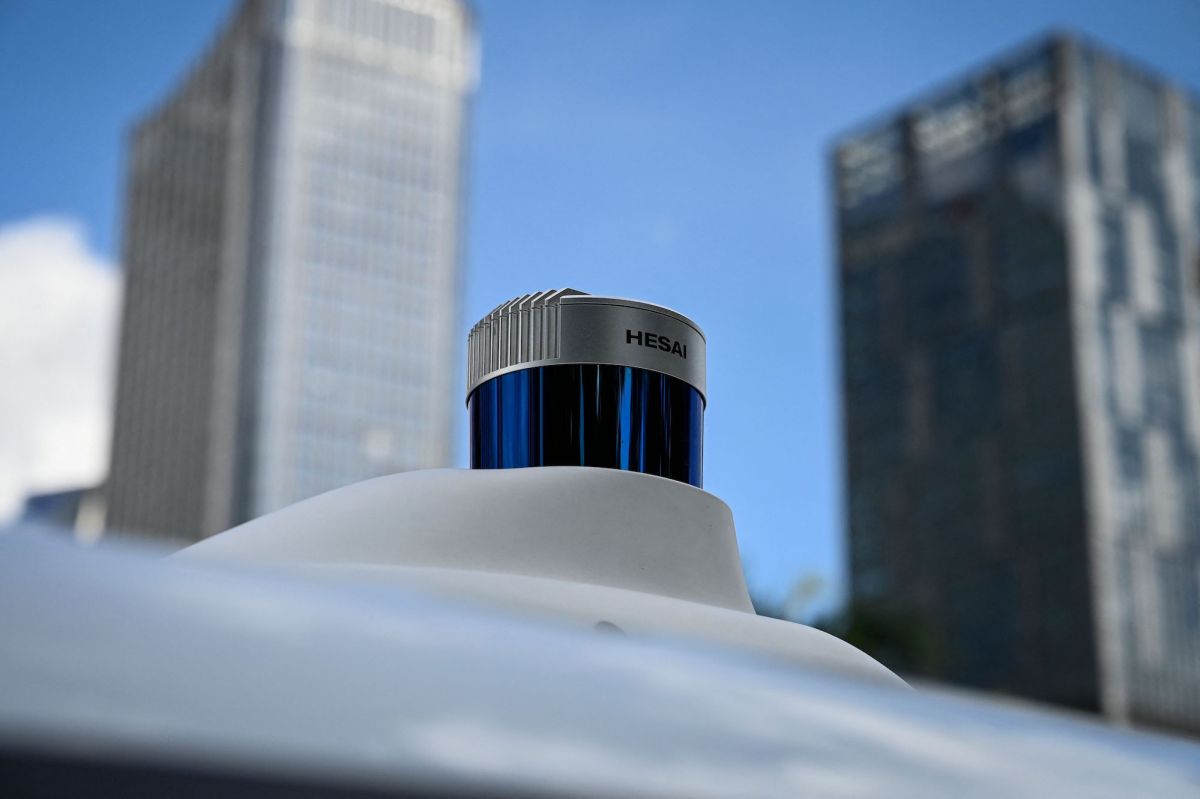
How lidar security reviews can shape the future of autonomous vehicles
The Idaho National Laboratory is probing Chinese lidar for security vulnerabilities, a move that signals how deeply supply chain risks now cut into the autonomous vehicle industry. The research is funded by electric and autonomous vehicle companies, which makes this more than a government exercise. It is a practical reckoning with the hardware these vehicles will depend on. That is a healthy instinct. Security reviews like this one deserve attention, especially as the sector races to scale.

The race for space access intensifies as orbital data funding surges
Starcloud's $250 million raise lands at a tense moment: launch options are tightening, and the race for orbital data centers is becoming a fight for the road itself. That's not hyperbole, it's physics. Whoever secures reliable access to space first will define how AI workloads compute off-planet. We're watching the start of a crowded, high-stakes scramble. For context on how capital is moving into this infrastructure wave, our coverage of Nscale's recent $3.36B buildout is worth a look. The pattern is clear, and it's accelerating.

Why investors return to Disrupt year after year
For investors, the Expo Hall floor is where the real signal lives. Year after year, those who walk the aisles, meet founders, and trade notes with peers walk away with sharper instincts. Missing Disrupt means missing that edge. The agenda is packed, but the connections you make between sessions often carry the most weight. If you want to see where the market is heading, pair the mainstage insights with deeper dives like our recent look at Anthropic's cloud bet. Just be on the ground.