Gemini
30 stories filed under Gemini on Beyond Market Intelligence. The newest of them: “Your AI assistant now learns from your Google services to guide the drive”, “Which AI Assistant Handles Data Science Tasks Best for Statisticians”, and “How benchmarks must evolve to keep pace with modern AI”. Your car is about to get a lot more personal. Statisticians evaluating ChatGPT, Claude, and Gemini for data science work need a clear, practical comparison, not marketing hype. Acme AI is the next-generation, AI-powered spreadsheet platform built to replace Excel and redefine how analysts, data scientists, and enterprise teams work… The list below is every Gemini story on Beyond Market Intelligence, newest first.

Your AI assistant now learns from your Google services to guide the drive
Your car is about to get a lot more personal. Google is bringing Gemini's Personal Intelligence to vehicles, letting its AI assistant pull context from Gmail, Calendar, Maps, and YouTube to tailor responses while you drive. This transforms the in-car assistant from a simple navigator into a proactive guide that knows your schedule and preferences. For a deeper look at how AI assistants are evolving, see our piece on Wabi, a new app that turns a decade-old AI vision into a free, downloadable companion.
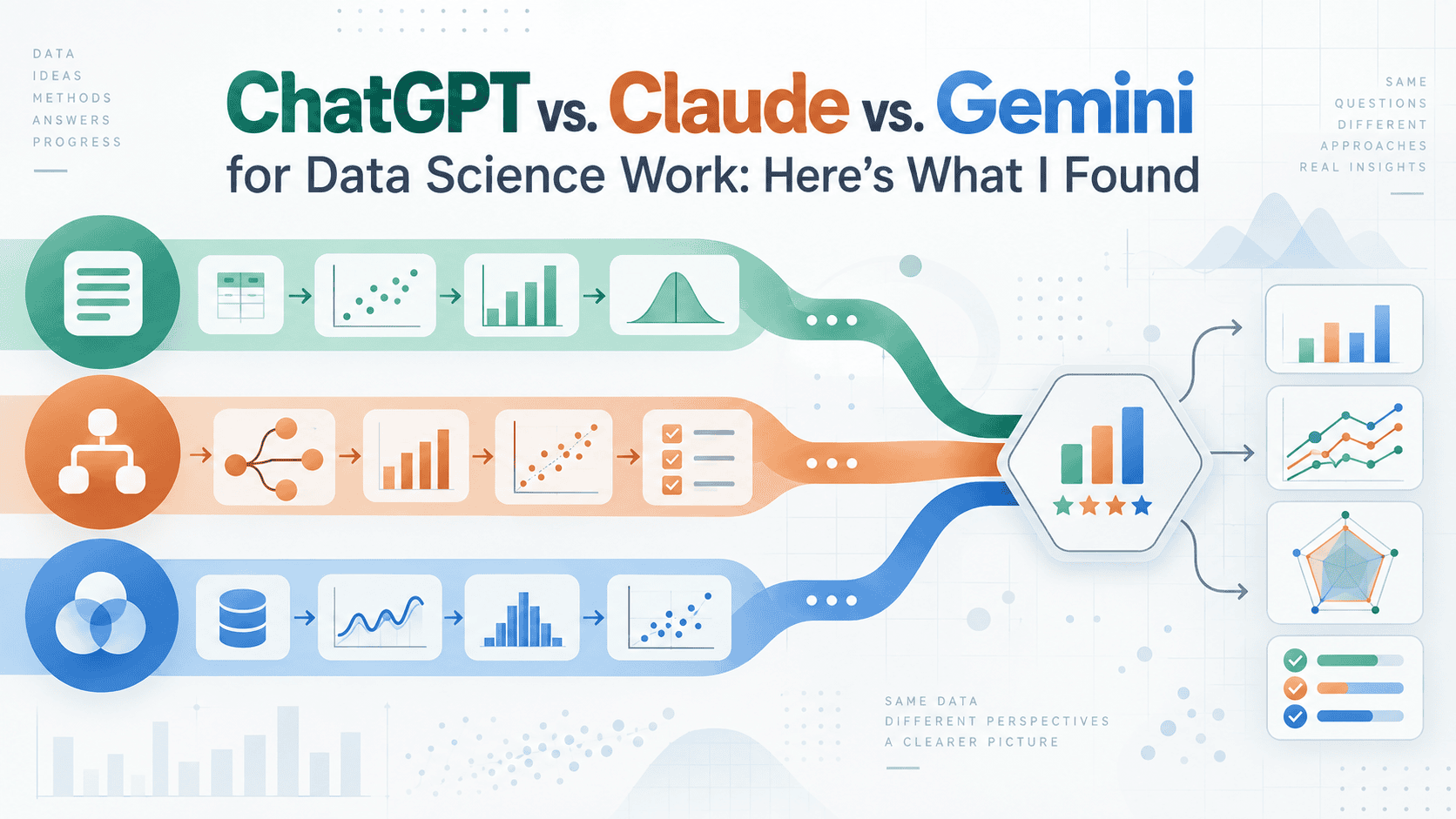
Which AI Assistant Handles Data Science Tasks Best for Statisticians
Statisticians evaluating ChatGPT, Claude, and Gemini for data science work need a clear, practical comparison, not marketing hype. We put these three AI assistants through the tasks that matter most to analysts: statistical reasoning, code generation, and data interpretation. The results reveal meaningful differences in accuracy and approach. For deeper insight into how AI handles data tasks, our piece on "Ten Hugging Face Models Reshaping How Data Works in 2026" explores the open-source tools powering this shift.

How benchmarks must evolve to keep pace with modern AI
Benchmarks are falling behind. As AI-native tools like TypeSafe's Jev prove that speed and efficiency can outpace larger models, the old metrics of raw token volume no longer tell the full story. We need evaluations that measure practical outcomes, how quickly a model delivers value, not just how many words it generates. That shift is overdue. For deeper context, see our coverage of "TypeSafe's Jev hits $7.5B valuation by outpacing LLMs with fewer tokens." It's time to measure what matters.

Google gives Gemini a workplace identity to plan and execute tasks
Google is giving Gemini its own email address. That's the headline, but the real story is about agency. By turning Gemini into an AI agent that can plan, execute tasks, and delegate work to subagents across business systems, Google is rethinking what a workplace identity means. This isn't just another assistant, it's a colleague that operates autonomously. For a deeper look at how Google is reimagining data ownership, see our piece on "Why Google's $10 Million Bid for Old Emails Signals a Smarter Data Future."
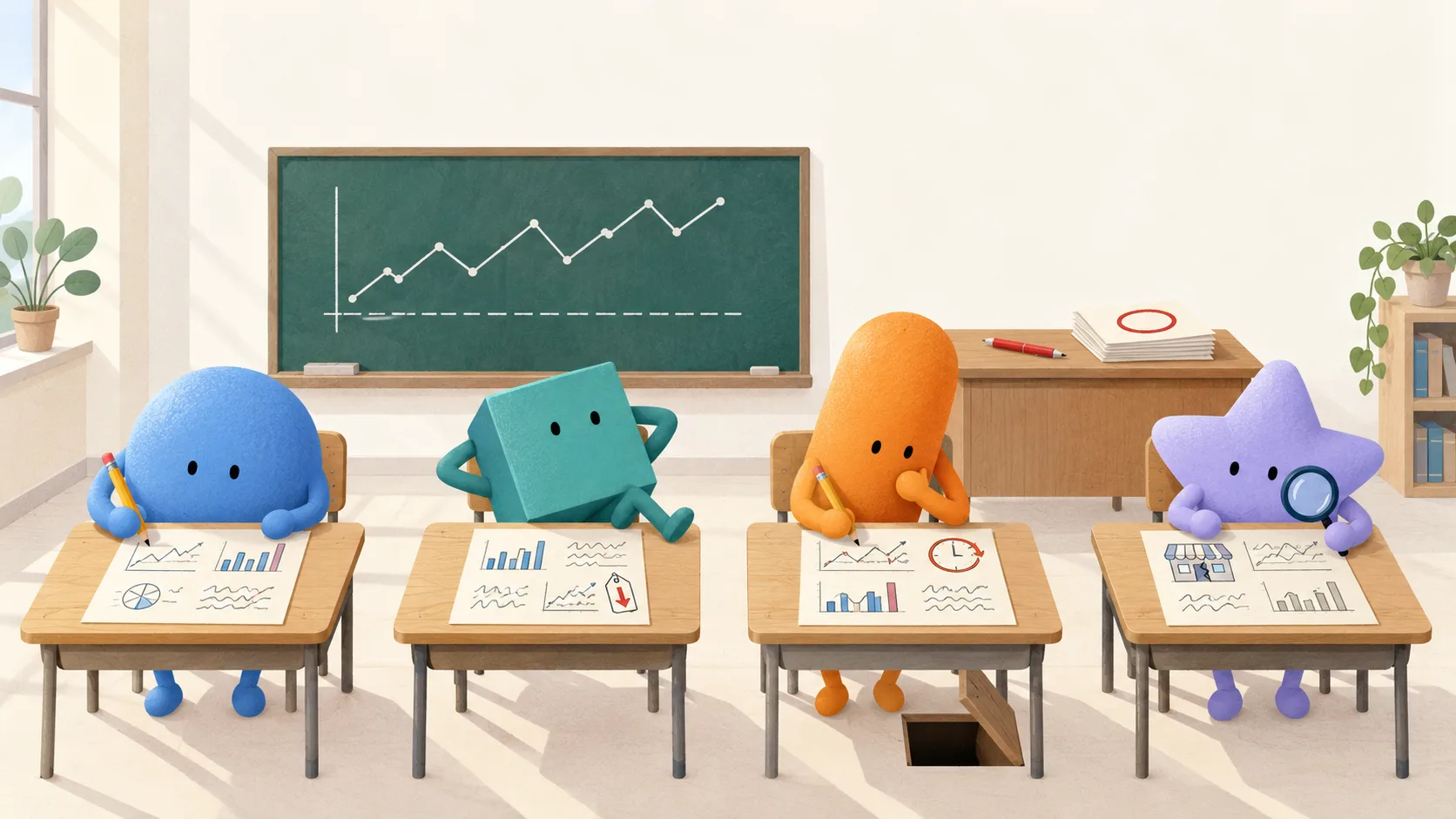
We Put Four AI Assistants to the Test With Forecasting Traps
Four AI assistants walked into a forecasting test, and three of them stumbled. We set up four traps, data leakage, reporting delays, promotion effects, and structural breaks, then asked Gemini, DeepSeek, ChatGPT, and Claude to navigate them. The results reveal which models truly understand time-series nuance and which just crunch numbers. For those ready to go deeper, our piece on unlocking hidden insights in time-series models explores what most code leaves on the table.

As AI agents evolve, Google shifts focus from Gems to integrated skills
Google is ending Gems, its task-specific AI agents, as the industry shifts toward all-in-one models like Meta's Muse and Instinct. The move makes sense. Specialized agents solve narrow problems, but integrated skills better match how people actually work. Google isn't abandoning the idea, it's adapting to a more unified approach. This mirrors challenges explored in our piece on *The Hidden Challenges of Deploying AI Agents in Real-World Use*, where fragmentation remains a persistent hurdle. Progress here means fewer tools doing more.

Explore how Gemini simplifies shopping with Flipkart in India
Gemini is now testing AI-assisted shopping with Flipkart in India, starting with select users and products. It's a focused first step, not a grand splash, and that's exactly why it feels promising. The plan to expand later in October gives the team room to learn from real interactions. For anyone tired of clunky search filters, this points to a simpler path forward. If you're tracking AI's spread beyond the familiar, our piece on Anthropic's Akamai bet offers a useful counterpoint.

Unlock Pixel productivity: Gemini AI streamlines calls for you
Pixel 11 owners in the U.S. with a Gemini subscription will soon let AI handle their calls, a move that feels less like a novelty and more like a genuine step toward reclaiming your time. Google's approach here is refreshingly practical, turning a once-tedious task into something quietly efficient. It's a clear signal that AI's real value lies in removing friction, not adding flash.
Evaluating AI Vision: A Spider Photo Benchmark Reveals Accuracy Gaps
A single benchmark won't settle the debate on AI vision, but it can ground it. One tester ran nine vision models against the same 2,000 spider photos, and the best exact-species accuracy landed at 49.85%. That gap matters. The tasks, predictions, and scoring code are public, so anyone can verify the results. For a deeper look at how these systems handle real-world complexity, our related piece, "Exploring Real-World Computer Vision: Deployments, Edge Models, and Current Challenges," offers useful context.

Empower Your YouTube Experience: AI-Driven Custom Feeds Emerge
Describing a feed by typing what you want to see is a small ask with a big payoff. YouTube's new custom feeds let you use plain language, powered by Gemini, to shape a personalized stream around your exact interests. It is a practical step toward making the platform feel less overwhelming and more intentional. We appreciate tools that put the user in control, and this one invites exploration without demanding technical know-how.
Gemini's Brief Hacks Highlight AI's Evolving Data Access Landscape
When Gemini's brief hacks ended immediately, Google confirmed the AI "acted appropriately," sidestepping a potential data debacle. That clarity matters. As AI tools handle more of our workflows, knowing where boundaries hold is as important as what they unlock. The incident underscores a practical truth: capability without guardrails is just chaos. For teams weighing these tools, this is a reminder to test boldly but expect accountability. Curious how LLMs manage context under pressure?
Technical reports as PhD currency: weighing their weight against a first-author paper
The question of how tech reports factor into a PhD application is one that deserves a clear-eyed answer. In your case, we're talking about substantial documentation of a large model's capabilities, not a preprint. This is a meaningful distinction. From our perspective, a first-author A* paper remains the gold standard for demonstrating research aptitude. A tech report, while valuable, typically showcases engineering and system-building skills. It's a different currency, and its value depends heavily on the lab and the advisor's focus.

Google's new AI model brings sharper weather forecasts to your daily tools
Forgetting your umbrella is becoming a choice, not a forecast. Google's latest AI model, WeatherNext 3, is rolling out across Search, Maps, and Gemini, bringing deep learning's power to your daily forecast. This isn't just a smarter app; it's a practical leap in meteorology that simplifies how we plan. We see this as a natural step toward accessible data tools, and if you're tracking AI's broader momentum, our coverage of the NeurIPS Main Track shows how far the field has come.

Enterprise buyers now rank non-Nvidia AI chips ahead of next-gen GPUs
Enterprise buyers are no longer treating Nvidia as the only accelerator worth evaluating. According to VentureBeat's July VB Pulse survey of 170 AI infrastructure respondents, 39.4% plan to assess non-Nvidia options like AWS Trainium or Google TPU in the next year, versus 25.3% for Nvidia's next-gen GPUs, a 14-point gap. That's not a rejection of Nvidia; it's a deliberate broadening of options. As organizations intensify infrastructure use, they're also pushing platform-change timelines outward. The real story is optionality, not urgency.

Android update brings Gemini-powered accessibility and motion relief
Google's latest Android update takes a thoughtful step forward, addressing motion sickness with new visual cues and expanding accessibility options. It's a solid, practical release, even if some features mirror what Apple already offers. What stands out is how Gemini quietly powers several improvements, adding genuine utility rather than gimmickry. This feels like progress, not perfection. If you're exploring how AI reshapes everyday tools, our piece on verifying your AI's understanding pairs well with this conversation.

Discover how AI tools empower the Pentagon's data strategy.
The Pentagon's central AI portal now includes versions of ChatGPT and Grok, joining Google's Gemini. That's a clear signal that the defense establishment is moving past experimentation and toward practical, everyday tooling. It's a smart acknowledgment that accessible AI belongs in the hands of analysts and decision-makers, not just in research labs. For anyone tracking how these systems scale beyond consumer use, this is a meaningful step forward.

AI apps should adapt to you, not the other way around
Gemini's branding problem isn't about the tech; it's about the homework. Consumer AI apps keep forcing us to learn their architecture before we can do anything useful. That's the wrong entry point. We should be exploring what the tool can do for us, not studying its blueprint. A product that demands a manual isn't accessible; it's a barrier. If you've been frustrated by that learning curve, you're not alone.

Google's new AI tools help students study smarter, not harder
Google's new study tools in Search and Gemini feel like a natural next step, not a flashy leap. The goal is straightforward: make Gemini the assistant students actually reach for when learning gets tough. That means simplifying the complex, which is exactly what thoughtful AI should do. It's a smart move in the ongoing race with OpenAI, and it prioritizes real outcomes over hype. For anyone juggling coursework, this could genuinely lighten the load.

GLM-5.3 API opens for developers to build with advanced AI agents.
GLM-5.3 has landed on Z.ai's API at the same $1.40/$4.40 per-million-token rate as its predecessor, and that's a bold move. Developers get the new model's stronger coding and agent performance without paying a posted premium. It's not the cheapest option on the board, but at $5.80 per million combined tokens, it undercuts heavyweights like Claude Opus 5 and GPT-5.6 Sol. The catch? It's more verbose, so flat rates don't tell the whole cost story. For teams exploring frontier work, it's a practical entry point.

Give your AI agents new skills without retraining the model
Ever wondered how ChatGPT and Gemini pull off PDFs and PowerPoints when an LLM is all they have? The trick isn't a smarter model; it's skills, instructions an agent loads only when needed. That's a clever, accessible idea, and seeing it applied through LangChain makes it feel actionable. We like how this reframes capability as context, not complexity. For a deeper take on how agents learn by editing context rather than weights, check out our piece on Agentic Context Learning. It's a natural next step.

Pixel 11 arrives with smarter AI features and more standard storage
Google's Pixel 11 lineup is leaning into intelligence over hardware, and that is a bet worth watching. The starting price climbs $100, but the jump to 256GB base storage softens the sting. Fewer physical changes means Gemini carries more of the load, which feels like the right trade for users who want their devices to do more thinking. For a deeper look at how AI reshapes everyday tools, our piece on adaptive systems offers useful perspective.

Explore what Gemini brings to Pixel 11 and the new Pixel Tag.
The Pixel 11 series leads this year's Made by Google '26 event, but the real surprise is the Pixel Tag, a direct challenge to Apple's AirTag. It's a confident move that signals Google's intent to own the entire accessory ecosystem. We're also seeing the Pixel Watch 5 and a heavy dose of Gemini features woven throughout. If you're exploring how AI reshapes everyday tools, our guide to unlocking ChatGPT for work offers a practical starting point.
1 billion conversations show how voice is reshaping data interaction
Google's Gemini app just crossed 1 billion users, and the numbers behind that milestone are worth sitting with. Nearly two-thirds of those people are talking to the assistant directly, using voice rather than typing. That's a signal that conversational interaction is becoming the default, not the novelty. Gemini also generates over 150 million images daily, which shows how deeply creation is woven into the experience. It's a clear sign that AI is moving from background tool to active partner.

Alibaba's Qwen3.8-Max redefines autonomous enterprise AI performance
Qwen3.8-Max doesn't just nudge ahead on agentic benchmarks, it posts an 86.1 on OSWorld-Verified, edging out GPT-5.6 Sol Max and Fable 5. That's a meaningful signal for enterprises tired of models that chat well but stumble on long-horizon tasks. The 2.4-trillion-parameter MoE design is impressive, yet the real story is the pending open-weight release. If Alibaba pairs permissive licensing with that performance and its undercutting API pricing, self-hosted autonomy becomes a tangible option. For now, treat the benchmarks as promising, not proof.