git
8 stories filed under git on Beyond Market Intelligence. The newest of them: “Explore How AI Agents Can Shape Your Next Developer Platform”, “Uber's GitFarm centralizes Git operations to transform monorepo scale.”, and “Code hosting meets AI collaboration with Cursor's new Origin platform”. Agents are quietly becoming the developer platform, pulling context from Git, Slack, and Jira through semantic search. Uber's GitFarm takes a different route to managing monorepos: it centralizes Git operations as a service, removing the need for local clones across thousands of repositories. Acme AI is the next-generation, AI-powered spreadsheet platform built to replace Excel and redefine how analysts, data scientists, and enterprise teams work… The list below is every git story on Beyond Market Intelligence, newest first.

Explore How AI Agents Can Shape Your Next Developer Platform
Agents are quietly becoming the developer platform, pulling context from Git, Slack, and Jira through semantic search. That's a shift worth watching, but it demands guardrails. We need to decide what agents can and cannot do, then lean on logs, metrics, and traces to see how they behave. It's less about hype and more about control. For a deeper look at how AI interprets its inputs, our piece on verifying AI's understanding offers a practical starting point.

Uber's GitFarm centralizes Git operations to transform monorepo scale.
Uber's GitFarm takes a different route to managing monorepos: it centralizes Git operations as a service, removing the need for local clones across thousands of repositories. By leaning on prewarmed checkouts and ephemeral sandboxes, the platform cuts resource use and startup lag for automation services. That's a practical answer to a scaling problem many teams feel deeply. For more on handling heavy workloads, our piece on Modal's sandbox rebuilds offers a useful parallel worth exploring.
Code hosting meets AI collaboration with Cursor's new Origin platform
Cursor just planted a flag in the heart of its own ecosystem. Origin, a git-based hosting platform built directly into the editor, moves code management out of the browser and into the flow of work. It's a confident bet: teams that live in Cursor shouldn't have to leave to push, review, or merge. The early beta on Pro, Teams, and Enterprise plans signals a serious play, not an experiment.
Mirror registries on your terms with Flux's declarative plugin
Flux Mirror gives teams a straightforward way to keep their software supply chain under their own control. This new CLI plugin, part of Flux v2.9, mirrors container images, Helm charts, and OCI artifacts between registries using a declarative configuration. The point is practical: keep Kubernetes clusters reconciling only from registries your team actually operates. That is a sensible, deliberate step toward reducing reliance on external sources.
Detecting AI-Generated Code with Confidence in Your CI/CD Pipeline
Detecting AI-generated code after it lands in Git is a game of shadows, not certainties. The original poster's instinct to treat this as a calibration problem, rather than a binary label, is the right one. Commit metadata and LOC spikes are weak proxies; they break the moment a developer cleans up a commit or the IDE strips its own fingerprints. We'd push harder on probabilistic risk scoring, where false positives are measured and accepted.

When GitHub stumbles, Cursor Origin offers a stable path forward.
If you're weighing whether to trust a new code host with your team's source code, Monday offered a pointed reason to pay attention. Cursor launched Origin, its own code hosting platform, and within hours GitHub suffered a global degradation that crippled pull requests, APIs, and Copilot for nearly seven hours. The timing was coincidental, but the message wasn't: the agent era demands a forge built for how code is actually reviewed today. Origin's pitch is worth exploring, starting with its low-risk, GitHub-as-source-of-truth design.
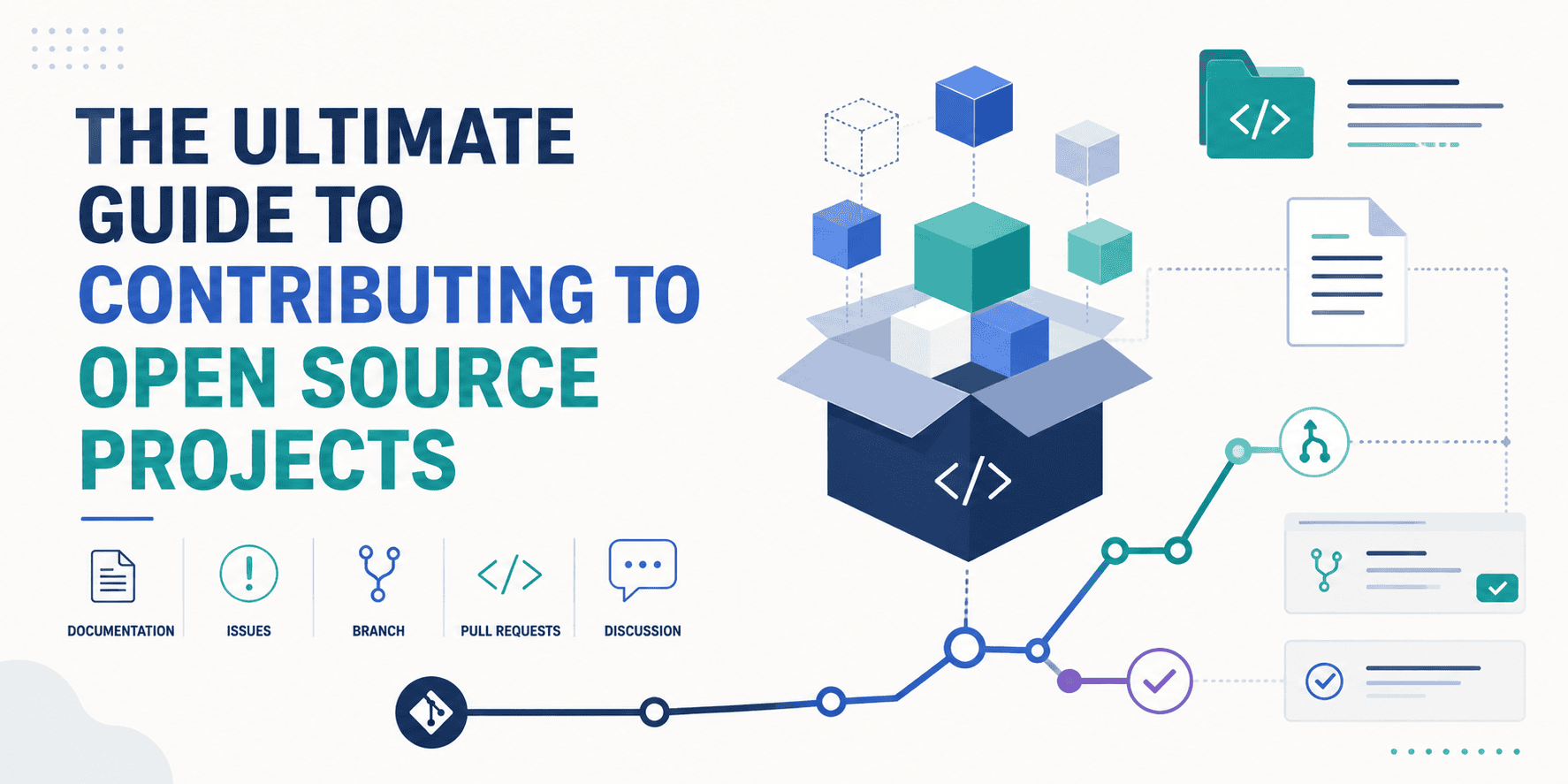
How to Contribute to Open Source Projects With Confidence and Clarity
Open source contributions often stall before they start, usually because the first commit feels like the hardest step. This guide cuts through the guesswork, showing you how to identify projects where maintainers actually respond, master the exact git workflow, and turn a single pull request into a lasting presence. It is a practical map for getting your first real contribution merged.
Train a harness once, then empower any model on any task
Training a harness once, then swapping in any task LLM, is the kind of reframe that turns a clever hack into a real discipline. The author spent months moving from "Agent-driven Self-improving Harness" to a cleaner concept: freeze the harness, train it against one environment, then let it generalize. The PyTorch-like framework with `StrictPareto()` and `GreedyMonotonic()` is a smart, honest abstraction. Seeing it beat Terminal Bench 2.0 and transfer to unseen tasks suggests determinism was the missing piece.