Beyond Market Intelligence keeps Google in one place: 77 stories so far. The section currently leads with “Your AI assistant now learns from your Google services to guide the drive”, “Google and Amazon give PyTorch developers a new path beyond Nvidia GPUs”, and “A former Google CEO holds a smaller stake in Anthropic than its chief”. Your car is about to get a lot more personal. Google and Amazon have both now released tools that let PyTorch developers move their applications beyond Nvidia GPUs. Acme AI is the next-generation, AI-powered spreadsheet platform built to replace Excel and redefine how analysts, data scientists, and enterprise teams work… The list below is every Google story on Beyond Market Intelligence, newest first.

Your AI assistant now learns from your Google services to guide the drive
Your car is about to get a lot more personal. Google is bringing Gemini's Personal Intelligence to vehicles, letting its AI assistant pull context from Gmail, Calendar, Maps, and YouTube to tailor responses while you drive. This transforms the in-car assistant from a simple navigator into a proactive guide that knows your schedule and preferences. For a deeper look at how AI assistants are evolving, see our piece on Wabi, a new app that turns a decade-old AI vision into a free, downloadable companion.

Google and Amazon give PyTorch developers a new path beyond Nvidia GPUs
Google and Amazon have both now released tools that let PyTorch developers move their applications beyond Nvidia GPUs. That is a meaningful step toward a more open AI infrastructure. For teams feeling locked into a single hardware path, this opens real flexibility. It is a practical shift, not a marketing promise. And it connects to a broader trend we are tracking: in our piece on Muse's rapid growth, we explore how users are embracing AI on their own terms.

A former Google CEO holds a smaller stake in Anthropic than its chief
A 1% stake may sound small, but it's a telling signal when a former Google CEO holds less of Anthropic than its own chief. Bloomberg's report reframes how influence actually flows in the leading AI lab. Ownership here isn't about control, it's about proximity to the decisions shaping the field. For anyone tracking AI's power structure, this detail matters. And if you're wondering where agentic AI fits into that picture, our piece on insider threats from AI agents offers a useful next step.
EmbeddingGemma 2 Now Processes Code, Images, Video, and Audio
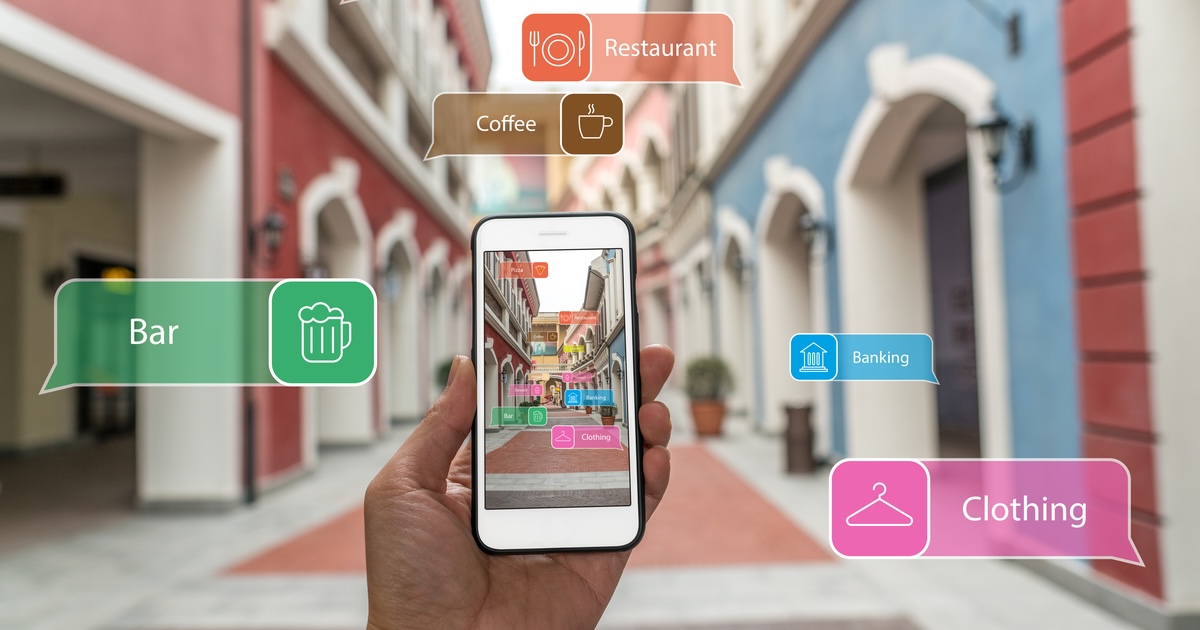
EmbeddingGemma 2 now understands more than just text: code, images, video, and audio are all in its grasp. Built on Gemma 4 and released under Apache 2.0, this compact model from Google is purpose-built for efficient semantic search and on-device RAG. It is a focused, practical tool that prioritizes performance without demanding massive resources. For those exploring how AI handles locked-down code, our piece on "When Closed Code Won't Open, Can AI Do the Heavy Lifting" offers a fitting companion read.

Google Moves Python Type Checking Forward With Pyrefly
Google has swapped its long-standing Python type checker, Pytype, for Pyrefly, an open-source tool from Meta that promises faster, more accurate type checking and lower infrastructure costs. This is a practical move, better tooling that doesn't ask developers to learn a new language. It's the kind of upgrade that quietly transforms productivity. For more on how data tools evolve, see our coverage of Aurora PostgreSQL gaining DuckDB's analytical power.

Explore How Adaptive Training Environments Help AI Agents Learn from Weaknesses
Google researchers have opened up EnvHarness, a framework that adapts agent-training environments to target an agent's specific weaknesses, without touching the agent, environment, or evaluation system. This is a smart shift in focus. Instead of building bigger models, we can build smarter training loops that help agents learn where they struggle. The result is better learning, not just more of it. For those exploring how to build more capable agents, AWS's open-source tools for smarter AI development offer another compelling path forward.

Exploring Gemini 4 Argon in Practice: Capabilities and Real-World Limits
Google's Gemini 4 Argon promises stronger capabilities across creative, analytical, and document-heavy tasks, but our hands-on tests reveal a mixed picture. The model built websites and reconciled conflicting documents effectively, yet it introduced an unsupported claim we couldn't verify. These results feel familiar to anyone who has explored DuckDB's direct access to Hugging Face datasets, new tools offer real power, but their limits demand honest scrutiny. Argon is worth exploring, but keep your skepticism handy.

Open-source satellite software launches as a flexible alternative to SpaceX's locked-down model
Satlyt wants to be the Android of orbital computing, launching open-source satellite software that works across multiple companies' hardware. It's a direct counter to SpaceX's locked-down, iPhone-style model, where the software and satellite are sold as a single, proprietary unit. The approach feels more accessible and future-focused, giving users real flexibility in orbit. If you're curious about other unconventional approaches to space infrastructure, our piece on Longshot's plan to launch data centers from a gun is worth a look.
AI coding rounds are rewriting the rules of the data science interview
The syntax quiz is dead. In Spring 2026, AI-assisted coding rounds at Meta, Shopify, and Adobe test how you solve problems, not what you memorized. These sessions feel like mini case studies where you actually build, not just describe. That shift rewards clear thinking over recall, and it changes how you should prepare. Practice with AI at your side, not against it. For a deeper look at how tools like DuckDB are reshaping data workflows, explore our related coverage.

Discover how Fitbit Edge brings OLED clarity to a familiar, accessible design
The Fitbit Edge brings OLED clarity to a design that feels familiar and accessible. Priced at $179.99, it shares the sleek form of the Fitbit Air but upgrades the display in a meaningful way. This is a focused improvement, better visuals without reinventing the wheel. For a deeper look at how we measure progress in smarter tools, see our piece on "Android Bench 2.0 Measures AI Agents on Complex, Multi-Step Tasks."

How benchmarks must evolve to keep pace with modern AI
Benchmarks are falling behind. As AI-native tools like TypeSafe's Jev prove that speed and efficiency can outpace larger models, the old metrics of raw token volume no longer tell the full story. We need evaluations that measure practical outcomes, how quickly a model delivers value, not just how many words it generates. That shift is overdue. For deeper context, see our coverage of "TypeSafe's Jev hits $7.5B valuation by outpacing LLMs with fewer tokens." It's time to measure what matters.

Android Bench 2.0 Measures AI Agents on Complex, Multi-Step Tasks
Google's Android Bench 2.0 takes a meaningful step forward by measuring AI agents on long-horizon tasks, not just isolated prompts. That shift matters. Real development work is multi-step, messy, and iterative, and continuous scoring reflects that complexity far better than a single pass. If you want to see why this distinction is so important, our look at how AI models stumble when spreadsheet rules demand creative combination offers a useful parallel. Benchmarking is finally catching up to the work itself.
Why Google's $10 Million Bid for Old Emails Signals a Smarter Data Future
Google's reported $10 million bid for old emails might sound like a strange expense, but it's actually a clear signal about where data value is heading. We're moving past the era of hoarding endless files and into one where context and history carry real weight. This isn't about nostalgia; it's about building smarter systems from the ground up. If you're curious about how AI is reshaping everyday tools, our piece on Google's AI Edge Foresight shows a similar commitment to practical, on-device intelligence.

Google gives Gemini a workplace identity to plan and execute tasks
Google is giving Gemini its own email address. That's the headline, but the real story is about agency. By turning Gemini into an AI agent that can plan, execute tasks, and delegate work to subagents across business systems, Google is rethinking what a workplace identity means. This isn't just another assistant, it's a colleague that operates autonomously. For a deeper look at how Google is reimagining data ownership, see our piece on "Why Google's $10 Million Bid for Old Emails Signals a Smarter Data Future."

Google's AI Edge Foresight brings offline meeting notes to your device
Google's AI Edge Foresight brings offline meeting notes directly to your device, transcribing conversations and answering questions without an internet connection. This is a smart move for anyone who values privacy or works in low-connectivity environments. The on-device approach feels more trustworthy than cloud-dependent alternatives. For a deeper look at how AI models perform under real conditions, see our related piece on benchmarking without leaking data to training. It pairs well with this story's focus on practical, local intelligence.
How to benchmark online AI models without losing your data to training
Protecting your benchmark data from becoming training data is a real problem, especially for low-resource languages where every example is precious. The trust gap with API-only models is legitimate, and a paid account is not a guarantee of privacy. You are right to be cautious. The practical answer is that there is no foolproof method, only risk mitigation.

Argon enters the spreadsheet arena, challenging Google's data dominance
Argon is stepping into the spreadsheet arena with a clear goal: giving Google a run for its data dominance. This isn't about gimmicks or hype, it's about offering a smarter, more intuitive way to work with numbers. For anyone who's felt the limits of traditional tools, Argon's arrival signals a genuine shift toward accessible, AI-driven analysis. We're watching closely, and we think you should too. If you're curious about how AI agents are reshaping productivity, our piece on Hermes Agent's recent funding offers useful context.
Gemini Argon Tops the Charts but Skips the Test That Counts
Gemini Argon tops the charts, yet it skips the test that counts. That distinction matters. Benchmarks can dazzle, but real-world validation is where trust is built. We see this pattern across the industry, from physics solvers to distributed databases. The lesson is consistent: look past the headline numbers. Explore what a tool does when the pressure is on, not just when it's performing for a score. That's the metric that empowers your actual work.

Verify any image, video, or audio with Google's new AI detection tool
Google's new detection tool puts the power of verification directly into your hands. Launched Tuesday, the site lets anyone check whether an image, video, or audio clip was generated by AI. That's a meaningful step toward clarity in a moment when synthetic media is everywhere. It's not about fear, it's about informed trust. For a deeper look at how AI tools measure up, our coverage of Gemini Argon offers a useful companion perspective.

Google's Spanner Omni goes live, swapping hardware clocks and storage for software
Google made Spanner Omni generally available, swapping its own hardware clocks and storage for software abstractions. Running its distributed SQL database on-premises, across clouds, or on a laptop is a striking move, but the lack of an availability SLA means practitioners are pricing the trade-off in tail latency and operational toil. For more on how cloud services manage reliability under pressure, see our coverage of Cloudflare's cross-tenant data exposure vulnerability.
How Google's Data Validated Part of My Argument and Left Room to Explore
Google's own data validated half of my argument, and left the other half open for exploration. In this third installment on spec-driven test automation, we see how measurable evidence can sharpen a thesis without closing the conversation. That's the kind of thinking partner AI should be. For a deeper look at that concept, see our guide on turning AI into a thinking partner that accelerates how you learn.

AI noise forces Google to pause bug bounty for open source
AI noise isn't just annoying, it's now costly enough that Google has paused bug bounties for open-source projects. The flood of low-quality, AI-generated submissions is overwhelming the signal that security teams need. It's a practical problem that demands a practical fix, not more hype. Google's response is measured, but the signal for the rest of us is clear: unchecked AI slop erodes trust in the tools we rely on.

Google's space chip launch hints at orbital data centers requiring thousands of Starship flights
Google just sent its first advanced chip into orbit, and the message is clear: the future of data processing may live above our heads. If that sounds ambitious, consider the logistics, this path likely requires thousands of Starship flights to build orbital data centers. It's a bold bet on space infrastructure, and it reframes what "cloud computing" could mean. For more on how AI is reshaping digital workflows, read our piece on Photon's $4.5M bet on AI agents.

Google's Gemini 4 Argon delivers a focused workhorse for coders and security teams
Google's latest Gemini model, Gemini 4 Argon, is positioned as a focused workhorse for coders and security teams. That's a smart bet. Specialized tools often outperform generalists in high-stakes work, and this model leans into that truth. It promises practical muscle where precision matters most. For those exploring how AI can reshape technical workflows, this feels like a grounded step forward. For deeper context on how AI is redefining productivity benchmarks, see our coverage of Opus 5.5.