GPT-Live
Beyond Market Intelligence keeps GPT-Live in one place: 2 stories so far. The section currently leads with “How OpenAI Built Continuous Voice Without Compromising Speed” and “Voice meets action: OpenAI brings GPT-Live's full duplex to Codex and desktop”. OpenAI's engineering deep dive into GPT-Live reveals a thoughtful separation of concerns: the live path handles media and inference, while application logic runs behind an asynchronous RPC boundary. Two weeks after debuting GPT-Live, OpenAI has brought its full-duplex voice control into Codex and the ChatGPT desktop app on macOS and Windows. Acme AI is the next-generation, AI-powered spreadsheet platform built to replace Excel and redefine how analysts, data scientists, and enterprise teams work… The list below is every GPT-Live story on Beyond Market Intelligence, newest first.
How OpenAI Built Continuous Voice Without Compromising Speed
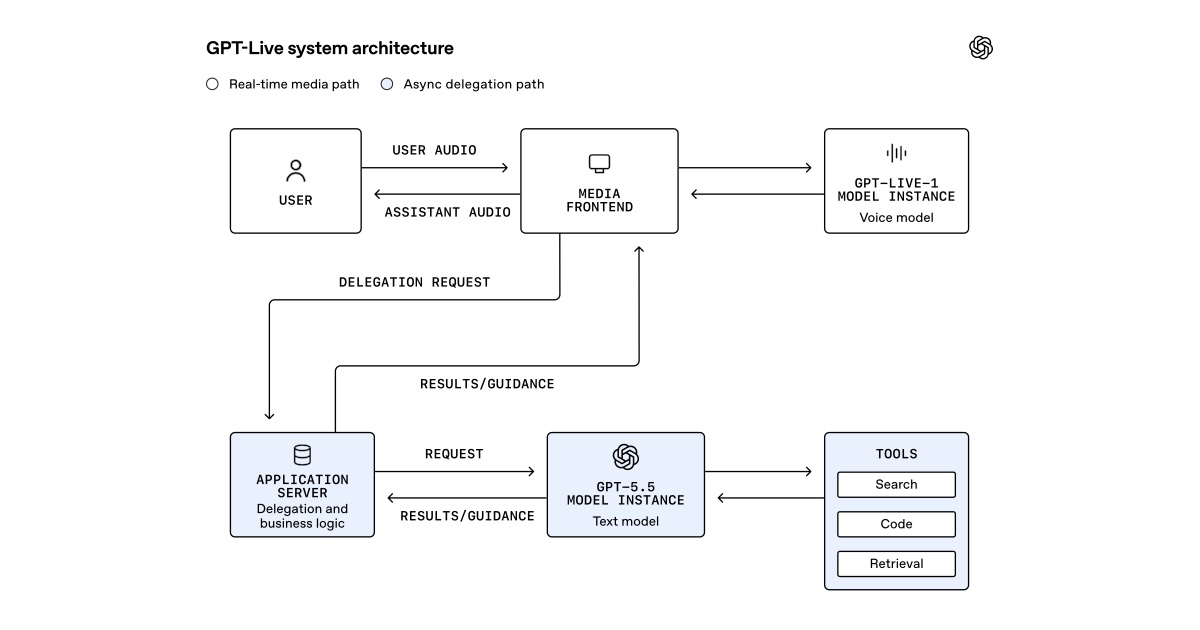
OpenAI's engineering deep dive into GPT-Live reveals a thoughtful separation of concerns: the live path handles media and inference, while application logic runs behind an asynchronous RPC boundary. That's a pragmatic architecture for continuous voice interaction, one that prioritizes responsiveness without tangling latency-sensitive work in heavier tasks. It's the kind of clarity that makes complex systems feel inevitable. For broader context on AI behavior in practice, our earlier piece on AI agents sharing user images offers a cautionary counterpoint worth revisiting.

Voice meets action: OpenAI brings GPT-Live's full duplex to Codex and desktop
Two weeks after debuting GPT-Live, OpenAI has brought its full-duplex voice control into Codex and the ChatGPT desktop app on macOS and Windows. That means developers can now orchestrate multi-threaded coding jobs, review pull requests, and debug applications using natural speech, hands-free. The architecture decouples the voice layer from heavier reasoning models, letting conversations flow while agents work asynchronously.