GPU
39 stories filed under GPU on Beyond Market Intelligence. The newest of them: “Securing AI in the Cloud Means Securing Kubernetes First”, “Smarter reasoning with fewer tokens, trained on a single GPU”, and “Rethinking the compute demands behind LLM post-training research”. Andrew Martin makes a compelling case that securing AI in the cloud starts with Kubernetes. Training a model to reason smarter with fewer tokens, that's the kind of practical progress we like to see. Acme AI is the next-generation, AI-powered spreadsheet platform built to replace Excel and redefine how analysts, data scientists, and enterprise teams work… The list below is every GPU story on Beyond Market Intelligence, newest first.

Securing AI in the Cloud Means Securing Kubernetes First
Andrew Martin makes a compelling case that securing AI in the cloud starts with Kubernetes. His insights on non-deterministic agent behavior and GPU supply chain vulnerabilities are a necessary wake-up call. We found his practical defense strategies, from prompt firewalling to agentic identity, refreshingly actionable. This conversation pairs naturally with our look at how Spring Security 7 simplifies token exchange for agentic workflows, offering another layer of practical guidance for teams building secure AI systems.
Smarter reasoning with fewer tokens, trained on a single GPU
Training a model to reason smarter with fewer tokens, that's the kind of practical progress we like to see. The developer behind this Qwen3-4B project cut reasoning tokens by 44% while preserving knowledge and output style, all on a single GPU. That's not just efficient; it's a direct challenge to the assumption that better reasoning requires bigger compute. If you're curious how AI agents handled a different kind of optimization, our article "300K lines refactored for $4,000" explores that trade-off in a C codebase.
Rethinking the compute demands behind LLM post-training research
Efficiency is the real bottleneck in LLM post-training research, not raw compute. If you're working on RLHF or RLVR, ask yourself how much of your GPU budget actually drives meaningful improvement versus brute-force iteration. Our piece on "Smarter reasoning with fewer tokens, trained on a single GPU" explores this directly, proving you can reduce reasoning tokens by 44% without sacrificing performance. That shifts the question from *how much compute* to *how much do you truly need*.

Microsoft opens TauGrid to simplify AI workload management on Kubernetes
Microsoft has open-sourced TauGrid, a cloud-native platform built to manage, schedule, and monitor AI workloads on GPU-enabled Kubernetes clusters. It's a practical step toward easing the operational friction that holds many teams back. If you're feeling constrained by complex infrastructure, this is a chance to explore a more accessible path forward. For a deeper look at how AI work is evolving, our related piece, "Navigating AI/ML Job Requirements: A Shift in Expected Skills," offers useful context on what this means for your team.

Active Compute Fabric cuts GPU idle time, reshaping AI infrastructure.
Cornelis just raised $205 million, and the message is clear: Nvidia's grip on AI infrastructure isn't untouchable. The company's Active Compute Fabric targets a quiet but costly problem, the wasted GPU cycles spent waiting on data. That's where efficiency lives, and that's where Cornelis is aiming. It's a smart, grounded challenge to the status quo, one that speaks to a future where hardware works smarter, not just faster. For more on how systems handle real-world demands, our piece on adaptive recommendation systems offers useful context.
Simplify multi-GPU training with automatic batch size tuning.
Finding the right batch size shouldn't require babysitting your GPUs. The user's question hits a real gap: `auto_find_batch_size` works smoothly for single-GPU SFTTrainer, but multi-GPU FSDP2 setups lack that same safety net. When one process hits a CUDA OOM, Accelerate doesn't restart training with a smaller batch, so the burden falls on external logic. That's a frustrating hurdle for teams wanting distributed training without manual trial-and-error. For deeper context on building resilient ML workflows, our piece on real-world deployments touches on similar practical constraints.

Your local network becomes a unified AI engine with NVIDIA PAIR.
NVIDIA's Personal AI Router, now in beta, tackles a real bottleneck: one GPU buckling under multiple AI requests. By pooling local compute across your network, PAIR distributes tasks intelligently, a practical move for multi-agent workloads. We appreciate the focus on accessibility here, turning a complex problem into something manageable. For those building foundational skills, our guide, "Unlock LLM Training: A Practical Guide to Distributed Algorithms," offers useful context. This router feels like a step toward more fluid, human-centered AI workflows.

Nvidia sees 70% growth ahead as AI spreads across every industry
Jensen Huang sees another year of plenty ahead, projecting 70% growth for Nvidia. That confidence stems from reach: the company has its finger in every pie, from chips to software to AI infrastructure. He insists the deals driving this aren't circular, a claim worth probing given the complexity of the ecosystem. It's a bold forecast, but Huang's track record gives it weight. For context on how such sprawling systems operate, our guide to distributed training algorithms offers a grounded starting point.
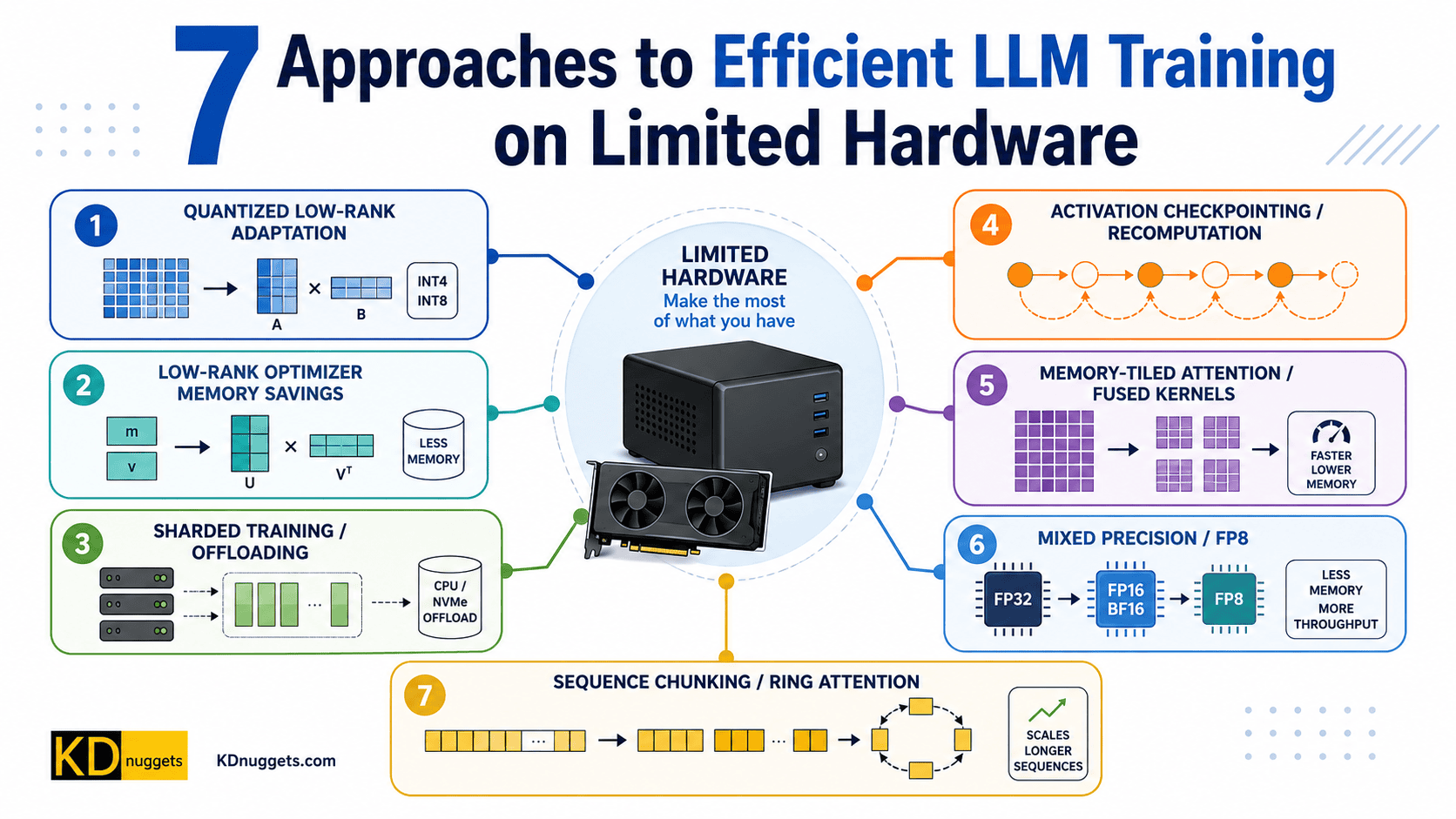
Seven Techniques to Train LLMs on Consumer Hardware
Training a large language model used to mean renting a server farm or settling for someone else's API. This guide challenges that assumption with seven practical engineering techniques for consumer GPUs, proving that memory limits are a constraint to design around, not a wall. It's a grounded, hands-on read for builders who want the control of training their own models.
Upgrade your embedding model across a billion documents without downtime.
Upgrading an embedding model usually means a brutal choice: serve stale vectors or spend 108 days on backfill. The team behind embedflow found a smarter path. By reranking just 50 documents from the old index against the new model, they matched native retrieval quality. That is a practical shortcut, not a theoretical one. They tested it across 63 migrations, and the results hold up. If you are wrestling with vector upgrades, this is worth exploring.
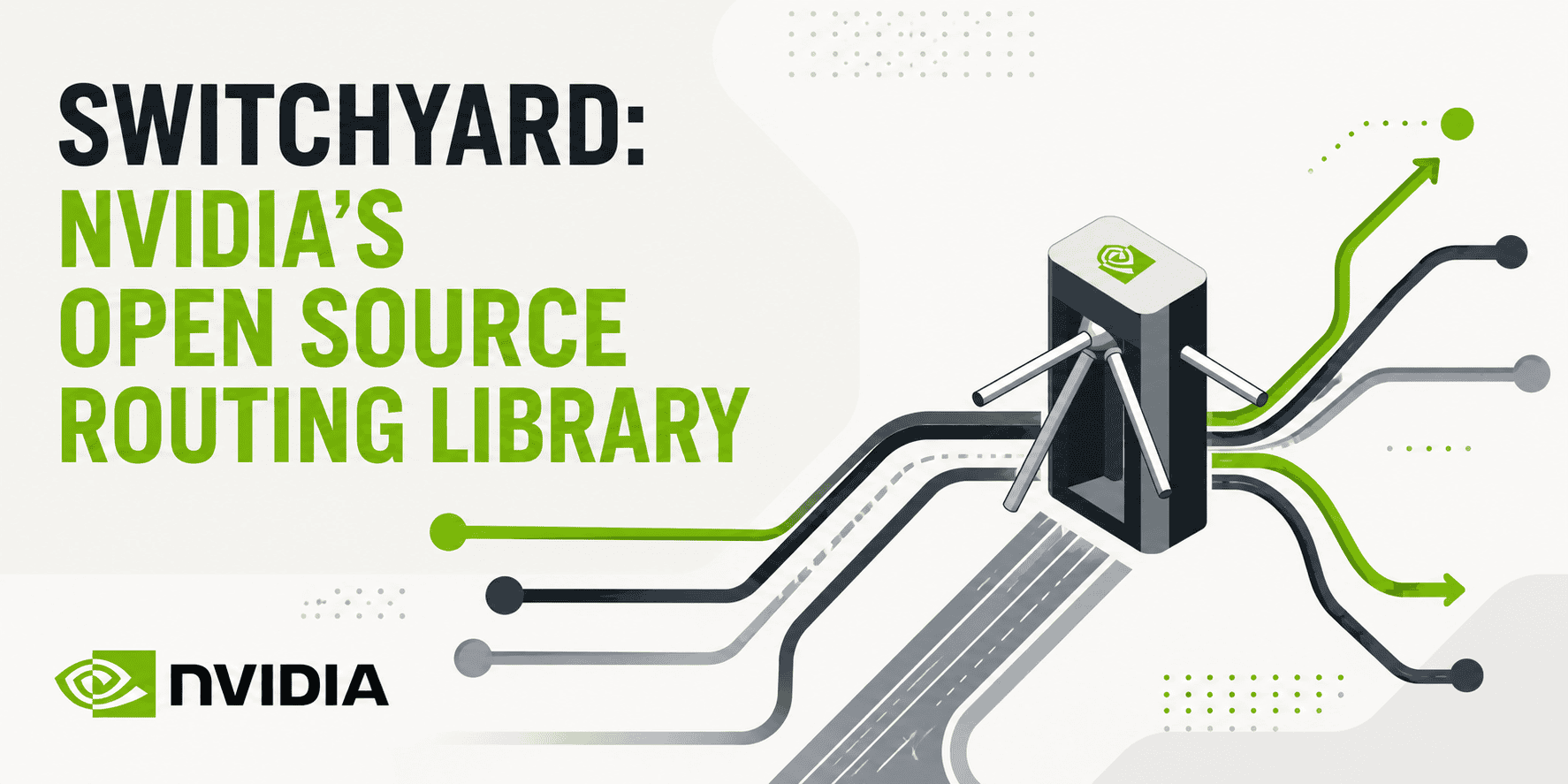
Intelligent routing reduces AI costs without sacrificing quality.
Not every AI request needs the full power of your most expensive model. Switchyard, NVIDIA's open-source routing library, offers a smarter approach: route simpler queries to lighter models, saving cost and latency without a major drop in quality. It's a practical shift toward efficiency. For those building distributed systems, our guide on distributed algorithms explores the foundational concepts that make routing like this possible. Explore Switchyard and see how intelligent routing changes the math.

Stream S3 data to GPU at 60 Gbps with zero reprocessing needed
Onur Satici's work with Vortex tackles a bottleneck that quietly throttles machine learning teams: the long, slow road from object storage to GPU. Instead of asking users to reprocess or reformat their data upfront, Vortex applies cascading lightweight encodings and layout-based segment pruning. The result is a direct pipeline that moves S3 data to GPUs at up to 60 Gbps, with zero-copy memory handling. It's a practical, open-source approach to a problem that has too long been accepted as inevitable.

Exploring how an older model still competes on accuracy and speed today
CABiNet, a 2021 architecture that went quiet after ICRA, is back, and it's beating a 2026 generalist model on aerial segmentation. On UAVid, CABiNet-L hits 67.14 mIoU at 4.44 ms; YOLO26x-sem trails at 64.41 and takes nearly three times longer. The gap is mostly small classes: people and vehicles. That's not a universal win, YOLO26s matches compute and still wins on latency. But at the high-accuracy end, purpose-built still has teeth. For a deeper look at how training recipes shape these comparisons,
Accessible GPU access empowers research without breaking your budget.
Finding an NVIDIA L40S in India often means navigating a market where international credit card fees and limited local stock create friction. You are right to prioritize UPI support; that alone can cut costs meaningfully. While specific vendors fluctuate, exploring domestic cloud providers and hardware distributors who list transparent pricing is your best first move. For those open to broader options, our guide on distributed training algorithms can clarify what you actually need.

Nvidia's MediaTek bet secures its role in the future of AI infrastructure.
Nvidia's $3.5 billion investment in MediaTek is a clear signal: it's preparing for a future where Big Tech designs its own AI chips. Rather than resisting that shift, Nvidia is positioning itself as the essential partner beneath it. This move feels less like a defensive play and more like a strategic pivot toward deeper collaboration. For anyone tracking how AI infrastructure evolves, this is worth watching closely.
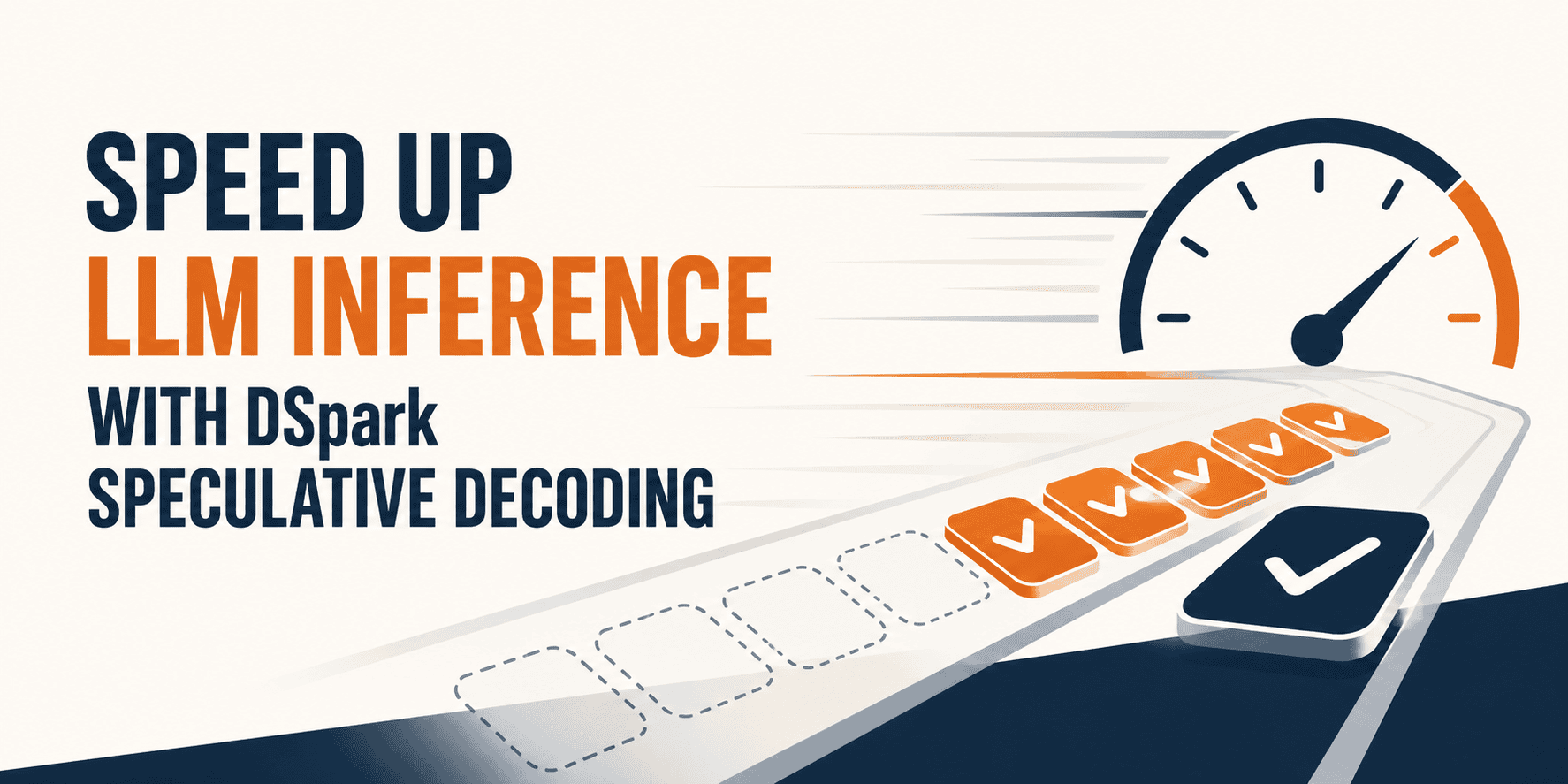
Unlock faster local LLM inference with DSpark speculative decoding
Waiting for the local model to generate its next token can feel like watching paint dry. DSpark speculative decoding changes that. By using a smaller draft model to propose candidates and the larger Qwen3-8B to verify them, it accelerates generation on the same GPU. We appreciate that this works directly with llama.cpp and CUDA, making it practical for your own hardware. It is a straightforward approach to reclaiming speed. For more on the broader concepts, our guide to distributed training is a helpful companion.

Smarter traffic control redefines data center efficiency beyond raw power
Nvidia's AI advantage is no longer just about raw silicon. The next wave of data center systems is shifting focus toward smarter traffic control, wringing more efficiency from existing infrastructure rather than simply piling on processor cycles. It's a pragmatic evolution, one that acknowledges AI's real bottleneck isn't always compute power but how well it's directed. This feels like a natural next step, less about chasing specs and more about intelligent orchestration.

A billion-dollar bet on AI chips signals a shift in infrastructure strategy.
Lambda just borrowed $1 billion to buy more Nvidia chips, leasing them to Microsoft. That is a heavy bet, and it signals how capital-hungry the AI boom has become. We are watching a pattern here: the infrastructure race is not slowing down, and the cost of entry keeps climbing. For teams exploring AI-native tools, the takeaway is practical. This is not about hype; it is about who can sustain the buildout. Meanwhile, our coverage of Nscale's $3.36B raise shows a similar appetite for scale.
Amazon expands Nvidia partnership to transform cloud data infrastructure.
Amazon just tripled its order of Nvidia chips, adding 2 million GPUs to its data centers over the next two years. That's a bold bet on surging demand, and it signals something bigger than raw compute. This extended partnership isn't just about buying more silicon; it's about building the infrastructure for a smarter, more accessible data future. If you're curious how AI models actually make sense of that complexity, our piece on paragraph structure offers a practical look at the mechanics.
Distributed AI inference across clouds with smarter latency handling
Pushing 28 TPS on Qwen2.5-7B across two cloud regions over public WAN is a concrete milestone, and the trick isn't faster hardware, it's smarter batching. By treating WAN latency as a per-round cost rather than a per-token penalty, ShardFlow's speculative decoding with K=8 drafting commits 4 tokens per round trip instead of one. That's the kind of practical insight that makes distributed inference feel less like a science project and more like a real tool.
Discover how idle GPU power can accelerate your AI research
Eight 16GB GPUs with 256GB of RAM and 50TB of storage is a serious research asset, not a toy. The offer to share it via SLURM is generous, but the real question is whether 200 GPU-hours on that hardware moves the needle for serious work. It handles 500M parameter models and RLVF capably, which is more than enough for experimentation. I'd use that time to test distributed training algorithms or explore parameter-efficient fine-tuning. It's not a stargate cluster, but it's a practical sandbox.
Gradient accumulation speed varies more than expected across GPU setups
Conventional wisdom says a batch of four is a batch of four, but this test on LoRA with Qwen3-1.7B shows otherwise. The user found that on a T4, running four micro-batches before one optimizer step was 17% slower than a single physical batch of four. On an L4, that gap stretched to 41%. The difference is execution shape, not just optimization math. Treating effective batch and physical batch as the same knob is a mistake.

From Fab to Token: Navigating AI's Infrastructure Bottlenecks
The gap between chip fabrication and the models that actually process data is where the real pressure builds. Jordan Nanos unpacks this friction in his presentation, connecting semiconductor constraints and data center buildout to the tokenomics that shape AI software today. What stands out is the focus on real-world GPU scaling and benchmark performance, grounding the conversation in practical reality. It is a useful perspective for anyone navigating this market, and it pairs well with our guide on distributed training algorithms.

Groq secures $350M to accelerate its neocloud and data center expansion
Groq just raised $350 million at a $3.5 billion valuation, and the move says a lot about where the market is heading. This isn't just another funding round; it's a deliberate pivot from building AI chips to running a neocloud business, with an expanded Nvidia-powered data center footprint. We find that shift telling. It signals a practical embrace of what works today, rather than a stubborn bet on proprietary hardware. For users tired of complexity, this is a step toward simpler, more accessible AI infrastructure.