gradients
gradients at Beyond Market Intelligence is a file of 3 stories. The newest of them: “Keep Training Strong: Fault Tolerance in Crucible's Distributed Pipelines”, “Visualize Neural Network Training: A Step-by-Step Interactive Tool”, and “Simplify complex gradients by shifting randomness outside the computation graph”. When a worker fails mid-training, most platforms stall. Watching weights adjust in real time is the difference between memorizing backprop and actually feeling it. Acme AI is the next-generation, AI-powered spreadsheet platform built to replace Excel and redefine how analysts, data scientists, and enterprise teams work… The list below is every gradients story on Beyond Market Intelligence, newest first.
Keep Training Strong: Fault Tolerance in Crucible's Distributed Pipelines
When a worker fails mid-training, most platforms stall. Crucible's approach is different: skip the offline stage and let healthy workers keep processing tokens. That pragmatic resilience, simulated on a 178M model across eight replicas, held validation loss near baseline even with stages down for six global steps. It's a sensible step toward using unreliable compute without derailing progress.

Visualize Neural Network Training: A Step-by-Step Interactive Tool
Watching weights adjust in real time is the difference between memorizing backprop and actually feeling it. OpenTrainDNN strips away setup friction, letting anyone tweak learning rates or network depth and see convergence or collapse happen live. That's the kind of hands-on clarity theoretical guides often miss. For a tool built to demystify training mechanics, it hits a practical sweet spot. If you're curious about broader model deployment challenges, our related piece on real-world computer vision offers a useful follow-up.
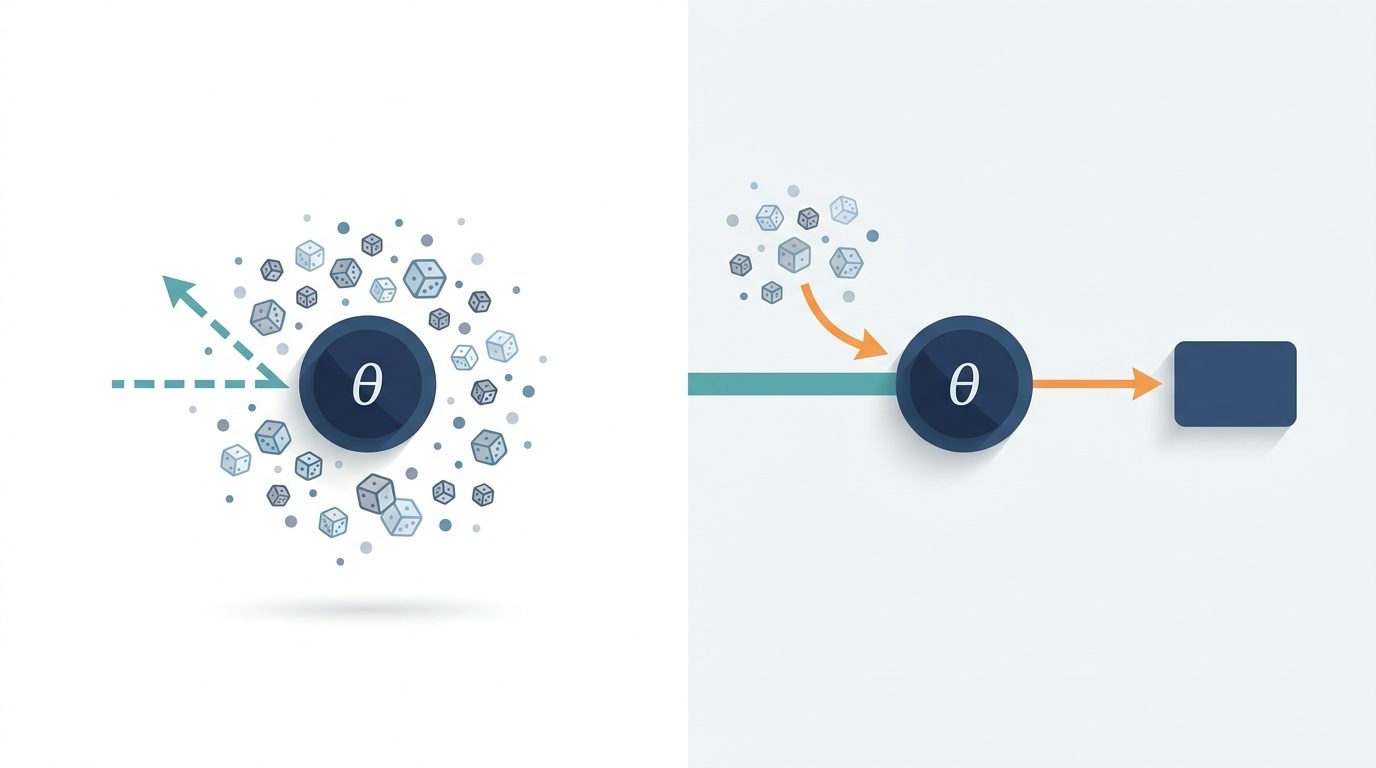
Simplify complex gradients by shifting randomness outside the computation graph
Noisy gradients are the price of sampling inside the computation graph. Moving randomness outside the computation graph changes everything. By reparameterizing, you keep the model differentiable while trimming variance that slows training. It is a practical, accessible breakdown of a technique that feels abstract until you see it applied. If you are exploring how to make your own models more stable, this is worth your time. For another angle on practical ML, our piece on real-world computer vision deployments pairs well here.