harness
harness at Beyond Market Intelligence is a file of 10 stories. The newest of them: “How small AI models closed the gap on a test built for humans”, “Accelerate Numerical Solutions: Introducing LinearSolveBench”, and “Explore how GPT-6 turns raw data into actionable insight without the complexity.”. For the first time, small local AI models have matched average human performance on a benchmark built specifically to prove human superiority, and it happened in just the last 30 days. Large sparse linear systems are where real numerical work gets slow, and most models stumble trying to write efficient C solvers. Acme AI is the next-generation, AI-powered spreadsheet platform built to replace Excel and redefine how analysts, data scientists, and enterprise teams work… The list below is every harness story on Beyond Market Intelligence, newest first.

How small AI models closed the gap on a test built for humans
For the first time, small local AI models have matched average human performance on a benchmark built specifically to prove human superiority, and it happened in just the last 30 days. Kagglers, limited to modest hardware, are now seeing their models beat the human baseline in a controlled harness. That's not hype; it's a measured shift. For a deeper look at how AI is redefining productivity tools, see our coverage of "How We Built IQRAX to Give AI Models Both Freedom and Verifiable Authority."
Accelerate Numerical Solutions: Introducing LinearSolveBench
Large sparse linear systems are where real numerical work gets slow, and most models stumble trying to write efficient C solvers. LinearSolveBench, a new benchmark from hgarud, directly measures how well a model or harness can produce fast, accurate, and general solvers for these systems. It pushes for algorithmic progress where it matters most: practical performance. If you are exploring how AI handles demanding computational tasks, this is a focused, honest stress test worth your attention.

Explore how GPT-6 turns raw data into actionable insight without the complexity.
GPT-6 is here, and its benchmark results are hard to ignore. On ARC-AGI-3, it scores around 60% without a harness, a figure that climbs significantly when one is applied. President Greg Brockman's pre-launch comment that we may now be in the AGI era feels less like hype and more like a statement of direction. That raises a practical question we should sit with: if models outperform human baselines on tests like GDPval-AA v2, why are knowledge workers still employed?
Exploring how KV cache transforms LLM inference into an interactive runtime
Most LLM agents feel reactive because they move token by token, pausing for the model to catch up. Our team has been exploring a different path: modifying the model's inference state, the KV cache, to make it a true runtime. This approach, outlined in a post by our researchers, powers more interactive systems. We see this as a key axis for agent capability, sitting between costly model changes and abstract harnesses.

A smarter AI agent needs more than a bigger context window.
Meta researchers have shown that smaller AI models can punch far above their weight class. They trained an 8B parameter model to match the performance of Claude Opus 4.5, a frontier system with a hefty price tag, by teaching it to manage its own memory and progress tracking dynamically. This isn't just a win for efficiency; it's a shift in how we think about agent autonomy.

Fine-tuning shapes smarter AI agents, even from modest models
Nvidia's latest research flips the spotlight from the model to the harness, and that's a shift worth noticing. Their work shows that fine-tuning the surrounding framework can keep AI agents on track, even when the underlying model isn't particularly strong at the task. It's a refreshingly grounded take, suggesting that clever engineering around the model matters as much as raw capability. For anyone wrestling with AI's unpredictability, this points to a more practical path forward.

TrueForge gives developers more control over AI agents without the cost burden
TrueForge enters a crowded field with a straightforward pitch: more control, lower cost. TrueFoundry's open-source harness, released under the MIT License, reports task completion costs 30% to 75% below Anthropic's managed offering, depending on the model used. That's a concrete claim, and it's backed by a sensible design that trims context waste and treats sandboxes as optional tools. For enterprises tired of choosing between vendor lock-in and operational overhead, TrueForge offers a practical middle path.

Writer's new AI model delivers enterprise power without the price tag
Writer is taking a pragmatic step toward cheaper AI deployment with a new model built as a post-training variation on Z.ai's open source GLM-5.2. The upgraded harness to contain token costs matters because it directly addresses what holds many teams back: unpredictable expenses. This feels less like a flashy leap and more like a sensible unlock. For a deeper look at why cost discipline is becoming central to AI work, our piece on catching AI slop before it skews your model offers useful context.
Schema proves process can match model power in ARC reasoning
A 99% score on ARC‑AGI‑3 is the kind of number that makes you stop and ask how. Schema, a harness built around Claude Opus 4.8 and Fable 5, claims exactly that without touching model weights. It reshapes the process: turning observations into working game models, testing predictions against interaction history, and revising plans on the fly. The fallback rule is refreshingly simple, rerun below 80 with a different model and keep the higher score. That's practical engineering, not magic.
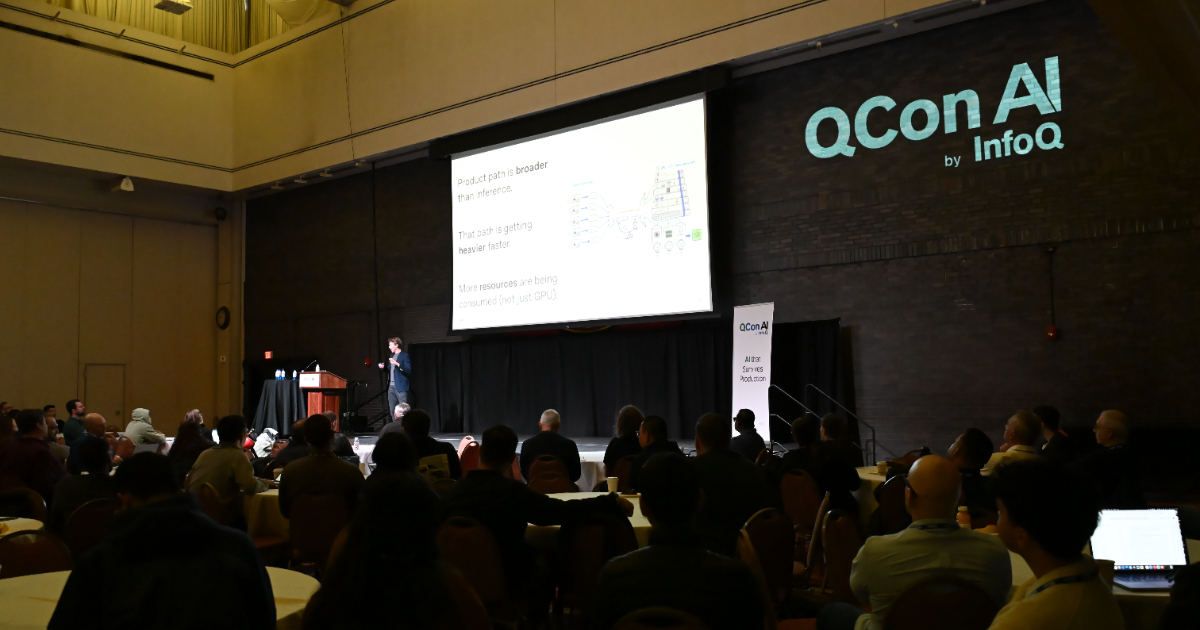
From Prompts to Platforms: Building the Infrastructure for Production AI
The operational reality of AI agents is finally taking center stage, and QCon AI Boston 2026 is where that conversation sharpens. The focus has shifted from what prompts can do to how we build dependable systems around them. We're talking about serious infrastructure: managing context effectively and wrapping agents in a security harness that keeps them safe in production. This is the unglamorous, essential work of making AI actually usable.