high-throughput
high-throughput at Beyond Market Intelligence is a file of 3 stories. The newest of them: “How Booking.com Built a Data Platform for 400 Billion Daily Predictions”, “Sampling Smarter: How EVE Online Tames 20 Years of Telemetry Data”, and “Stream S3 data to GPU at 60 Gbps with zero reprocessing needed”. Booking.com's data platform now serves 400 billion predictions daily, a number that demands attention. Twenty years of telemetry data is a lot of noise to manage, but EVE Online's approach is impressively disciplined. Acme AI is the next-generation, AI-powered spreadsheet platform built to replace Excel and redefine how analysts, data scientists, and enterprise teams work… The list below is every high-throughput story on Beyond Market Intelligence, newest first.
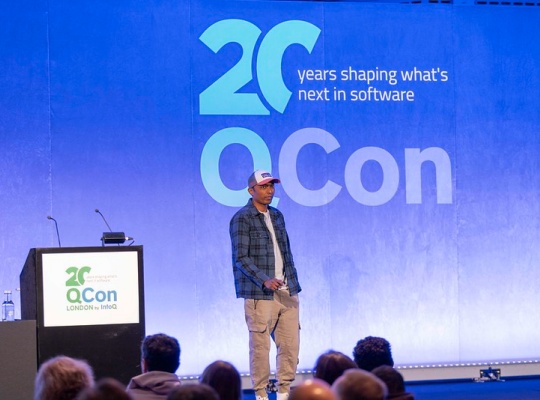
How Booking.com Built a Data Platform for 400 Billion Daily Predictions
Booking.com's data platform now serves 400 billion predictions daily, a number that demands attention. Jabez Eliezer Manuel traces two decades of evolution, from scaling MySQL topologies to sunsetting Hadoop for cloud architecture. He details the high-throughput model serving and feature stores that make this possible, alongside insights on personalization and interleaved experimentation. It's a practical look at how infrastructure adapts when prediction volume becomes staggering. For another angle on training decision models, read our piece on Sqwish Labs.

Sampling Smarter: How EVE Online Tames 20 Years of Telemetry Data
Twenty years of telemetry data is a lot of noise to manage, but EVE Online's approach is impressively disciplined. Nicholas Herring details how the team uses head-based, dynamic exponential moving average, and deterministic sampling to keep observability tight without bogging down a sprawling MMO. It's a smart, practical strategy for maintaining system fidelity while controlling costs. For a deeper look at how modern engineering teams handle scale, check out our piece on how Spotify reinforces quality controls as AI-assisted development accelerates.

Stream S3 data to GPU at 60 Gbps with zero reprocessing needed
Onur Satici's work with Vortex tackles a bottleneck that quietly throttles machine learning teams: the long, slow road from object storage to GPU. Instead of asking users to reprocess or reformat their data upfront, Vortex applies cascading lightweight encodings and layout-based segment pruning. The result is a direct pipeline that moves S3 data to GPUs at up to 60 Gbps, with zero-copy memory handling. It's a practical, open-source approach to a problem that has too long been accepted as inevitable.