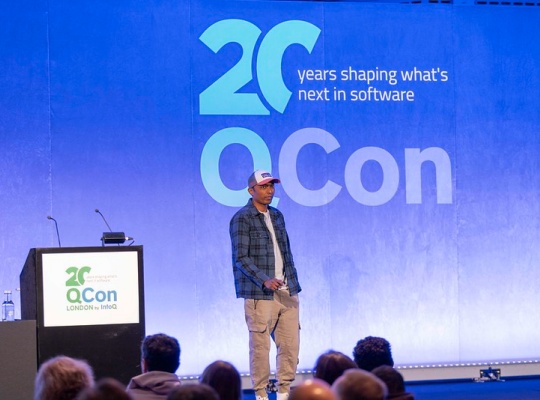
Four hundred billion predictions per day. That is the operating tempo of Booking.com's machine learning platform, a system that has quietly become one of the most sophisticated data engines in travel. Jabez Eliezer Manuel's account of the company's twenty-year evolution from MySQL topologies to cloud-native model serving is a masterclass in pragmatic engineering, and a clear signal that the era of static spreadsheets is closing. For anyone who still treats their data platform as a cost center rather than a competitive weapon, this story should serve as a wake-up call.
The technical details matter, but what stands out is the deliberate sunsetting of Hadoop. Booking.com didn't just add cloud architecture on top of legacy systems; they made the hard choice to retire an entire infrastructure paradigm. That willingness to walk away from sunk costs is rare, and it's exactly the kind of discipline that separates transformative data operations from bloated ones. Meanwhile, Agentic AI gives supply chains speed and reliability with $4.7M in new funding shows a similar pattern emerging in logistics, where autonomous decision-making is replacing rule-based workflows. The parallel is unmistakable: the companies that thrive will be those that treat their data infrastructure as something to be continuously rebuilt, not maintained.
Manuel's emphasis on personalization and interleaved experimentation is where the story gets most practical for everyday users. Booking.com isn't just serving predictions; they are serving the *right* predictions at scale, using experimentation methods that test multiple variants simultaneously without degrading the user experience. This is a far cry from the A/B testing most organizations still rely on, and it points to a future where data tools must support rapid iteration without friction. For users feeling constrained by traditional spreadsheets, the lesson is clear: the tools that empower you to experiment freely are the ones that will ultimately transform your workflow. Your AI stylist remembers your style, plans outfits, and shops for you illustrates this same principle in consumer AI, where personalization depends on the ability to learn and adapt in real time.
The most consequential detail, however, is the mention of an agentic AI foundation. Manuel doesn't frame this as a distant ambition; it is presented as the next logical step after building feature stores and high-throughput serving layers. This suggests that Booking.com is already moving beyond prediction into autonomous action, where models don't just forecast what a traveler might want but proactively assemble itineraries, negotiate prices, and handle exceptions. The open question for our readers is whether their own data platforms are ready for that shift. A specific takeaway: if your organization cannot yet serve predictions at high throughput with low latency, you are not ready for agentic workflows. The infrastructure must come first. And if you are still debating whether to migrate off legacy systems, Booking.com's twenty-year journey offers a direct answer: start now, because the gap between those who do and those who don't is only widening.