human approval
3 stories filed under human approval on Beyond Market Intelligence. The newest of them: “How AI Transforms Enterprise Support from Complaints to Resolutions”, “A self-hosted inbox for background AI agents is now open source”, and “Rethinking AI agents on Kubernetes as efficient worker pods”. Most AI coding demos stop at task managers and weather apps. A team of developers at AWS has open-sourced Pizza Bot, a self-hosted inbox designed for background AI agents. Acme AI is the next-generation, AI-powered spreadsheet platform built to replace Excel and redefine how analysts, data scientists, and enterprise teams work… The list below is every human approval story on Beyond Market Intelligence, newest first.
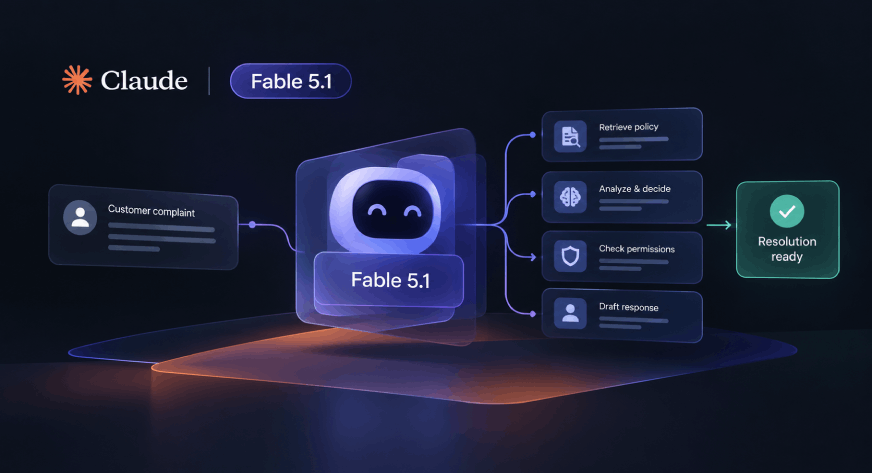
How AI Transforms Enterprise Support from Complaints to Resolutions
Most AI coding demos stop at task managers and weather apps. This project goes further, building an enterprise customer-support platform that investigates complaints, retrieves policies, and recommends resolutions while keeping risky actions behind human approval. That's a practical stress test for Claude Fable 5.1. The approach feels grounded, focusing on real workflow pressure rather than flashy output. For deeper context on how AI agents handle security permissions, Docker's recent CNCF contribution on agent permissions is worth exploring.

A self-hosted inbox for background AI agents is now open source
A team of developers at AWS has open-sourced Pizza Bot, a self-hosted inbox designed for background AI agents. It lets agents run scheduled or webhook-triggered tasks, delegate work to specialized workers, and pause for human approval when needed. This is a practical step toward making autonomous agents more controllable and transparent. For more on how AI agents are reshaping workflows, see our coverage on shrinking the window for open source vulnerability fixes.

Rethinking AI agents on Kubernetes as efficient worker pods
Most teams assume each AI agent deserves its own Pod, but kagent challenges that instinct. Agents are bursty, short-lived, and often wait on human approval, making one Pod per agent a wasteful use of cluster resources. Instead, agent-substrate introduces a control plane that schedules logical Actors onto long-lived worker Pods. It's a smarter deployment unit, one that matches how agents actually behave. For more on scaling concurrent workloads, our piece on Modal's sandbox rebuild pairs well with this perspective.