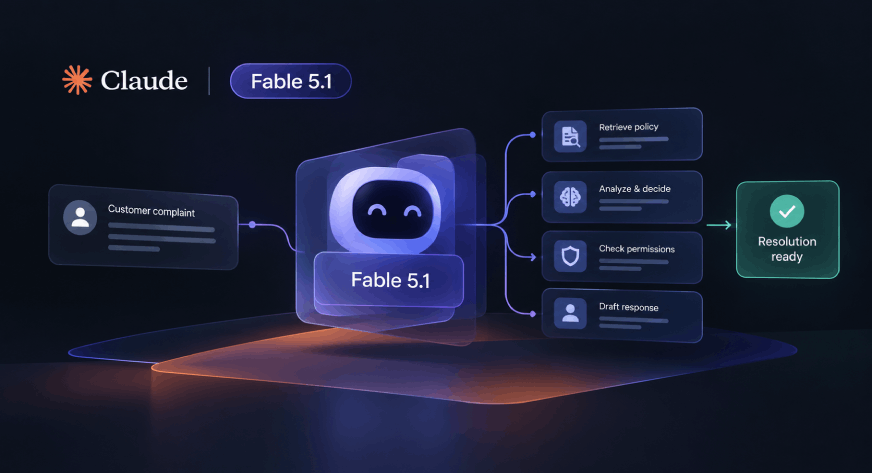
Most teams treat AI support tools as a way to close tickets faster. That misses the point. The real opportunity is turning a complaint into a resolution that feels considered, not automated. That is why building an enterprise customer-support platform with Claude Fable 5.1 and Claude Code matters: it moves the conversation from answering questions to owning outcomes. This is not about replacing human judgment. It is about giving it better raw material. When a system can investigate a complaint, pull relevant policies, and propose a resolution, it stops being a chatbot and starts being a colleague. The risky actions still require human approval, which is exactly the right line to draw. We are not talking about a futuristic experiment. We are talking about a practical test of what happens when AI is given real responsibility, not just a prompt.
The contrast with simpler demos is instructive. Task managers and weather apps are fine, but they do not stress a model the way enterprise support does. Retrieving the right policy from a messy knowledge base, understanding the emotional weight of a complaint, and suggesting a course of action that a human can actually approve: that is a different level of pressure. It also connects to the broader push toward AI agents that need permissions and guardrails, something Docker brings AI agent permissions to the CNCF as portable container images is already addressing. And when security is the concern, OpenAPPA Turns the Tables on Prompt Injection With a Perfect Security Record shows that defending the system is just as important as building it. The takeaway is that enterprise AI is not a single model problem. It is a systems problem, and this project treats it that way.
What this means for you is practical. If you are leading a support team, you do not need to wait for a vendor to sell you a magic dashboard. You can build the workflow yourself, with the right model and the right code. The platform described here is not a toy. It is a template for how to handle sensitive interactions without losing the human element. That is the part that most demos ignore. They show you the answer, but they do not show you the reasoning. Here, the reasoning is visible, traceable, and kept in check by a human reviewer. That is not a limitation. That is the feature that makes it trustworthy.
The question worth watching is how far this extends. If a support platform can investigate and recommend, what stops it from drafting the final response and sending it with approval? That is not a technical gap. It is a policy decision. The model is ready. The code is ready. The question is whether your organization is ready to define what stays human and what gets assisted. That is the resolution we should all be working toward, and it starts with building the right system, not the flashiest one.