humans
Beyond Market Intelligence keeps humans in one place: 6 stories so far. The section currently leads with “Discover how AI is translating the hidden electrical language of plants”, “The real edge in robotics isn't the robot: it's the human connection”, and “AI handles the execution but human judgment still leads analytics.”. Plants speak, and we're finally learning to listen. When a robotics company wins by focusing on people instead of machines, it changes the game. Acme AI is the next-generation, AI-powered spreadsheet platform built to replace Excel and redefine how analysts, data scientists, and enterprise teams work… The list below is every humans story on Beyond Market Intelligence, newest first.

Discover how AI is translating the hidden electrical language of plants
Plants speak, and we're finally learning to listen. Electric Plant has built an AI-powered translator that deciphers the subtle electrical signals coursing through stems, turning a hidden biological language into something humans can understand. It's a genuinely progressive take on data, nature's own data. This isn't science fiction; it's an invitation to explore a new way of connecting with the living world. For more on how AI is reshaping interaction, see our coverage of "When Robotics Gets Its ChatGPT Moment, Assembly Becomes Play."

The real edge in robotics isn't the robot: it's the human connection
When a robotics company wins by focusing on people instead of machines, it changes the game. The real edge isn't the robot, it's the human connection. That's why the founder insists, "We are not a robotics company." It's a quiet confidence that prioritizes empathy and outcomes over hardware specs. We've seen this theme before in our piece on AI world models, and it's worth exploring how that mindset shapes what comes next.

AI handles the execution but human judgment still leads analytics.
Agentic AI is rewriting the analytics stack, shifting execution to intelligent agents that handle the heavy lifting. But as this technology takes over the mechanical work, one skill remains untouchable: the human judgment to ask the right questions. The distinction matters because agents can process data, yet they can't decide what truly matters. This division of labor isn't about replacing people; it's about freeing them to focus on insight and strategy.
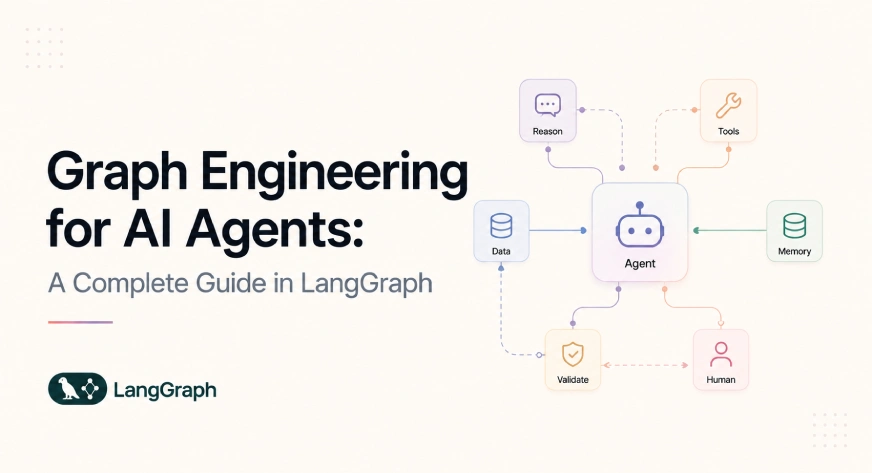
Design Your AI Workflows with Graph Engineering, Not Just Agent Loops
Single-agent loops are only part of the story. Graph engineering treats AI applications as explicitly designed workflows, where agents, tools, validators, and humans coordinate with intention. It's a shift from autonomous tinkering to deliberate architecture. That distinction matters. Moving beyond isolated prompts and toward systems that feel engineered, not improvised is a strong case. If you're curious how such coordination plays out in practice, our piece on talking to an AI clone offers a grounded counterpoint.

Discover how Buzz brings humans and AI agents into one conversation.
Jack Dorsey is taking on Slack with Buzz, a group chat platform built for teams and their AI agents to work side by side. It's a bold move that puts humans and automation in the same conversation, not separate corners. We've been exploring this territory before, like in our piece on questioning AI clones, and Buzz feels like a natural next step. For teams tired of juggling tools, this could simplify how work actually gets done. Worth a closer look.

When AI Saves Time but Misses the Bottom Line
A perfect eval score meant nothing when the CFO ran the numbers. The agent passed every metric in the harness I published, yet leadership killed it because its successful resolutions cost more than the humans it replaced. That is the gap between technical validation and business reality. Metrics can measure task completion, but they rarely capture true economic value. If you are exploring how AI agents actually perform in production, this story is a grounded reminder that context matters.