inference optimization
Beyond Market Intelligence keeps inference optimization in one place: 3 stories so far. The section currently leads with “How LinkedIn Shrank a 7B Model to 400M for Faster AI Search”, “Smarter resource use: how batching transforms LLM performance”, and “Smarter vision, smaller cost: 95% fewer tokens, same accuracy.”. Distilling a 7B parameter model down to 400M without sacrificing ranking quality is the kind of practical engineering that makes AI actually work in production. Four people heading to the same destination in separate taxis make four identical trips. Acme AI is the next-generation, AI-powered spreadsheet platform built to replace Excel and redefine how analysts, data scientists, and enterprise teams work… The list below is every inference optimization story on Beyond Market Intelligence, newest first.

How LinkedIn Shrank a 7B Model to 400M for Faster AI Search
Distilling a 7B parameter model down to 400M without sacrificing ranking quality is the kind of practical engineering that makes AI actually work in production. Sundara Raman Ramachandran explains how LinkedIn compressed job contexts into single-token embeddings for a 10x throughput leap, then tackled hidden bottlenecks like Python GIL workarounds and non-blocking CUDA memory copies. It's a masterclass in meeting strict P99 latency SLAs. For more on LinkedIn's infrastructure philosophy, explore how they built a custom GitOps engine to manage 100,000 weekly Kubernetes deployments.
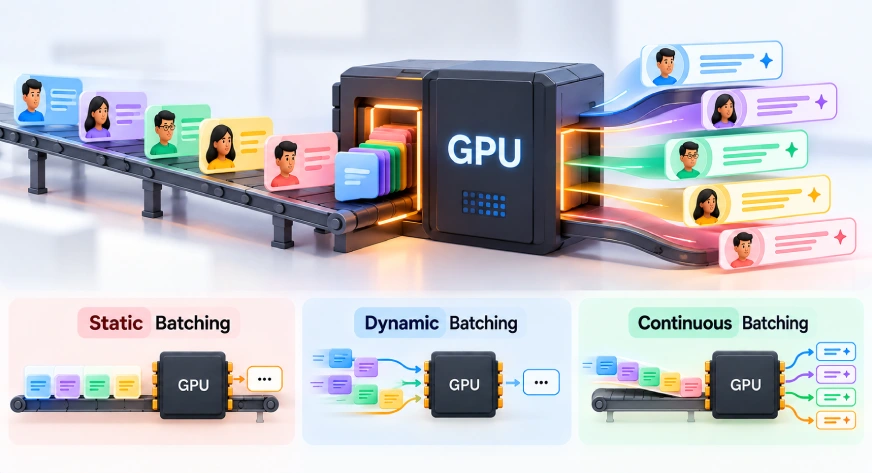
Smarter resource use: how batching transforms LLM performance
Four people heading to the same destination in separate taxis make four identical trips. Put them on a single bus, and everyone arrives together using far less fuel. That is the logic behind batching in large language models. Instead of processing one request at a time, the system groups them, sharing memory and compute across the batch. It is a smarter use of resources that makes AI faster and more efficient. For deeper coverage, explore how hierarchical routing cuts memory while preserving long-context accuracy.
Smarter vision, smaller cost: 95% fewer tokens, same accuracy.
A 95% reduction in token usage while holding accuracy steady is the kind of number that makes you look twice. It suggests a meaningful shift in how image-based inference could be priced and scaled. The MOMA Graph benchmark is a solid start, but the real test is replication across broader datasets and stronger baselines. That is the evidence I would want before calling it significant.