intelligence
23 stories filed under intelligence on Beyond Market Intelligence. The newest of them: “Explore how AI-designed chips can accelerate the future of computing”, “Exploring the Next Wave of AI Architectures Beyond Transformers”, and “North Korean operatives now hidden inside dozens of US firms”. A startup is teaching AI to design chips, learn from each iteration, and improve the next one. The race to move beyond the Transformer is producing a fascinating zoo of architectures, from Mamba's selective state spaces to Dragon Hatchling's emergent attention. Acme AI is the next-generation, AI-powered spreadsheet platform built to replace Excel and redefine how analysts, data scientists, and enterprise teams work… The list below is every intelligence story on Beyond Market Intelligence, newest first.

Explore how AI-designed chips can accelerate the future of computing
A startup is teaching AI to design chips, learn from each iteration, and improve the next one. The goal is to automate and accelerate chip design itself. This isn't about incremental upgrades; it's about rethinking the process from the ground up. If AI can master its own hardware, the future of computing gets faster, smarter, and more efficient. For more on how platforms are evolving, see our piece on Figma opening its platform to agents.
Exploring the Next Wave of AI Architectures Beyond Transformers
The race to move beyond the Transformer is producing a fascinating zoo of architectures, from Mamba's selective state spaces to Dragon Hatchling's emergent attention. What stands out is the shared goal: getting more intelligence from limited compute, not just scaling up. These aren't merely academic curiosities, they're practical bets on reasoning, memory, and adaptation. The comparison table reveals how linear attention, softmax, and test-time memory overlap across labs. For deeper context on system-level reasoning, see our piece on uncovering hidden flaws with formal methods.

North Korean operatives now hidden inside dozens of US firms
U.S. authorities are tracking North Korean operatives embedded inside dozens of American companies, using compromised employees as facilitators between breached networks and Pyongyang. This is not a distant threat. These spies are inside payroll systems, supply chains, and cloud infrastructure. A recent *Danish Data Breach Exposes 8 Million Records Including the Deceased* shows how porous digital borders have become. If sanctioned hackers can walk through your corporate firewall disguised as a trusted worker, your spreadsheet holds secrets you never meant to share.

FBI arrests OpenAI employee in recording probe tied to super intelligence data
The FBI has arrested an OpenAI employee as part of a recording probe tied to the company's super intelligence technology. Director Kash Patel stated the scheme aimed to "capture sensitive communications" about that work, though the exact purpose of the recording device remains unclear. It is a stark reminder that as AI capabilities accelerate, the stakes, and the scrutiny, grow just as fast. For a look at how AI is reshaping physical work, see "Factory robots retrain in minutes, not weeks, for delicate assembly tasks."

Truecaller expands scam protection beyond calls into the open web
Truecaller is extending its scam protection beyond phone calls and into the open web, a move that speaks directly to where fraudsters are heading. As pressure mounts on its core caller ID business in India, its largest market, this expansion feels like a necessary and smart pivot. We appreciate the focus on user safety over feature-checkboxes. For more on how AI is reshaping everyday tools, our piece on Gemini simplifying shopping with Flipkart in India offers a useful parallel.

Explore the Future: When AI Designs Its Own Hardware
When a chip learns to design itself, the role of human engineers shifts from architect to partner. At TechCrunch Disrupt 2026, Ricursive Intelligence co-founders Anna Goldie and Azalia Mirhoseani take the Disrupt Stage to explore closing the loop between AI and hardware development. It's a conversation about trust, iteration, and machines that build better versions of the tools we use. For deeper context on how AI thinks through structured problems, our piece "Exploring Paragraph Structure" pairs well here.

FBI Data Breach Raises Concerns About Agent Security and Counterintelligence
The theft of personal information belonging to FBI agents is a stark reminder that data breaches carry consequences far beyond stolen credit cards. When the private details of those tasked with protecting national security fall into the wrong hands, the threat shifts from financial loss to something more dangerous: counterintelligence. The potential for agents and their families to be extorted into cooperating with foreign powers is a sobering reality. This incident underscores a pressing need for stronger safeguards.

Explore Xiaomi’s MiMo-V2.6: AI Model Training Achieves $3.5M Benchmark
Xiaomi's MiMo-V2.6 just made a compelling case for efficiency in AI training, clocking in at a $3.5 million total RL cost. That's a number that invites a second look, especially when paired with a live benchmaxxing dashboard that puts the process on display. It's a practical, transparent approach to a field often shrouded in complexity. For those wrestling with how to evaluate such models, our piece on verifying your AI's understanding offers a timely starting point. This isn't about hype; it's about measurable progress.

Discover a faster, more affordable path to AI-powered software.
Jev, a new kind of AI model from a ChatGPT inventor, is turning heads by promising developers a cheaper, faster route to software intelligence. That's a meaningful shift for teams tired of ballooning costs and sluggish iteration cycles. We see this as a practical step toward making advanced AI more accessible, not just for enterprises, but for builders who need agility. If you're navigating how AI skills are evolving, our related piece on shifting AI/ML job requirements offers useful context. This is worth exploring.
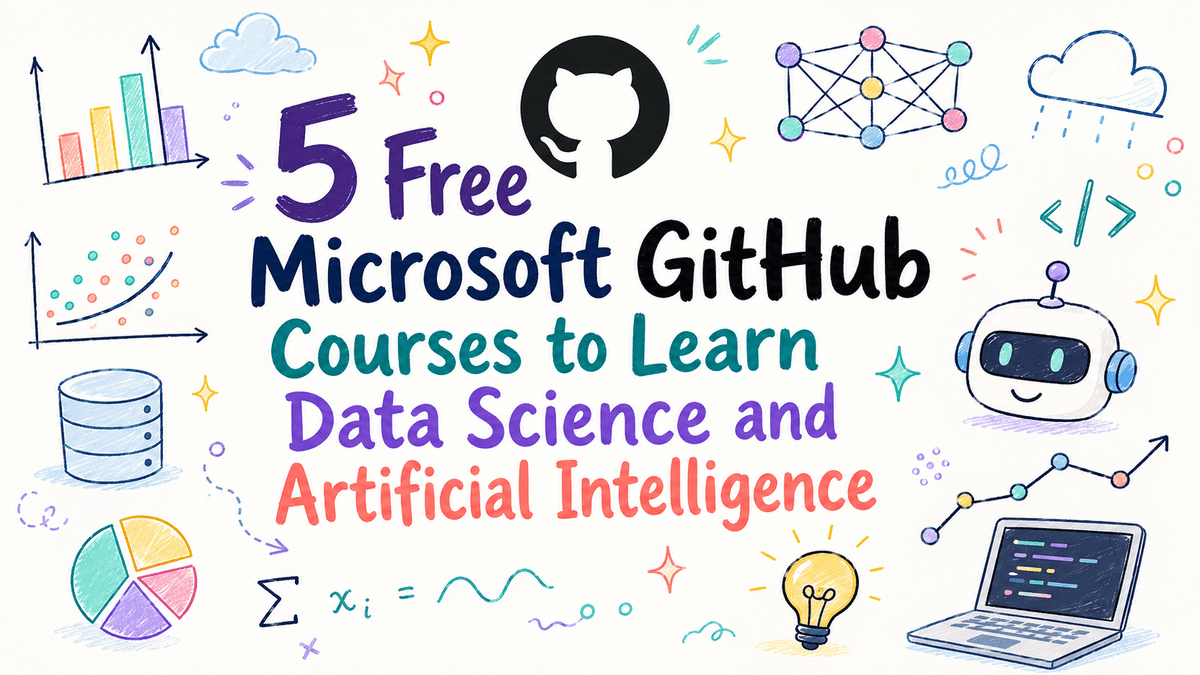
Discover five free GitHub courses to build practical AI skills
Microsoft's GitHub is quietly becoming one of the best free launchpads for data science and AI skills. These five courses cut through the noise, covering everything from machine learning fundamentals to generative AI, LLMs, RAG, and fine-tuning. What stands out is how practical the path feels, you are not just reading about concepts, you are building toward AI agents. If you are ready to move beyond theory, this is a solid starting point.
An insider's view on why the US: China AI rivalry may be overstated
A former insider who has worked on both sides of the US, China AI landscape argues that the so-called arms race is more perception than reality. It's a rare perspective, one that cuts through the noise and challenges the assumption that the two superpowers are locked in a zero-sum contest. The real story is more nuanced, and more human. For readers still wrapping their heads around how AI is reshaping technical roles, our piece on shifting ML job expectations offers a grounded follow-up.

Discover how AI transforms data work into intuitive conversations
Asking Astra to handle a task is a reasonable impulse, but it deserves a moment of reflection first. The real question is whether you trust the output enough to act on it. We see AI as a tool for empowerment, not a substitute for judgment. It can streamline the mundane, but you remain the decision-maker. For those wanting to understand the underlying mechanics better, our guide on distributed algorithms offers a solid starting point.
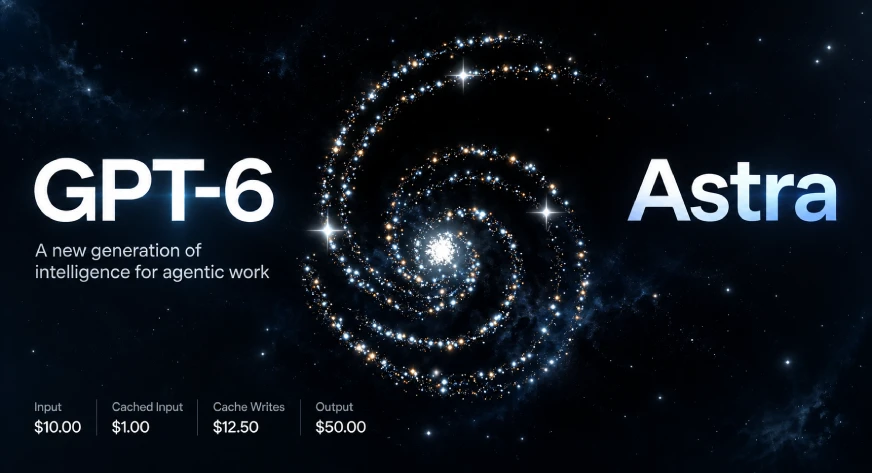
OpenAI's GPT-6 Astra Does More Than Just Answer Questions
OpenAI's GPT-6 Astra arrives barely a week after Anthropic's Claude Fable 5.1, yet its claim is bolder than a release date. OpenAI calls it the world's most intelligent and aligned model, but the real shift is simpler: Astra is built to do more, not just answer more. That distinction matters if you're tired of tools that talk well but act limited. For deeper context on how models handle real-world tasks, our piece on computer vision deployments pairs well here.

When a RAG System Says No, It Should Show Four Proof Points
A confident wrong answer is a bug, but a bare "no answer" with no justification is barely better. This piece breaks down why a RAG system that says "not in this document" must show four distinct kinds of evidence to earn trust. It's a practical push for accountability in AI output. For readers wrestling with how LLMs structure their reasoning, "Exploring Paragraph Structure" offers a useful companion on the mechanics behind the curtain.

What data scientists miss about rerankers and why it reshapes your RAG architecture
Ask a data scientist what a RAG reranker actually does under the hood, and you'll get a pause before an honest answer: it's not magic, it's a focused relevance filter. That honesty matters more than any architecture diagram, because it forces hard decisions about where your enterprise RAG pipeline spends its compute. We think that clarity is the real unlock. For teams already wrestling with distributed systems, this piece pairs well with our practical guide to distributed algorithms.

Rethinking Enterprise RAG: Ten Overlooked Positions That Demand Your Attention
Most tutorials treat enterprise RAG as a simple plug-and-play. This series argues for ten positions that challenge that assumption, starting with the idea that retrieval isn't just a search problem, it's a structural one. Each article maps a specific argument, building a coherent framework rather than a collection of tips. If you're tired of surface-level advice, start with "Exploring Paragraph Structure: How LLMs Navigate Token Space" to see why token coordinates need better metrics. This is the map. The rest is exploration.

Build the Index Before You Open the Folder
A case file is more than a stack of PDFs, and the index proves it by mapping what the case type demands before a single folder is opened. The two questions worth building for are not retrieval questions at all, which reframes how we think about RAG's purpose. It's a sharp, practical push toward relational tables that serve the work. For deeper context on how LLMs handle structure, our related piece on paragraph structure and token space pairs well here.

Row-Level Chunks Deliver the Exact Table Data You Need
Tables are rarely retrieved in pieces. But when a document stores data in rows, each row carries its own context: the column headers that give it meaning. That row becomes a chunk, and it is often the exact unit the reader needs. Row-level chunks should be treated as a retrieval standard, not a workaround. It is a practical reframing of RAG, and it pairs well with our earlier look at how paragraph structure shapes token navigation.

Designing the dispatcher that makes agentic RAG workflows smarter
The dispatcher in an agentic RAG system isn't just a router; it's the judgment call that decides when to loop back for another retrieval and when to trust what's already in context. This piece from our series on enterprise document intelligence finally puts the patterns together, and it's a refreshingly clear look at why that decision is the real engine of reliability. If you're still wrestling with when your workflow should stop, this is the guide you've been waiting for.

OpenAI expands Daybreak with a new model designed for cyber defense.
As AI-driven attacks grow more sophisticated, defense has to evolve just as quickly. OpenAI is stepping up by expanding its Daybreak cybersecurity program and launching a new model trained specifically for cyber defense. It's a practical, forward-looking move that treats security as an active, intelligent practice rather than a reactive patchwork. For anyone navigating this shift, understanding how AI protects and challenges us matters.

Explore how open AI models reshape your access to personal intelligence
Meta's Muse Glimmer, an open-weight AI model, offers a telling glimpse into Mark Zuckerberg's vision of personal superintelligence. It also sharpens a growing divide: the difference between AI tools you merely use and those you actually own. That distinction matters. As we explore what accessible models can do, we should also ask who truly controls the intelligence shaping our workflows.

Seven patterns to turn RAG extraction errors into honest answers
Calling a RAG mistake a "hallucination" misses what actually happened. If the model read the context and still got it wrong, that's an extraction error, not a creative invention. The piece breaks down seven typed-contract patterns that keep generation honest, plus a decomposition rule for smaller models. It's a sharper way to diagnose failures, and we're glad to see the framing. For a deeper look at how structure shapes model reasoning, "Exploring Paragraph Structure: How LLMs Navigate Token Space" pairs well with this analysis.

Four PDFs, one pipeline: consistent, cited answers from messy documents
Four very different PDFs. One RAG pipeline. The same four upgraded bricks in every case, and every answer typed and cited. That is the kind of consistency that makes a tool feel trustworthy, not just clever. We appreciate how the demonstration walks through the practical wiring of a paper, a NIST standard, and a report with a broken TOC. It is a grounded demonstration of what happens when retrieval is built to handle real-world mess.