interfaces
interfaces at Beyond Market Intelligence is a file of 3 stories. The newest of them: “Architecting AI-Powered Mobile UIs: Speed, Delight, and Scalability”, “Beyond the Screen: A Future-Focused Vision for Data and Healthcare.”, and “Explore how AI agents are reshaping the tools we use to build interfaces.”. Latency can make or break a mobile AI experience, and Balakrishnan Ramdoss knows it. Max Hodak's Disrupt talk promises a bold departure from the screens that tether us to data. Acme AI is the next-generation, AI-powered spreadsheet platform built to replace Excel and redefine how analysts, data scientists, and enterprise teams work… The list below is every interfaces story on Beyond Market Intelligence, newest first.

Architecting AI-Powered Mobile UIs: Speed, Delight, and Scalability
Latency can make or break a mobile AI experience, and Balakrishnan Ramdoss knows it. In his latest piece, he gets down to the practical work of architecting production-grade, AI-powered conversational apps. He breaks down how to tackle model response times head-on, using server-driven UI and Backend-for-Frontend patterns to render dynamic, multi-modal interfaces on the fly. It's a grounded look at optimizing prompts for UI selection and weaving in on-device AI for that privacy-first, low-latency edge.

Beyond the Screen: A Future-Focused Vision for Data and Healthcare.
Max Hodak's Disrupt talk promises a bold departure from the screens that tether us to data. His vision of screen-free interfaces, capable of delivering medical assistance, feels less like speculation and more like a logical next step. We're eager to hear how he frames this shift toward more human-centered technology. It's a conversation worth having, and the early-bird pricing ends September 25. For more on how founders are reshaping health and wellness, our coverage of Wahlberg and Lee's upcoming discussion offers a fitting complement.
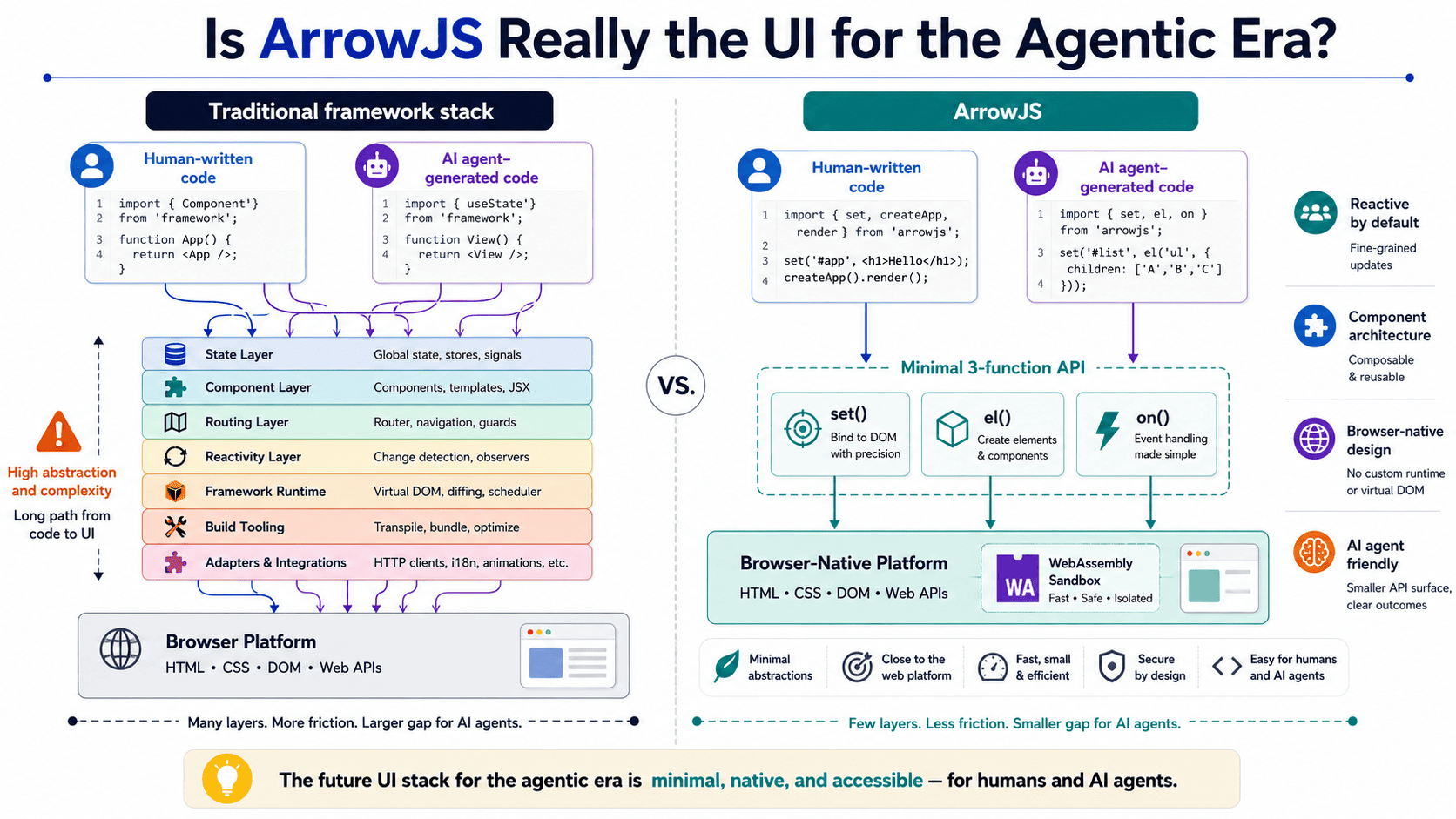
Explore how AI agents are reshaping the tools we use to build interfaces.
ArrowJS is asking a question worth pausing on: if AI agents are writing more of our interfaces, why are we still rendering them like it's 2019? This piece digs into whether ArrowJS actually fits the agentic era or just adds another layer of complexity. It's a practical, grounded take, and it pairs well with our earlier look at how LLMs navigate token space. Both point to the same truth: the tools we choose shape the systems we build.