interoperability
6 stories filed under interoperability on Beyond Market Intelligence. The newest of them: “Architecting Trust: A Blueprint for Enterprise mDL Decisions”, “How AI Helped GitHub Rebuild Its Copilot Engine in 14 Weeks”, and “AI agents need a digital handshake to navigate today's web defenses”. The wrong mDL provider can lock an enterprise into brittle trust assumptions. GitHub migrated more than 800,000 lines of Copilot runtime code from TypeScript and Node.js to Rust in about 14.5 weeks, using AI-assisted development to make it happen. Acme AI is the next-generation, AI-powered spreadsheet platform built to replace Excel and redefine how analysts, data scientists, and enterprise teams work… The list below is every interoperability story on Beyond Market Intelligence, newest first.

Architecting Trust: A Blueprint for Enterprise mDL Decisions
The wrong mDL provider can lock an enterprise into brittle trust assumptions. Praveen Kumar Gopalakrishnan's framework cuts through that risk. It shows which cryptographic properties to verify, which trust boundaries must stay visible, and how requirements shift across real-world use cases. This is the blueprint for asking hard architectural questions before committing. For teams building smarter AI agents, our coverage of AWS's new open-source tools offers a complementary look at control and abstraction.

How AI Helped GitHub Rebuild Its Copilot Engine in 14 Weeks
GitHub migrated more than 800,000 lines of Copilot runtime code from TypeScript and Node.js to Rust in about 14.5 weeks, using AI-assisted development to make it happen. The incremental approach leaned on N-API interoperability, automated testing, human review, and 128 pull requests while still shipping releases. That's a disciplined, practical model for large-scale rewrites. For more on how teams are tackling ambitious rebuilds, our piece on Shopify's Checkout Blocks rewrite offers a useful comparison.

AI agents need a digital handshake to navigate today's web defenses
Personal AI agents are hitting a wall. Every time they try to book a flight or make a reservation, anti-bot defenses block the way, leaving consumers stuck in the middle. That friction is the problem a new standard aims to solve, giving agents a digital handshake to navigate today's web defenses. It's a practical step forward. For more on how agents are reshaping workflows, Cloudflare's new CLI opens the door for AI agents to command its services.

Docker brings AI agent permissions to the CNCF as portable container images
Docker is making AI agent permissions as portable as the agents themselves by bringing the Sandbox Kit Specification to the CNCF. This move treats what an AI can access like a container image, something you can pack up and move anywhere. It's a practical step toward trust and flexibility in agentic workflows. For another look at how AI is reshaping practical tools, read our piece on Shopify's Canvas builder.

Explore how Swift 6.4 simplifies subprocesses and accelerates Wasm performance
Swift 6.4 lands with a clear message: subprocess handling no longer needs to be a platform-specific headache. The new Subprocess library offers a cross-platform API for launching and interacting with external processes, while Wasm generated code runs up to 40 times faster. That's a practical leap forward. Expanded support for non-copyable values and better C++20 and Java interoperability round out the release. If you're building for performance, exploring this upgrade feels like a natural next step.
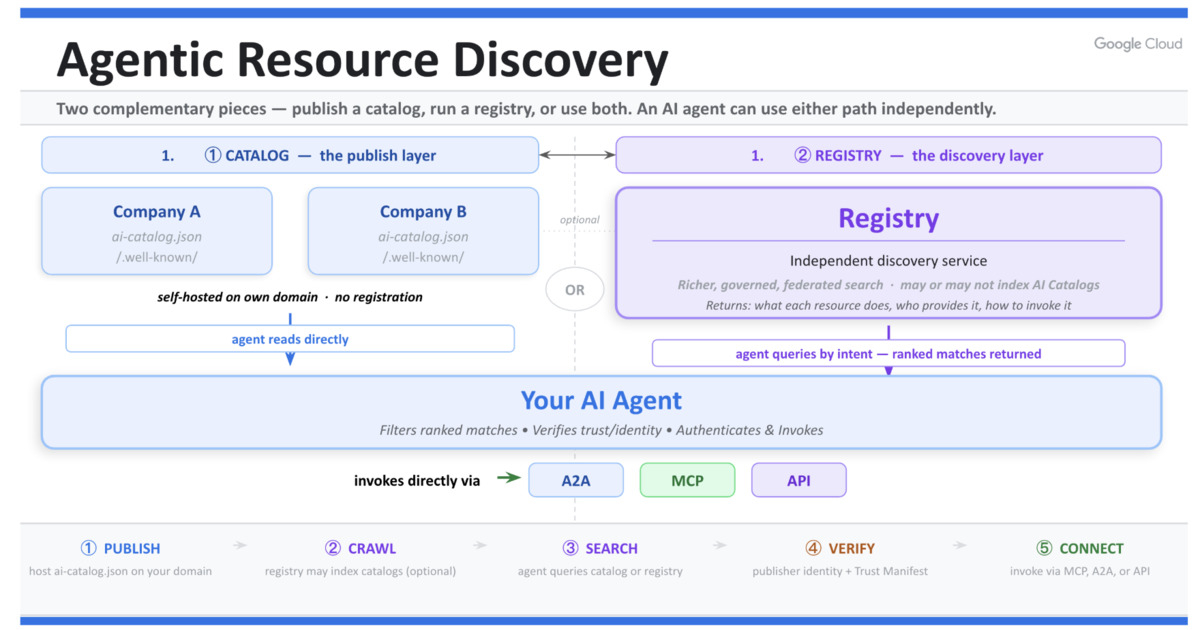
Explore how ARD makes AI tools discoverable and trustworthy.
The Agentic Resource Discovery Specification tackles a problem that has quietly slowed AI progress: tools and agents remain hard to find. Google and its partners are introducing an open standard built on catalogs and registries, which enables dynamic discovery while leaning on existing protocols like MCP and OpenAPI for execution. It is a practical move toward trust and interoperability. If you are still mapping out how MCP fits into your workflow, our visual guide to unlocking MCP is worth a look.