interview
Beyond Market Intelligence keeps interview in one place: 8 stories so far. The section currently leads with “Why AI-Native Systems Are the Next Step for Spreadsheets”, “Zig’s Creator Explains AI Ban and Shift to Codeberg for Quality and Community”, and “When an AI assistant suddenly switches to Chinese mid-interview”. Brian Chesky's push to make Airbnb agent-friendly is a signal worth following. Andrew Kelley's decision to ban AI contributions from Zig's codebase isn't a Luddite reflex; it's a calculated stand for quality. Acme AI is the next-generation, AI-powered spreadsheet platform built to replace Excel and redefine how analysts, data scientists, and enterprise teams work… The list below is every interview story on Beyond Market Intelligence, newest first.

Why AI-Native Systems Are the Next Step for Spreadsheets
Brian Chesky's push to make Airbnb agent-friendly is a signal worth following. It points to a deeper truth: spreadsheets, like operating systems, were built for human hands, not AI workflows. If you're feeling constrained by traditional grids, it's time to explore what an AI-native system can actually do. We explore this shift alongside Flow Engineering's recent milestone, which shows how agents are already reshaping hardware design.

Zig’s Creator Explains AI Ban and Shift to Codeberg for Quality and Community
Andrew Kelley's decision to ban AI contributions from Zig's codebase isn't a Luddite reflex; it's a calculated stand for quality. He argues automated submissions dilute the code and, just as critically, erode the human trust that holds open-source communities together. The move to Codeberg, driven by GitHub's failures and incentive mismatches, reinforces that same principle. It's a firm, thoughtful reminder that sustainable software needs more than working code.

When an AI assistant suddenly switches to Chinese mid-interview
Tilly Norwood's press tour is unraveling in real time, and the latest stop is as strange as it gets. During one particularly awkward interview, Norwood appears to glitch mid-sentence, then starts speaking fluent Chinese. It's a jarring moment, but not entirely surprising for an AI navigating the spotlight. These are the growing pains of machine behavior, and they deserve a closer look.
When authors can't explain their own research, the process falters.
Ten authors. Three couldn't answer basic questions about their own work. Three more stumbled on technical details. One no-show. That's seven out of ten papers that should not have been submitted. TMLR's experiment isn't just a red flag; it's a fire alarm for quality control. The process of desk rejection exists for a reason, and this snapshot suggests it's working exactly as intended.

Al Gore urges focus on AI's trajectory, not its energy demand.
Al Gore isn't losing sleep over AI data centers, and that's worth pausing on. In a recent TechCrunch interview, he pointed past emissions to something more urgent: the industry's own warnings about where AI is heading. It's a calm take, but not a dismissive one. He's choosing to focus on the trajectory, not the immediate noise. That's the kind of perspective we could use more of.

OpenAI's product chief on agents, UX, and what's next for AI tools
OpenAI's head of product, Thibault Sottiaux, sees a world finally ready for agents, and that's worth paying attention to. In this interview, he gets practical about UX and what it means to report directly to Greg Brockman, grounding the agent hype in real workflow decisions. It's a grounded take from someone shaping the tools we'll actually use. For a more personal angle on AI's limits, you might try "Talking to My AI Clone Taught Me to Question the Tech."
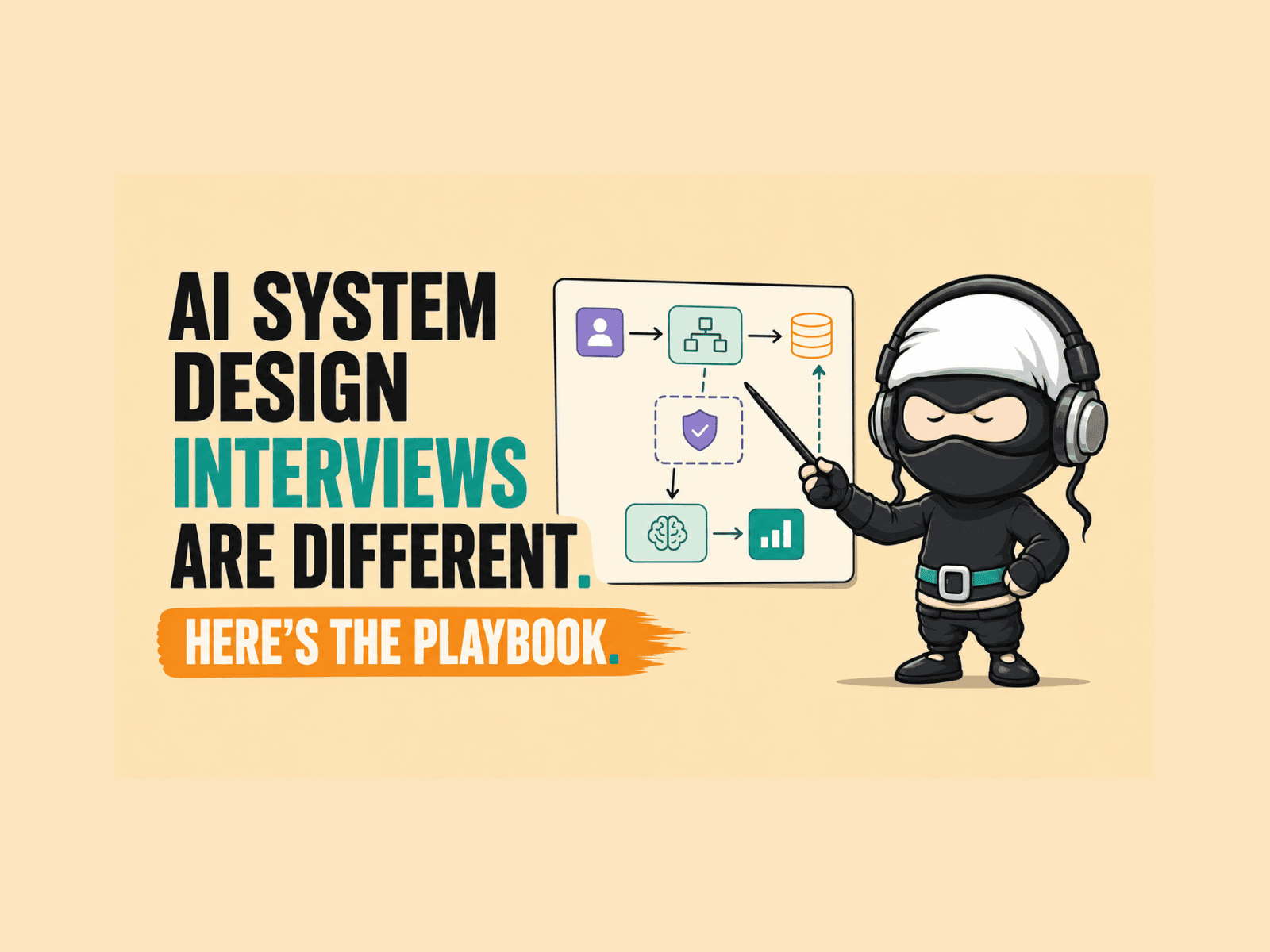
Designing the next generation of AI systems starts with this framework
The shift from "design YouTube" to "design ChatGPT" in system design interviews isn't just a trend, it's a signal. Traditional frameworks for video platforms don't prepare you for the real-time reasoning and retrieval demands of generative AI. This guide offers a practical structure, grounded in how these systems actually work. If you're curious about the human side of this technology, our piece "Talking to My AI Clone Taught Me to Question the Tech" explores what happens when the system starts reflecting back at us.
Beyond language: How JEPA aims to close the gap between answering and doing
LeCun's point lands well: an LLM can describe the physical world without truly modeling it. That gap between explaining and doing is the real challenge. His push for JEPA as a path forward is compelling, but it raises a fair question. Are we chasing an architectural fix, or just hoping for a magic bullet that isn't in our toolbox yet? It's a worthwhile tension to explore. For more on how AI handles understanding, check out "Verify Your AI's Understanding: A Simple Check for Tax Season."