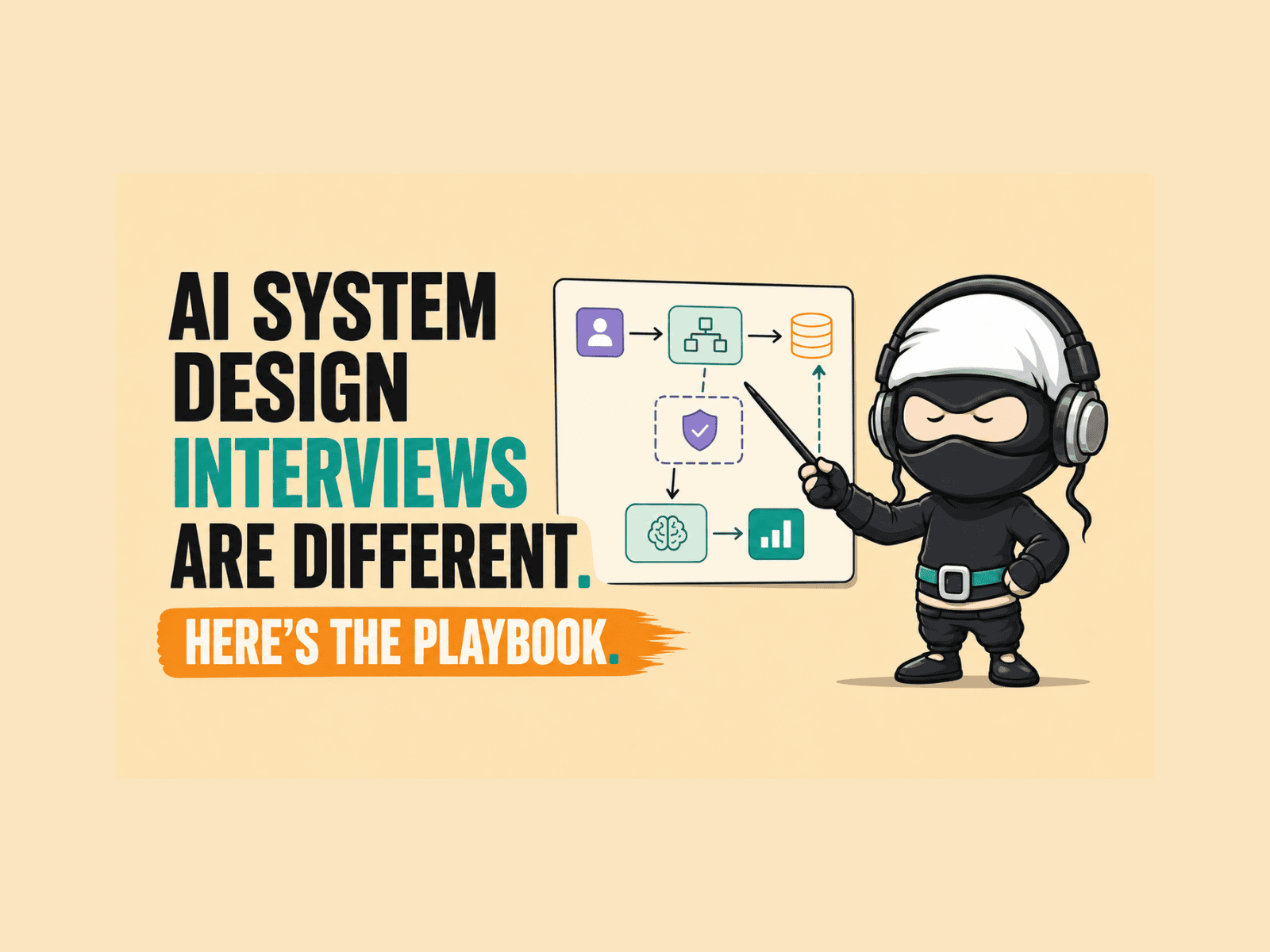
The shift from "design YouTube" to "design ChatGPT" in system design interviews is not a minor tweak. It is a signal that the industry is finally catching up to what users have been experiencing for two years. For anyone preparing for these roles, the old playbook of caching layers, database sharding, and video transcoding pipelines is no longer enough. The new question demands you understand probabilistic inference, context windows, and the economics of token generation. If you are still rehearsing your Netflix recommendations architecture, you are bringing a horse to a charging station.
This evolution mirrors a broader tension we have been tracking. When our contributor talking to an AI clone taught them to question the tech, the discomfort was not about the model's fluency. It was about the hidden complexity of what makes that fluency possible. A system design interview for an AI assistant forces you to confront that complexity head-on. You cannot hand-wave with "the model does it." You have to reason about latency budgets for a single forward pass, about how to serve a trillion-parameter model without burning a hole in the budget, and about how to handle the long tail of prompts that do not fit neatly into a batch. The framework is a useful scaffold, but the real test is whether you can adapt it under pressure.
For our readers, the practical takeaway is blunt: the bar for entry into AI engineering roles has shifted. We have already discussed how AI/ML job requirements are becoming a confusing mix of software engineering and research skills. This interview trend is the other side of that coin. It is not enough to have fine-tuned a model on a Kaggle dataset. You need to understand the serving infrastructure, the batching strategies, and the trade-offs between streaming and non-streaming responses. If you are preparing for these interviews, do not memorize the framework as a checklist. Use it as a starting point to build your own mental model of where the bottlenecks actually are. The candidates who succeed will be the ones who can articulate why a particular design choice falls apart at a million users, not just what the choice is.
The open question we are watching is whether this becomes a standard gate for all senior engineering roles, not just AI-specific ones. If it does, the skills gap will widen, and the pressure on non-specialists will grow. But for now, the immediate consequence is simpler. The next time you sit down to practice system design, ask yourself if you can design a system that generates a coherent paragraph in under two seconds. If you cannot, you have your work cut out for you. The future of the interview is not about the answer. It is about your ability to reason through the unknown.